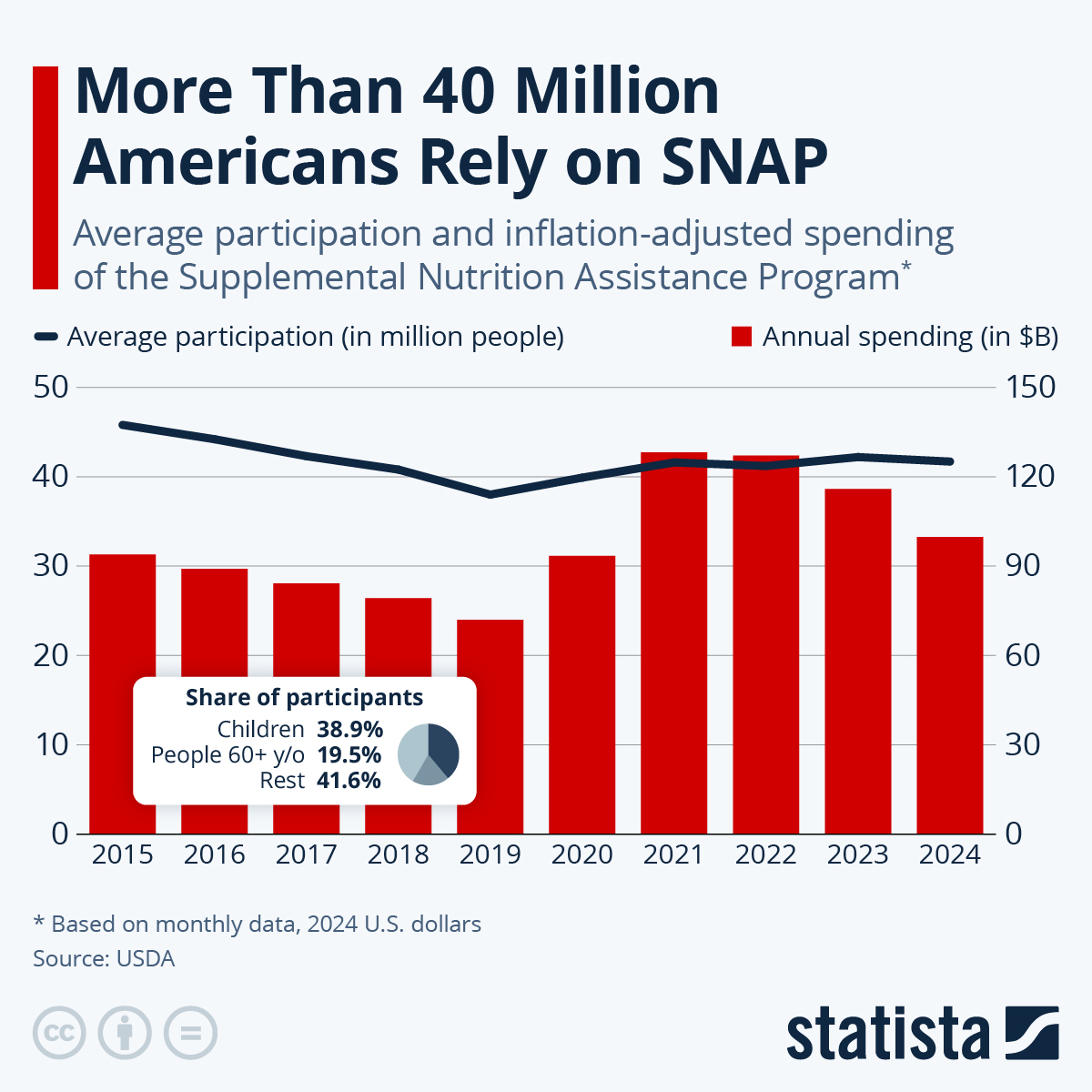
More than 40 million Americans – or 1 in 8 – received SNAP benefits last year. While spending on the program rose as high as $128 billion annually during the pandemic, this decreased to around $100 billion again in 2024. The Trump administration and Republicans in Congress have this year already made cuts to the tune of $186 billion to SNAP over the course of 10 years, as stipulated in the One Big Beautiful Bill Act signed into law in July.
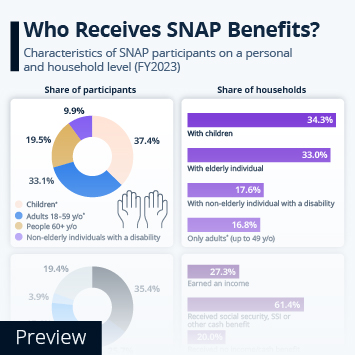
Almost 2 in 5 SNAP participants (as of fiscal year 2023) were children, while 1 in 5 were over the age of 60. SNAP also serves disabled Americans, as well as many working parents and families.
All SNAP recipients 16-50 years old also fall under a work requirement unless they have health problems or qualify for another limited exception. Able-bodied adults up to 54 years of age without dependents are subject to a stricter set of rules around required work or training if they want to receive more than three months of payments in three years. However, observers point out that many issues SNAP recipients have, like lack of housing or mental health conditions, are already not covered under these and that bureaucracy around SNAP also poses additional hurdles.