FREE WHITEPAPER

Decoding AI Consumers

The rise of the AI consumer is here. Discover the AI consumer personas reshaping buying decisions, trust, and loyalty. Our 2026 Consumer Trends whitepaper distills insights from 12,000+ consumers across the U.S., UK, and Germany.

Inside, you’ll get:

  • A look at the four emerging AI shopper personas
  • Strategies to build trust and lasting loyalty
  • Practical tactics to future-proof your go-to-market plan

Download the whitepaper Get the Consumer Trends Report
 

Persona 1

Meet the AI Enthusiast

Why it's important to understand AI Enthusiasts

AI Enthusiasts represent a forward-looking consumer group that is both optimistic and influential. Unlike average consumers, they are far more confident about their personal, national, and financial futures. They are more willing to make major purchases, less constrained by price, and more trusting of the information provided to them. As early adopters of innovation, they serve as a bellwether for wider consumer shifts, displaying loyalty, openness, and creativity.

For brands and companies, this makes them an essential audience to understand; successfully engaging with them can unlock enduring brand advocacy and provide momentum in markets that reward trust, optimism, and innovation.

AI Enthusiast

The data behind it

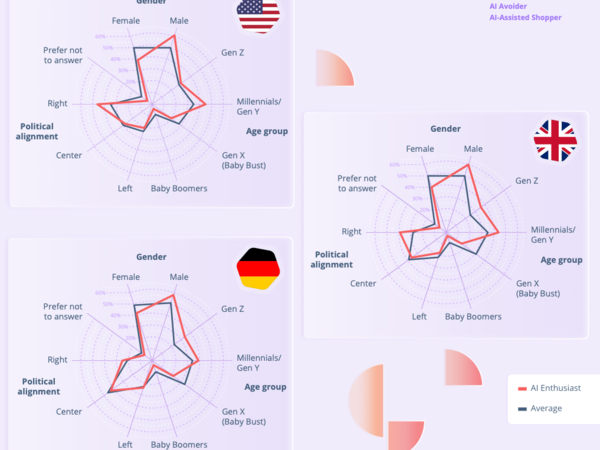
Young, male, and future-focused

Mostly young men, Millennials and Gen Z, make up the bulk of AI Enthusiasts. Their enthusiasm leans right of the political spectrum, where optimism about technology often aligns with pro-growth politics.

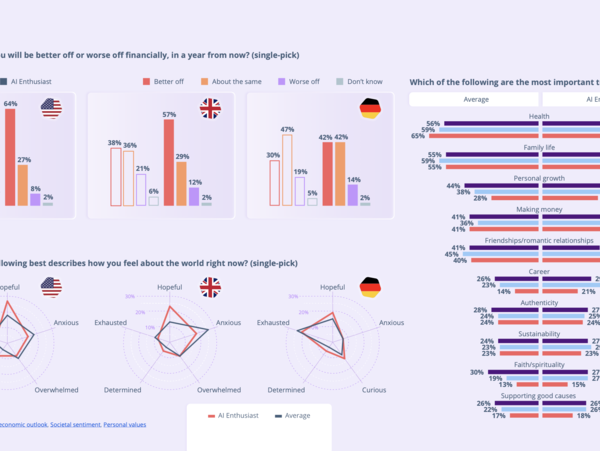
The optimists of the marketplace

Compared to the average consumer, AI Enthusiasts display a markedly positive outlook on their personal situation, national economy, and future opportunities. These consumers expect to make major purchases and embrace a hopeful vision of tomorrow. In Germany, however, societal fatigue tempers this optimism.

Growth in life and wealth

Health and family sit at the core of their values, alongside personal growth, financial success, and strong relationships. While cost-consciousness is on the rise, AI Enthusiasts are slightly less price-driven than the average consumer.

Sources: Gender, Age (generations), Political spectrum summarized


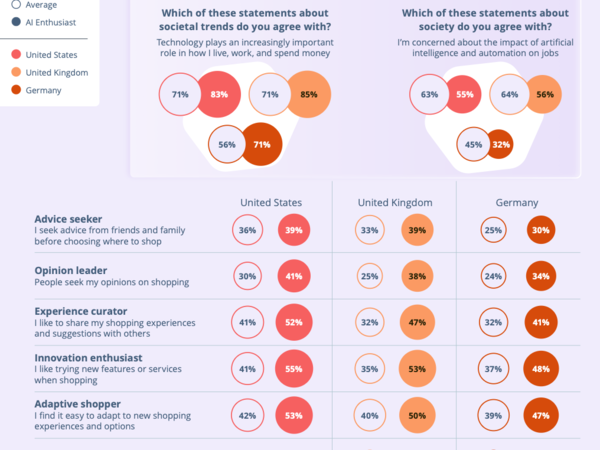
Technology shapes their choices

AI Enthusiasts value technology, integrating it into every facet of their lives—whether at work, at home, or as part of their purchasing decisions. They are far less concerned about the potential threat technology poses to everyday life. Where others see risk, they see opportunity, making them natural allies for brands that champion innovation.

Influential and engaged

AI Enthusiasts are influential shoppers who actively engage with the retail experience. More than the average consumer, they lead with their opinions and readily share their experiences across their networks. They are quick to adopt and adapt to new products and experiences, helping to shape trends along the way.

Sources: Trend on technology & digital integration, Macro trends in society, Consumer typology

Strategies for success

To engage AI Enthusiasts effectively, brands must focus on four key strategies:

1. Lead with innovation
Highlight new ideas, creativity, and technological progress rather than competing on price. These consumers value forward-thinking solutions and are eager to embrace change.

2. Appeal to optimism and growth
Position offerings as enablers of personal growth, health, relationships, and financial success, tapping into their future-focused mindset.

3. Build trust by sharing knowledge
Communicate with authority and authenticity. As information-trusting consumers, AI Enthusiasts respond well to clear, confident, and insightful messaging.

4. Adapt to local nuance
In the U.S. and the UK, connect through aspirational and entrepreneurial narratives. For Germany, emphasize dependability, thoughtfulness, and stability.

CONSUMER TRENDS REPORT

Want the complete 2026 consumer picture?

37 pages. Cross-industry insights. Regional breakdowns for U.S., UK, and Germany.

Talk to our team to get the full report.

Get the full report →

Persona 2

Meet the AI Skeptic

Why it's important to understand AI Skeptics

The wary majority

AI Skeptics represent the cautious baseline of consumers—neither highly resistant nor enthusiastic. Rather, they tend to mirror the average shopper. Compared with enthusiasts, AI Skeptics are more anxious, less trusting, and generally pessimistic about their country’s future. They hesitate over major purchases and scrutinize information carefully. With skepticism spread evenly across gender and age, this outlook reflects a broad, default stance in the market.

For brands, understanding AI Skeptics is vital. Assuming universal enthusiasm for AI can trigger resistance, so messaging should be measured and sensitive to consumer anxieties. Winning over skeptics isn’t just about selling AI—it’s about responding thoughtfully to anxieties and actively building trust.

AI Skeptic


Broadly skeptical

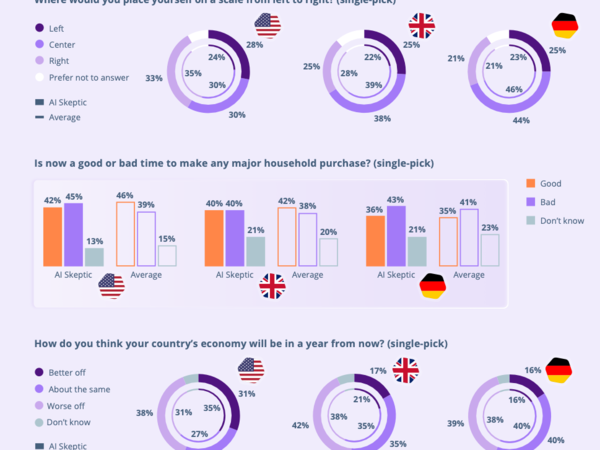
AI skepticism shows no strong differences by gender or age. Men and women, young and older consumers alike share this stance. AI Skeptics lean slightly more left politically compared to the average consumer.

Glass half empty

AI Skeptics generally share the average consumer’s views on today’s economy but are notably more doubtful about the future. They’re less likely to believe they’ll be better off next year, and particularly in the U.S. they tend to view the present as an inopportune time for major purchases. Their skepticism stretches beyond personal finance—most are more negative than positive about their country’s current and future prospects.

Sources: Political spectrum summarized, Major purchase intentions, Country's economic outlook


Careful, considered, committed

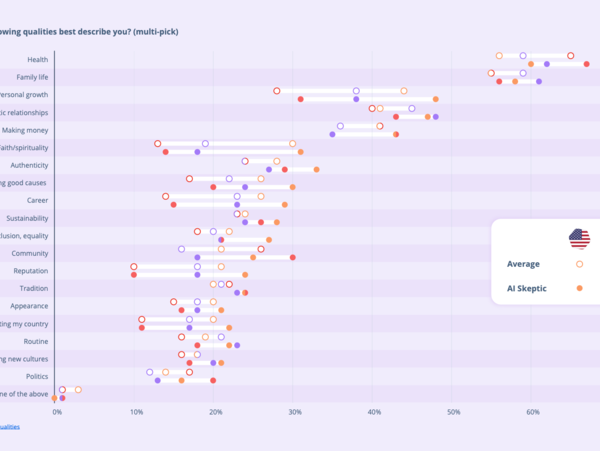
Top qualities shared by these consumers across markets include loyalty, dependability, open mindedness, thoughtfulness, organization, knowledgeability, and authenticity. These traits define a consumer group that deliberates carefully before embracing change, emphasizing a thoughtful approach to adoption.

Guarded with a dose of anxiety

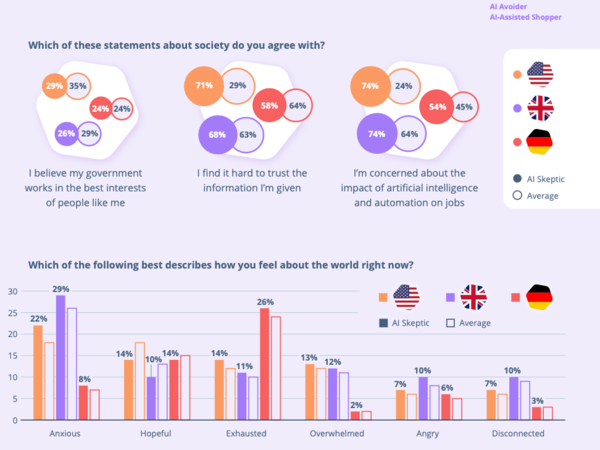
AI Skeptics struggle to trust institutions and information. They are concerned about government representation, wary of technology’s role in automation, and much more anxious about the potential loss of jobs. While U.S. and UK Skeptics report anxiety, German Skeptics tend to feel more drained and exhausted by the state of society.

Sources: Societal attitudes, Social sentiment

Strategies for success

To win over AI Skeptics, brands must focus on addressing fears while building trust and reassurance:

1. Build confidence through transparency

Skeptics don’t take information at face value. Companies must offer clarity, openness, and honesty to foster credibility.

2. Prioritize security and stability

Positioning should highlight safety, dependability, and protection rather than disruption to appeal to the cautious mindset of this consumer. Messaging that highlights reliability will resonate most. Demonstrate ROI, long-term savings, and practical benefits over flashy innovation.

3. Balance value with affordability

Pricing is key for this audience. Clear value communication, offers that emphasize efficiency, and practical messaging resonate strongly with AI Skeptics.

4. Reduce the anxiety gap

Provide reassurance when you can about automation, job impacts, and government alignment. Framing AI as a supportive tool rather than a threat can ease fears and open doors to gradual acceptance.

CONSUMER TRENDS REPORT

Discover what’s shaping consumers in 2026


Looking for even more? Access 37 pages of cross-industry insights, plus regional deep dives across the U.S., UK, and Germany.

Speak with our team to access the full report.

Get the full report →

Persona 3

Meet the AI Avoider

Why it's important to understand AI Avoiders

Not all consumers are as eager to jump on the AI bandwagon. While a certain degree of skepticism about AI and new technology exists in virtually all shoppers, there is also a distinct group that avoids AI altogether. These consumers have been watching the AI hype with suspicion and are unimpressed—or even frightened—by what they’ve seen so far.

While this persona is expected to decrease in numbers in the years to come, they currently represent a significant consumer demographic that cannot be reached with the same marketing strategies that are used for AI-positive consumers.

AI Avoider

The data behind it


A cautious consumer

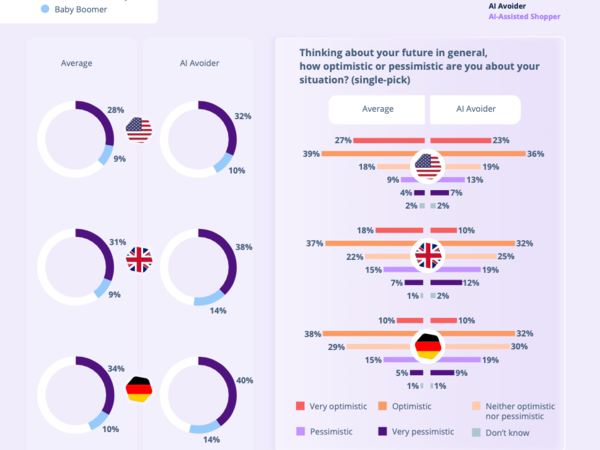
The AI Avoider is a thoughtful, deliberate shopper who keeps their distance from AI in everyday life. Often belonging to Generation X or the Baby Boomer cohort, they typically live in below-average income households and lean politically left. Their choices are shaped as much by personal values as by wider social anxieties. They see themselves as dependable and loyal, yet often burdened by pessimism about the future, both personally and nationally.

Financial guardrails

Financial caution is a defining trait of the AI Avoider. They believe now is not the time for big purchases; saving money is a priority over spending. While they don’t avoid spending altogether, they prioritize experiences that strengthen personal connections rather than material goods. Social and economic shifts have guided them toward wellness-focused products and services that support both physical and mental health.

Sources: Age (generations), Personal outlook


Trust in people, not in tech

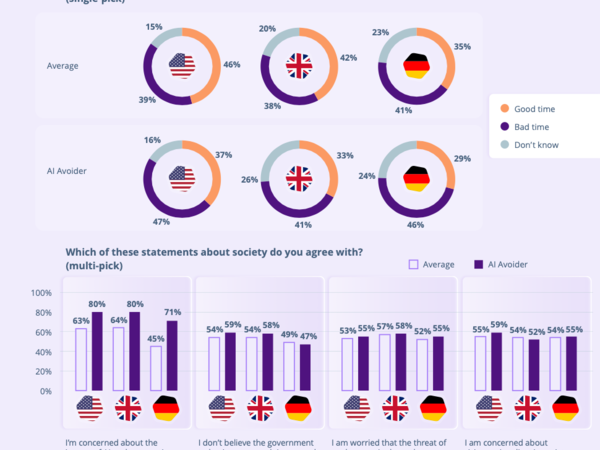
Shopping decisions are rarely made alone. The AI Avoider is an advice seeker: they turn first to family and friends for guidance, reflecting both caution and a preference for human connection. Their distrust extends to technology itself, especially AI and automation. They often view these innovations as greater threats to jobs and society than climate change or war.

Reliability over innovation

Unlike younger, tech-driven consumers, AI Avoiders are unmoved by brand activism and innovation-centered marketing. They value reliability, fairness, and affordability, choosing trusted, human-centered experiences rather than digital novelty.

Sources: Major purchase intentions, Societal attitudes

Strategies for success

To engage and earn the trust of AI Avoiders, brands must adopt an empathetic, transparent, and human-centered approach that respects their reluctance toward AI and automation:

1. Communicate simply

Use clear language, avoiding technical jargon or gimmicky AI references. Highlight tangible, human benefits like cost savings, ease, and wellness, rather than AI capabilities.

2. Leverage social proof

Showcase customer recommendations and testimonials from relatable groups to foster credibility and trust.

3. Enable human interaction

Provide human phone support, live chat, and in-store assistance. Never make AI the only option.

4. Prioritize reliability over novelty

Promote dependability and stability while avoiding trend-driven or overly innovation-heavy campaigns.

Persona 4

Meet the AI Shopper

Why it's important to understand AI Shoppers

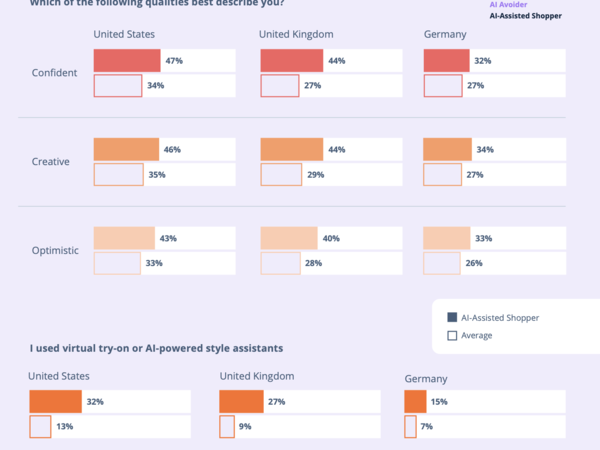
Similar to the AI Enthusiast, this ‘shopper of the future’ fully embraces AI and understands how it can make their lives easier, specifically when making purchases. The AI-Assisted Shopper recognizes the time-saving potential that AI has for their shopping experience. They are not afraid to let AI shopping assistants such as Amazon Rufus or the Zalando Assistant recommend items for them—in fact, they prefer it over having to scroll through product listings themselves. They prioritize convenience and value, making them more likely to use price comparison tools than their AI Enthusiast counterpart. This persona will increase its presence in 2026, making them a vital target group for future-oriented brands.

AI Shoppers

The data behind it


Digital-first and confident

The AI-Assisted Shopper represents a new breed of digital consumer, typically a younger male, Millennial or Gen Z, who eagerly embraces innovation and technology. This group skews politically right and ranges in income level by region—lower in the U.S., average in Germany, and higher in the UK. Defined by above-average confidence, ambition, creativity, and optimism, these shoppers are energized about the future. They view the present as the perfect time to invest in major purchases.

Embracing AI everywhere

Early adoption is a hallmark of this persona. They seek out new features and adapt quickly to evolving shopping trends. Convenience, personalization, and speed matter most: fast delivery, curated recommendations, and seamless shopping experiences are highly valued. These shoppers also show an above-average interest in novelty features like virtual clothing try-ons.

Sources: Personal qualities, Fashion & apparel behaviors

Influenced and socially connected

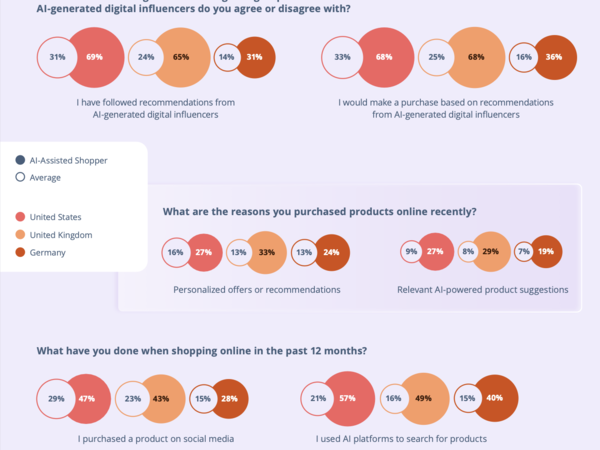
Social and AI-generated influencer content drives nearly half to buy through social media, making these shoppers highly receptive to integrated digital marketing. Social commerce is second nature and platforms that streamline both discovery and purchase have lasting appeal.

Value-driven and analytical

Value-conscious yet excited by new experiences, AI-Assisted Shoppers regularly use AI-powered price comparison tools, loyalty programs, and wish lists to navigate the online marketplace intelligently. They use AI to weigh options to get the best deals, turning to digital resources that simplify decision-making and make each purchase fulfilling. While they enjoy discovering new products and offers, they remain watchful. Shipping costs, negative reviews, and slow delivery continue to be major barriers.

Health-focused and tech-savvy

Curiosity about well-being strongly influences their choices in food and beverages. Reading nutrition labels and switching brands—often based on influencer or AI-driven input—is a common habit. For example, nearly half shop for beauty products online or test AI-powered beauty recommendations, seeking new ways to personalize their routines. Tech-savvy and adaptable, this segment expects every digital shopping experience to offer efficiency, tailored options, and the latest digital innovations.

Sources: Attitudes on AI-influencers, eCommerce behaviors, Drivers for eCommerce

Strategies for success

AI-Assisted Shoppers crave convenience, innovation, and curated experiences. To connect with them, brands must embrace personalization, social integration, and seamless digital journeys:

1. Harness AI personalization

Deliver adaptive recommendations, tailored search, and virtual style or beauty assistants to spark curiosity and create unique value.

2. Engage through social commerce

Blend shopping with entertainment via influencers, interactive platforms, and even AI-generated personalities.

3. Maximize ease and flexibility

Emphasize fast and free shipping, simple returns, transparent pricing, and low-friction onboarding.

4. Sustain excitement with innovation

Highlight new features, gamify loyalty programs, and frame AI as an empowering tool that supports consumer choice and ambition.

Conclusion

As AI continues to reshape the consumer landscape, leading with insight has never been more vital. The trends uncovered in this whitepaper help brands connect authentically, anticipate shifts, and build meaningful relationships with their customers in 2026.

By harnessing a data-driven understanding of today’s diverse AI personas, your brand is ready to go beyond expectations, foster trust, and drive growth in an era defined by both digital innovation and human experience.

If you’re ready to see how these AI personas will shape and respond to the 2026 trends revealed by Statista, don’t miss our complete in-depth report below—the 2026 Consumer Trends Report.


UNLOCK THE FULL REPORT

You've seen the AI chapter. Now get the complete 2026 insights.


Talk to our expert team to receive:

  • The complete Consumer Trends 2026 Report (PDF)
  • 15-minute discussion on how these trends impact your business
  • Overview of Statista's Consumer Insights solutions 

Get the Full Report →

* Required fields

GET STARTED

Ready to elevate your campaigns with trusted consumer insights?


Talk to sales