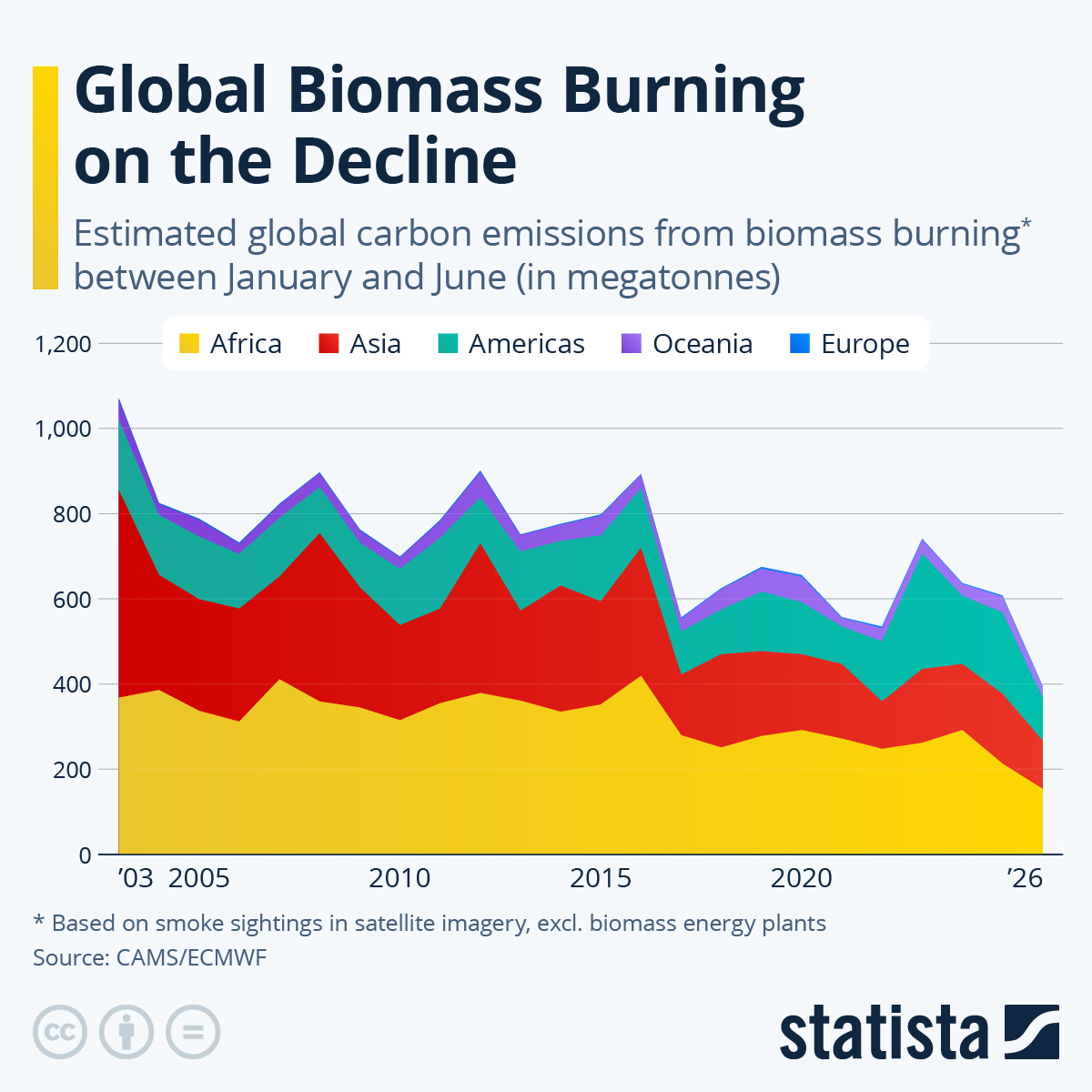
Despite the number of wildfires and their acreages rising around the world, total biomass burned is actually decreasing. This is due to African and Asian countries carrying out fewer controlled burns for agriculture and controlling Savanna fires more.
Data collected by the Copernicus Atmosphere Monitoring Service at the European Centre for Medium-Range Weather Forecasts shows massive declines in carbon emissions due to biomass burning on both continents. Emission shares from Oceania, the Americas and Europe, which are smaller, have remained more stable. The latter continent is battling large wildfires along the French Atlantic coast and in Spain at the moment, but global numbers show how insignificant Europe's contribution to worldwide fire emissions is.
While individual year can show biomass burning peaks due to exceptional fire activity, a general downwards trend in the data persists. Copernius states that large woodland fires burning in Siberia and Canada at the moment could still turn the record for 2026 around in the second half of the year, even though this would not per se change the larger trend of biomass fire emissions declining globally.