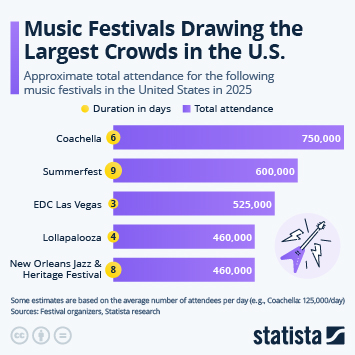
Summer is music festival time and while one major event, Coachella, kicks off the U.S. season in April, Burning Man – starting this Sunday in Nevada – closes it out. The two events might seem like polar opposites in the music festival realm, but have more in common than meets the eye.
Burning Man continues to be an icon of counterculture but attending the festival that relies on visitors to be self-sufficient to a high degree is expensive. The personal income of the average attendee has changed in recent years as the festival has become popular among well-to-do crowds.
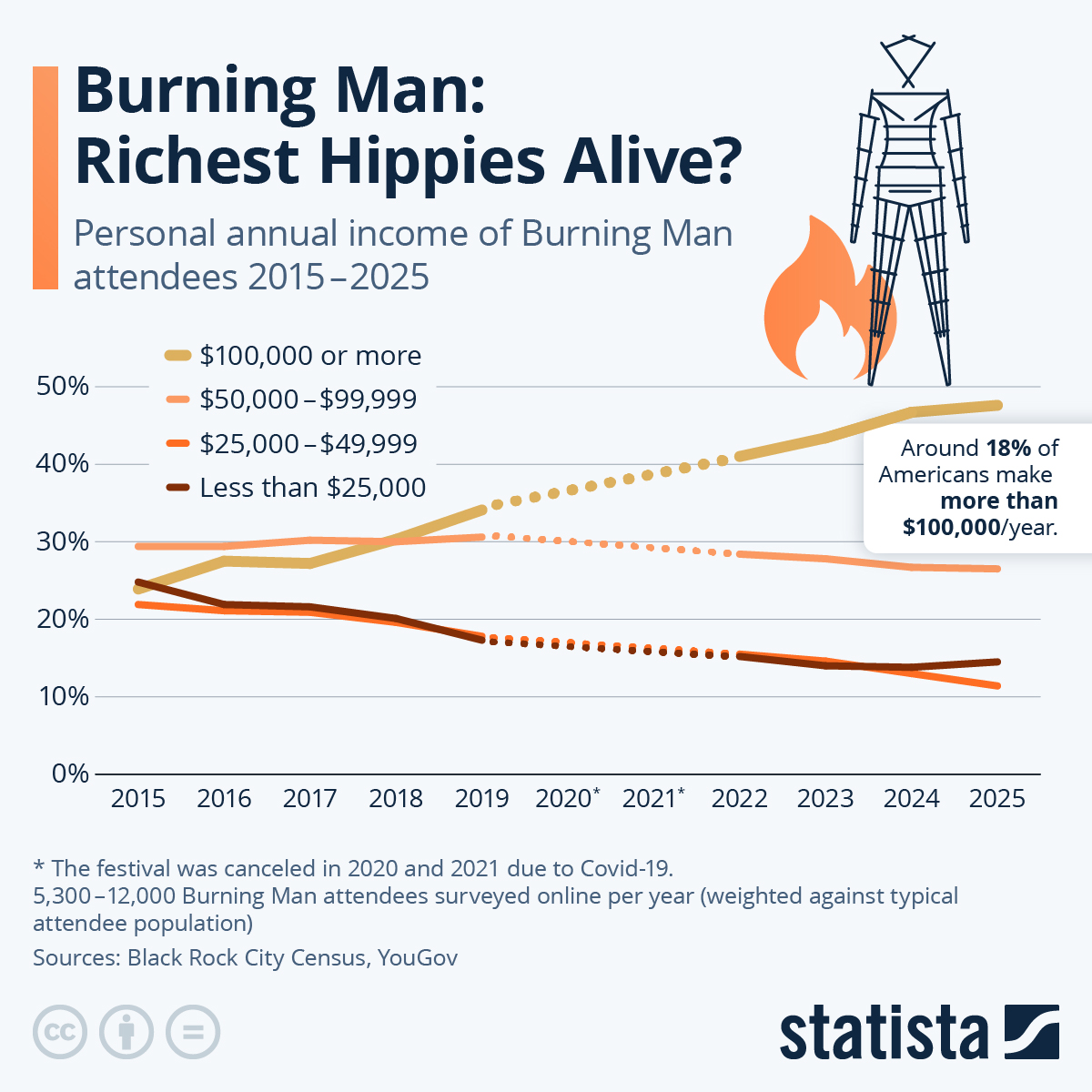
A survey carried out under scientific conditions among Burning Man attendees every year shows how the personal incomes of those heading to Black Rock City have evolved. While in 2015, only close to 24 percent said they made $100,000 or more annually in personal income, this had increased to almost 48 percent by 2025. For comparison, YouGov states that incomes like these are only brought home by around 18 percent of Americans.
Especially the infamous tech bro has been credited with changing the make-up of the desert festival which features music performances and art installations on its spread-out grounds that work on the basis of community organization instead of cash-based services. Marc Zuckerberg's 2012 visit made headlines, but he was hardly a driving force in the burgeoning popularity the festival has experienced among young CEOs and founders. Before the now very obvious shift to luxurious camps and millionaire visitors, the likes of Google founders Sergey Brin and Larry Page as well as Amazon CEO Jeff Bezos were already partaking in Burning Man in the 1990s.
The survey also shows that the number of first-time attendees has remained stable around 25-30 percent over the years and that a reliable 80 percent of attendees say the event's stated philosophy was important or very important to them. More than 60 percent of participants are in their 30s and 40s, with peaks around the 35-42 age range. The event skewing 60 percent male, up to 40 percent Californian and 75 percent white also fits the tech millionaire demographic. At around 25 percent, cost was however still the most cited barrier to visiting the festival again.