As AI is reshaping the (working) world at breakneck speed, workers have no choice but to adapt to the new realities and requirements or risk being left behind. PwC’s Global Workforce Hopes and Fears Survey 2026, for which almost 50,000 workers from 48 countries were interviewed, finds that a gap is already opening up between those embracing AI and new ways of working and those lacking opportunities, motivation or support to acquire new skills.
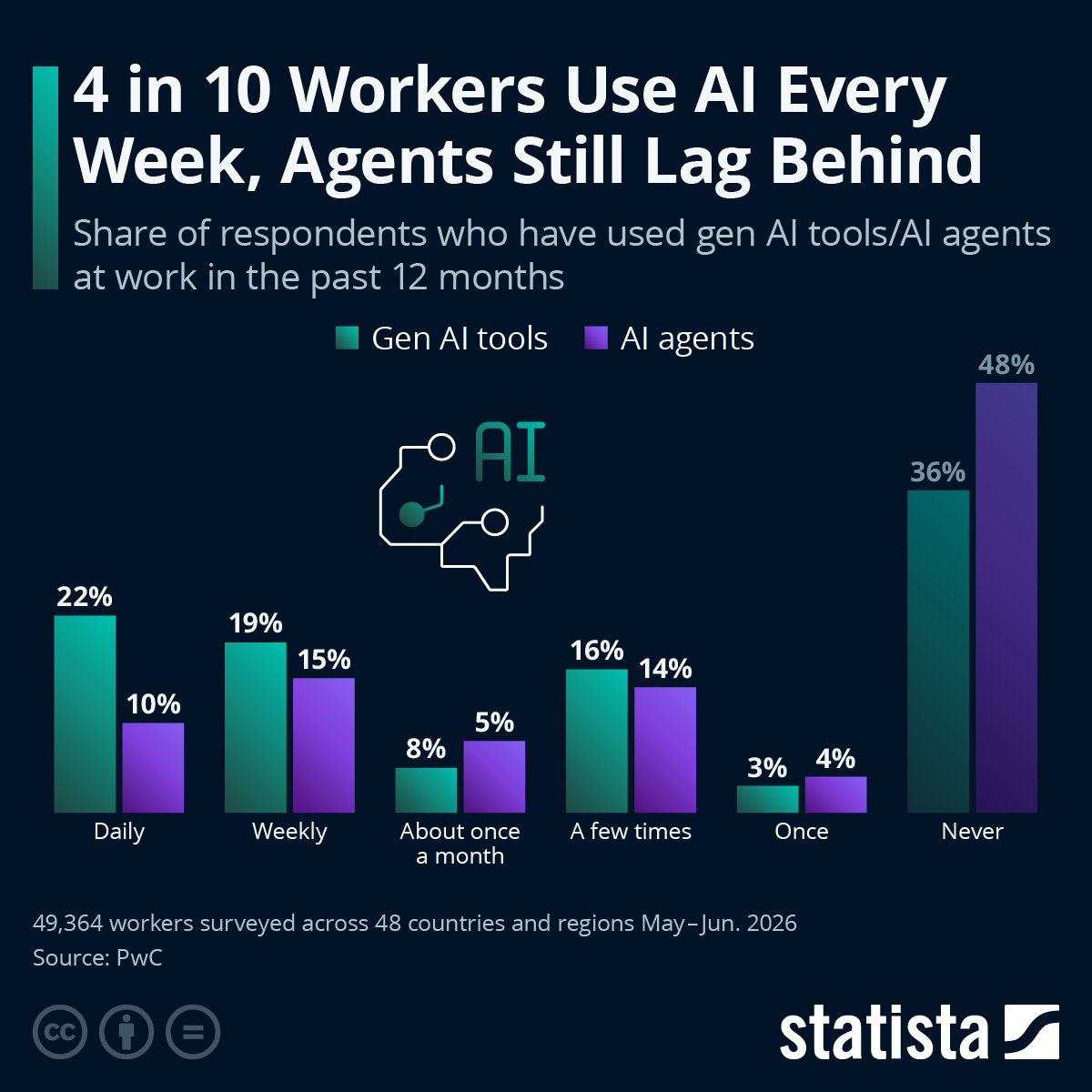
According to the survey, 64 percent of workers reported having used generative AI tools at work in the past 12 months, up 10 percentage points from the previous year. More than one in five workers even said they use AI at work every day now, highlighting the speed at which AI tools have reshaped the working lives of millions of people. At the other end of the spectrum, 36 percent of respondents haven’t used AI tools at work in the past year, and another 19 percent said they only used AI once or a few times. According to PwC, it is this group of workers – the so called “engine room” cohort – that employers should pay attention to, as they represent the majority of the workforce, are responsible for most of the day-to-day work within an organization yet often feel replaceable and shut out of growth opportunities.
The survey also reveals that adoption of AI agents, i.e. tools that can carry out complete tasks autonomously with or without human supervision, still lags behind the use of generative AI tools, with 48 percent of respondents saying they haven’t used an AI agent and two thirds reporting very limited use. Only 10 percent of workers reported daily use of AI agents so far, even though many experts see agentic AI as a key to unlocking AI’s full potential in the workplace. Agents enable workers to automate entire workflows rather than “just” providing answers to their promts. Building and using agents does, however, require more knowledge and skills, which is why their adoption will only grow with adequate training.