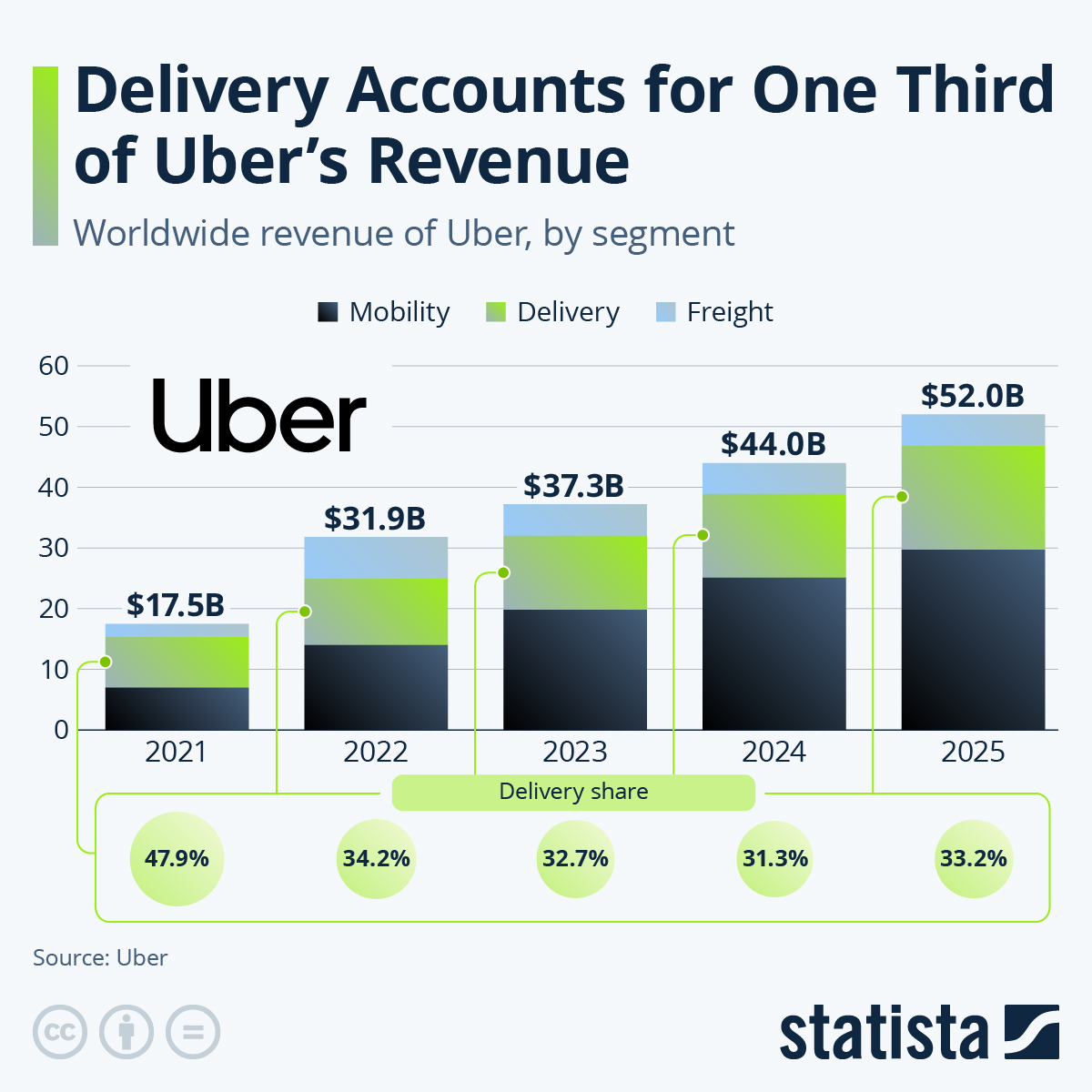
Uber’s global revenue increased from $17.5 billion in 2021 to $52.0 billion in 2025. The largest share of this continues to be generated by passenger transport: the mobility segment reached revenues of $29.7 billion in 2025, while the delivery segment accounted for $17.2 billion, representing 33.2 percent of the company’s total revenue. Freight, including commercial freight transport and logistics, contributed an additional $5.1 billion. Total revenue rose by approximately 18 percent compared to 2024. In the latest quarter reported by Uber Wednesday, revenue rose by just 10 percent year-over-year, but the company cited a change in accounting practices for the shortfall.
Uber's delivery segment encompasses more than just restaurant meals. Delivery also includes orders of groceries and other goods through the Uber Direct delivery service for merchants and restaurants as well as advertising on the Uber Eats platform, which has become a bigger source of revenue for the company recently. Mobility meanwhile covers not only ride-hailing services but, once again, advertising and other activities. Freight, in contrast, is geared toward businesses: Uber connects shippers with freight carriers and provides transport management services.
Despite taking up a smaller share of Uber's revenue today than in 2021, overall delivery revenue has not shrunk. In fact, it has more than doubled over the course of four years, growing from $8.4 billion to $17.2 billion in 2025. However, the mobility segment grew even faster during the same period, expanding from $7.0 billion to $29.7 billion. Additionally, the freight segment saw strong growth, particularly between 2021 and 2022. As a result, delivery’s share of total revenue fell quickly from 47.9 percent in 2021 to 31.3 percent in 2024.
A look at the competition reveals that Uber’s strength varies depending on the business segment and region. In the U.S., Uber is the larger provider for app-based ride-hailing compared to Lyft, while DoorDash leads over Uber Eats in food delivery. In Europe, the landscape varies significantly from country to country. In ride-hailing, Uber competes with players such as Bolt and local services, while in the delivery sector, it faces competition from European market leader Just Eat Takeaway. To consolidate its international standing, Uber just purchased Delivery Hero, a German company with operational business in Asia, Southern Europe, Africa and the Arab Peninsula.