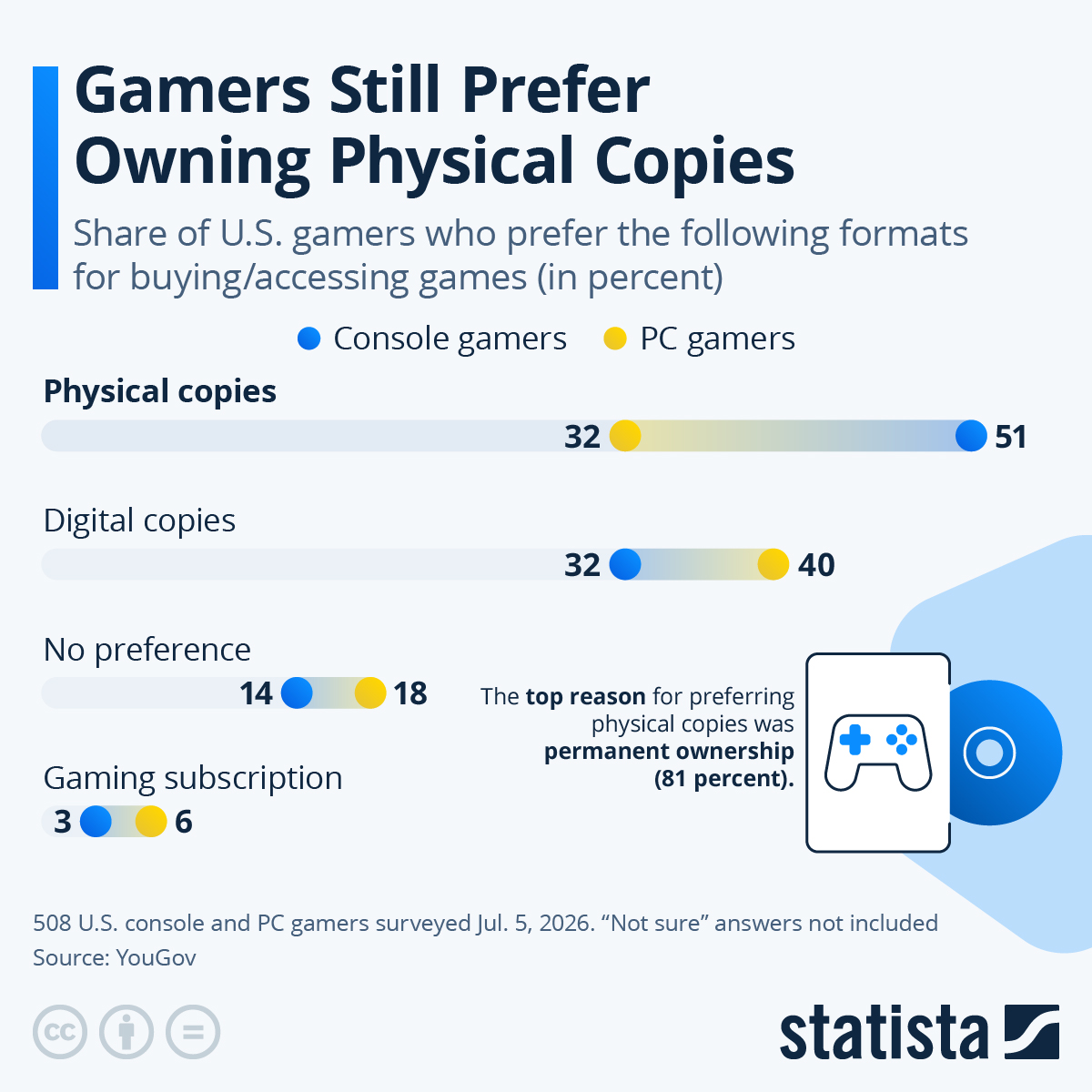
Video games, like many media products, are moving online quickly. Makers of the PlayStation, Sony, announced in July that they would cease video game disc production in early 2028, while popular game Grand Theft Auto VI, out in November on PlayStation and Xbox, already does not have any physical discs for purchase. At the same time, U.S. gamers, especially those using consoles, still prefer to hold the newest game of their preferred franchise in their own two hands as a physical copy. In a YouGov survey from July, 51 percent of console gamers and 32 percent of PC gamers in the U.S. said they preferred physical copies, compared to 32 percent and 40 percent, respectively, who said they liked digital copies better. A similar number of console and PC gamers participated in the survey.
As with movies, series and music, the potential impermanence online game availability is making consumers think twice about digital purchases. 81 percent of those who said they preferred physical copies said they did so because of the permanence of physical ownership, while 70 percent said they were worried about digital purchases becoming unavailable.
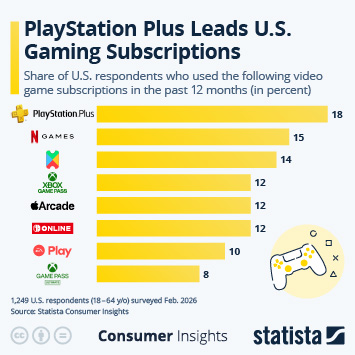
Even if a game is downloaded after an online purchase, many need an online log-in or check-in to function, sometimes in addition to needing a permanent internet connection. 56 percent of those who prefer physical games mentioned not depending on an internet connection as an advantage, while the ability to buy pre-owned games (65 percent) was another often-cited factor. Subscriptions, offering the lowest level of permanence, were the least popular way to access games, at 3 percent of console gamers and 6 percent of PC gamers saying they like them best. Data from Statista shows that these are more popular among casual and mobile gamers.
Those who said digital copies were preferable said they liked the convenience of having the game available right away (54 percent), having easy accessibility on several devices (41 percent), seeing discounts in one place (40 percent) and often getting a cheaper price in general (40 percent).