While the debate surrounding possible consequences of the rapid development of AI has recently taken a dramatic turn – with several AI leaders and industry insiders pointing out the risk of extinction-level catastrophe – ordinary people are still preoccupied with more mundane AI concerns such as job losses.
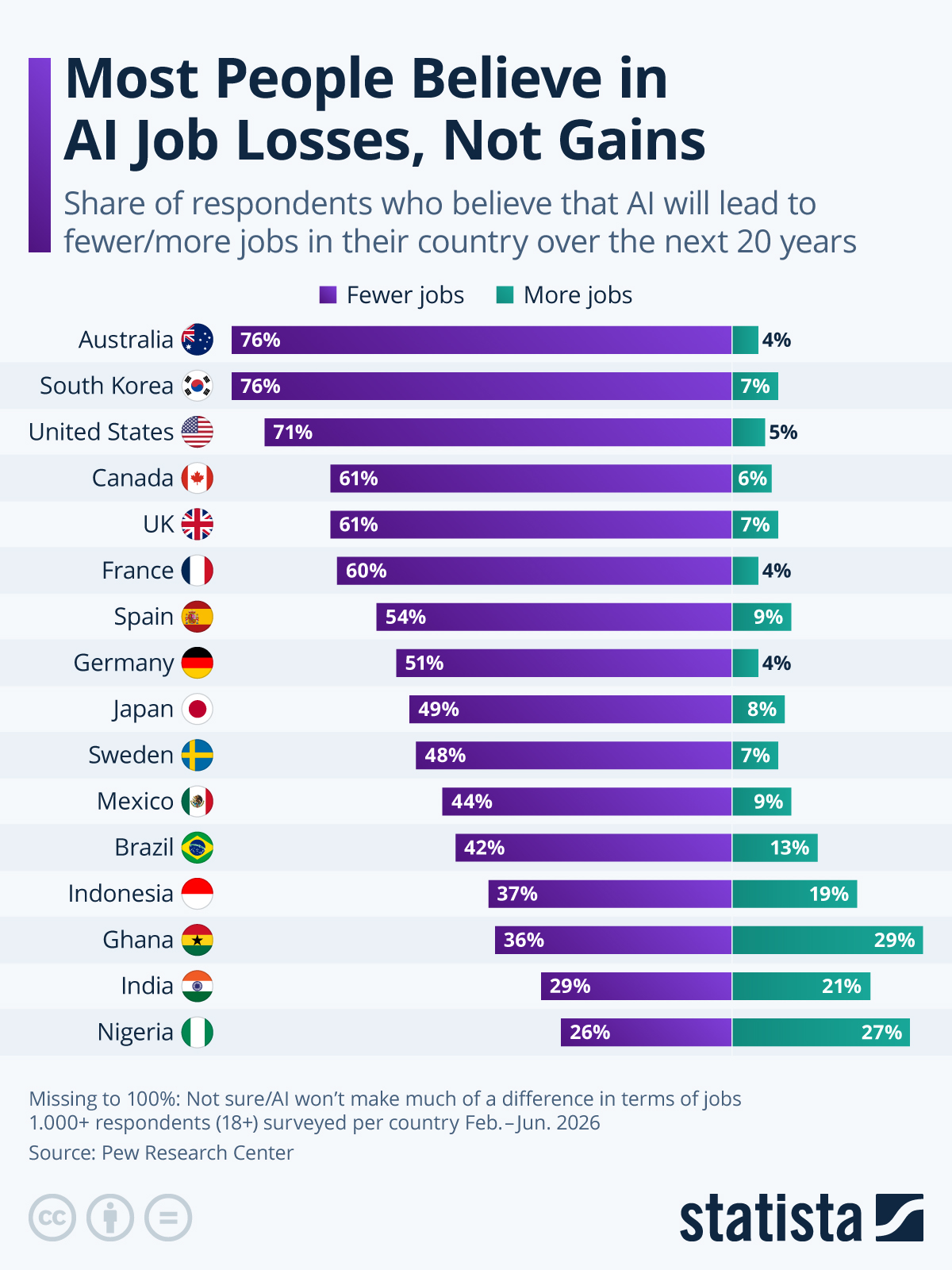
According to an international survey carried out by the Pew Research Center this year, people in 34 of 37 countries surveyed are more likely to believe that AI will result in fewer rather than more jobs over the next two decades. These concerns are particularly widespread in high-income countries, with more than 7 in 10 respondents expecting AI-related job losses in countries like Australia, South Korea and the United States. Interestingly, there appears to be a correlation between AI awareness and concerns. In around half the country surveyed, people who said that they heard or read a lot about AI were more likely to expect AI-related job losses.
In many countries, expectations of job losses were also more common among younger people, who are widely seen as most vulnerable to AI job displacement. If AI takes over many of the tasks that typically used to be reserved for entry-level workers, it dismantles young workers’ pathways to acquiring skills and experience, leaving them even less equipped to find a place in the rapidly evolving job market.
Over the next few years, policy makers are faced with the difficult task of creating a framework that helps workers, businesses and economies adapt to the new realities. Without regulation and equitable access to education and reskilling initiatives, AI could erode rather than elevate the middle class, with possible consequences ranging from mass unemployment to the collapse of social protection systems.