With two months left to go until the midterm elections, the U.S. remains a deeply divided country. Approval ratings of the presidency and of Congress (all in the hands of Republicans) are both near all-time lows amid high inflation and the unpopular trade and actual wars of the current administration. President Donald Trump in recent interviews has repeatedly blamed Congressional Republicans for the expected midterm lull, saying they were more unpopular than him.
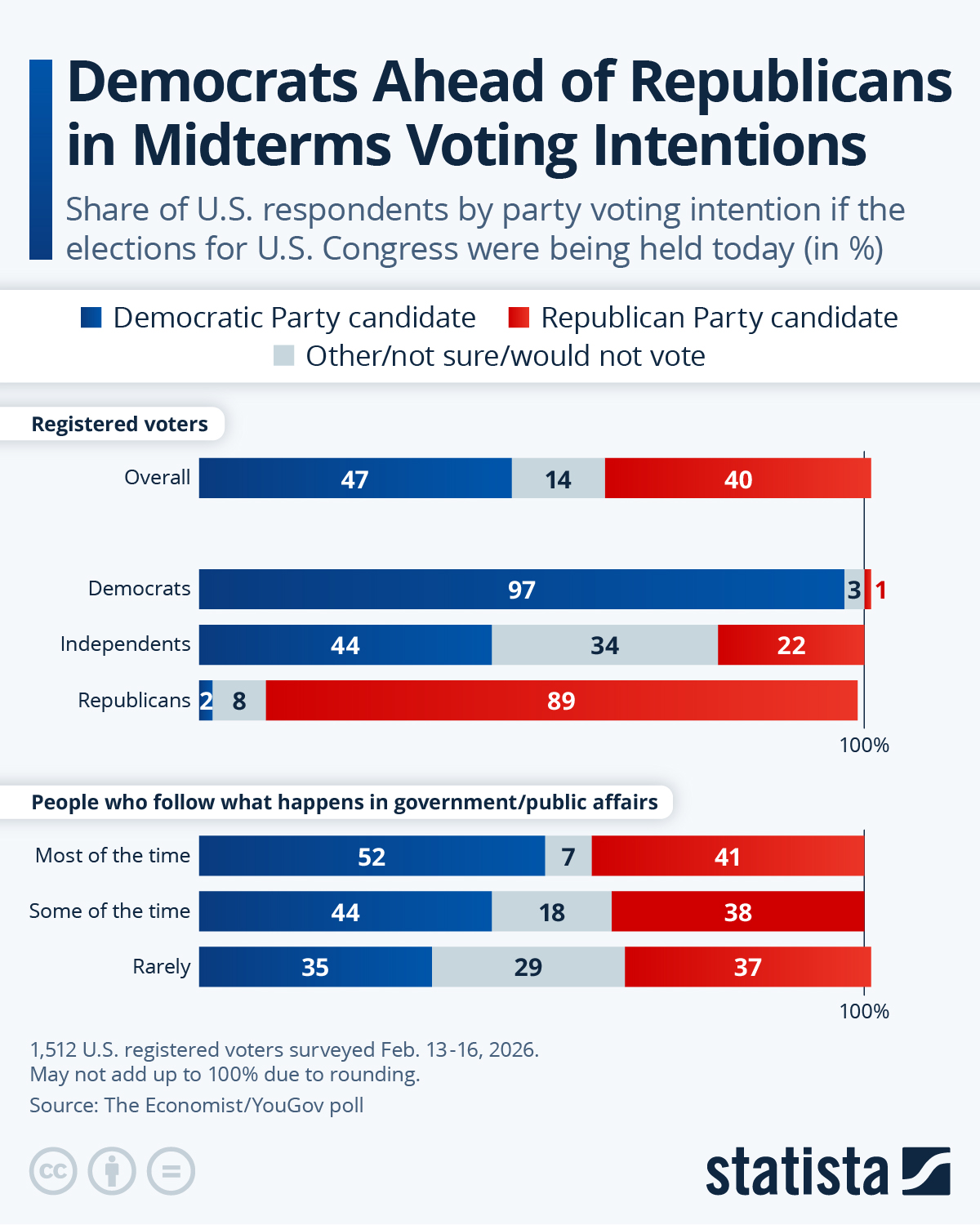
According to data aggregated and weighted by Silver Bulletin, Democrats currently lead voting intentions for the midterms by almost 7 percentage points, with 48 percent of those surveyed saying they would vote for a Democratic candidate if the election took place today. Democrats have also been able to widen their lead – from fewer than 3 percentage points one year ago to 6.6 percentage points most recently.
Despite Democrats' lead in the general vote, the projected distribution of House seats is still a toss-up with no party in the lead. While this is a likely outcome in the U.S. voting system that does not adjust House seats for the general vote, it is made more severe by past and present gerrymandering efforts – carried out by both parties but generally applied more successfully by Republicans. Between the 2024 and 2026 elections, litigation tied to the Voting Rights Act as well as unprecedented voluntary redistricting changed the U.S. electoral map once again, favoring Republicans to a higher degree even though Democrats pushed back with voluntary efforts also.
Another factor disadvantages Republicans, however. Swing voters, which switch between parties, have historically abandoned the ruling party in the midterms, favoring the party not currently in power. Midterm polling in the lead up to November shows as much. In line with typical patterns, the general voting intentions lead flipped from Republicans to Democrats just a few months after Donald Trump's second inauguration in January of 2025.