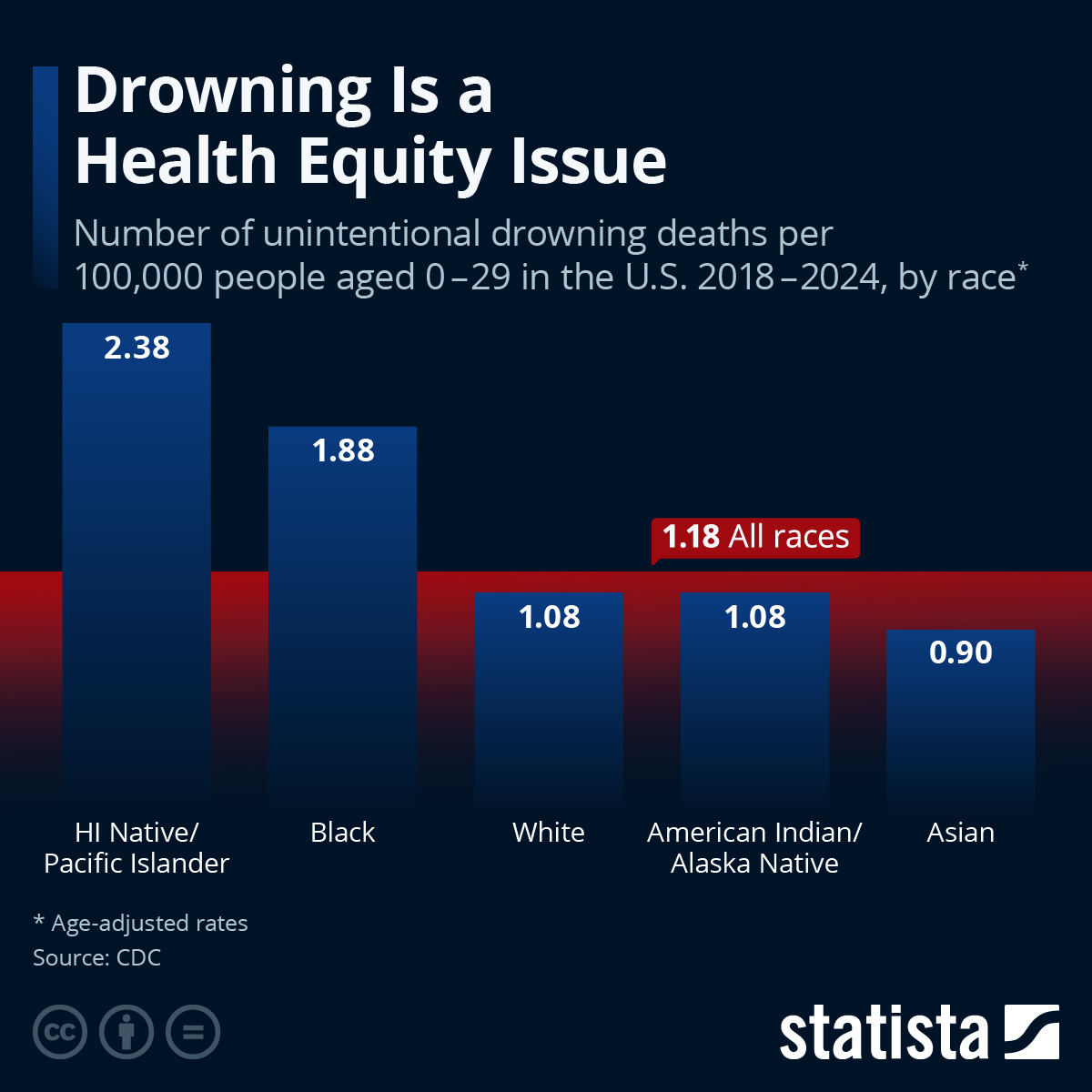
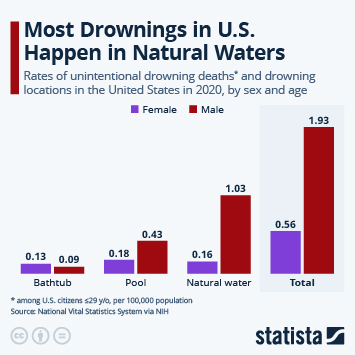
Drowning in the United States is not only a public health issue – it is also a health equity issue. CDC data shows clear disparities across racial and ethnic groups, particularly among younger populations. For Americans aged 0 to 29, Native Hawaiians and Pacific Islanders have the highest drowning death rates, followed by Black Americans, while rates are significantly lower among white and Asian populations.
Research suggests that these disparities are driven by a mix of structural and environmental factors. Access to swimming lessons and water safety education plays a key role, with studies showing that Black children, for example, are significantly more likely to be described as poor swimmer by their parents. At the same time, exposure to different types of water environments matters: some communities are more likely to encounter higher-risk settings such as open water, where hazards like currents and waves increase the likelihood of fatal incidents. Hawaii is a prominent example of such environmental factors, as the island state, with its many water hazards, has the second highest drowning rate in the U.S., trailing only Alaska.
While environmental factors cannot be changed, access to education and swimming lessons can be improved. Closing existing gaps through equitable access to swimming education and targeted prevention campaigns remains a key challenge in reducing drowning deaths across all groups.