The U.S. government last week banned the import of new advanced robotic devices manufactured abroad. The move is mostly aimed at China, which is like the U.S. a leader in the field. The country accused the U.S. of protectionism and announced countermeasures. While the ban applies to state-of-the-art humanoid robots, the Federal Communications Commission on the weekend clarified that it also extends to the import of robot vacuum models and similar machines not yet sold in the United States. The FCC cited national security concerns for its decision, as foreign actors could gain access to the devices and their sensitive data.
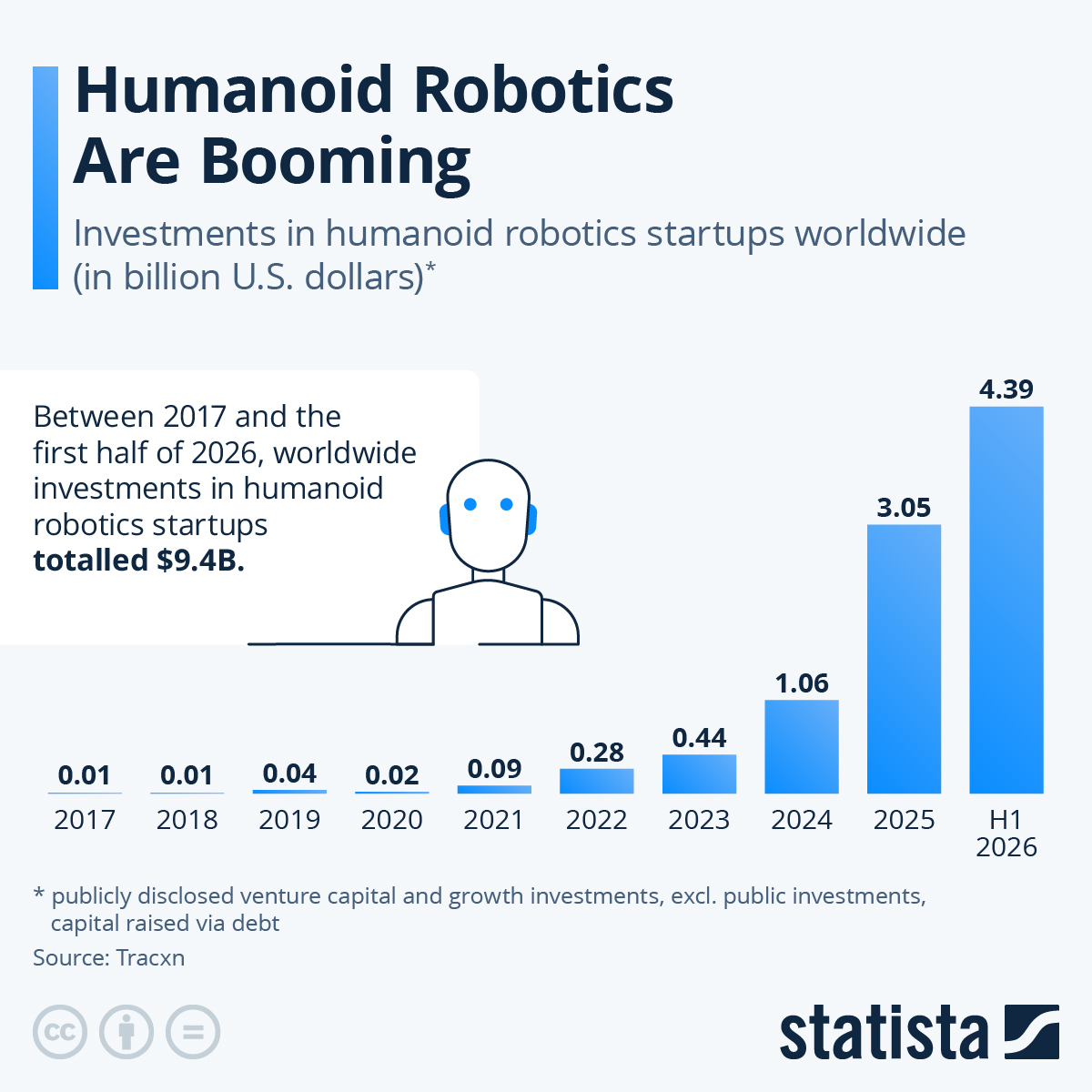
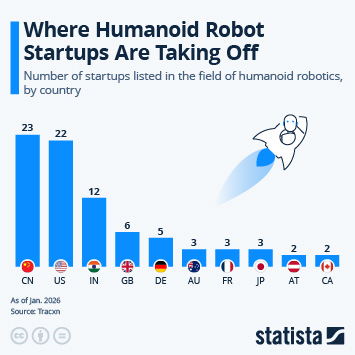
The market for humanoid robots has recently experienced significant growth, as seen in investments into relevant startups globally. In the first half of 2026 alone, $4.39 billion was invested in humanoid robotics startups around the world – meaning this year's spending will surpass that of the last decade combined. This is based on data from Tracxn, a market and corporate data platform.
Humanoid robots are modeled after the human body in terms of form and mobility. Typically featuring a head, torso, two arms, and two legs, they are designed to perform a wide range of tasks within human-centric environments. While their movements are generally slower than those of humans, they offer greater flexibility, can move freely and are unaffected by heavy lifting, allowing them to take on physically demanding, monotonous or dangerous work.
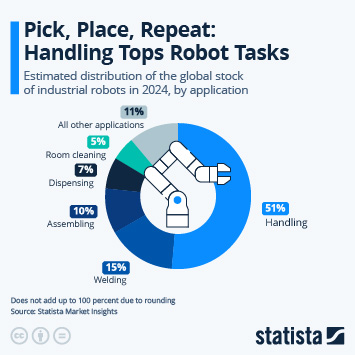
Industrial robots, in contrast, are typically specialized machines designed for a clearly defined task in an industrial setting – such as welding, painting or stacking pallets on a factory line. They are usually fixed in place, operating behind safety barriers.
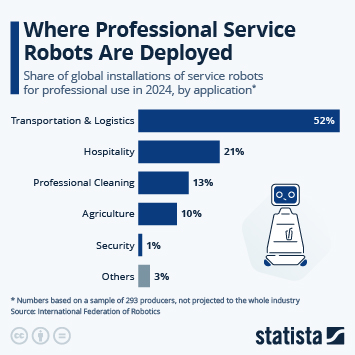
Lastly, service robots are designed to perform services for people – such as cleaning, transporting, serving, providing information or offering assistance in healthcare and medical settings. They generally operate in environments directly used by humans (homes, hotels, hospitals, restaurants), interact with users and must therefore be comparatively safe to operate and offer at least some variety of tasks. While humanoid robots can also perform service tasks, they possess a distinctly human-like form and movement capabilities, which is not necessarily the case with service robots.