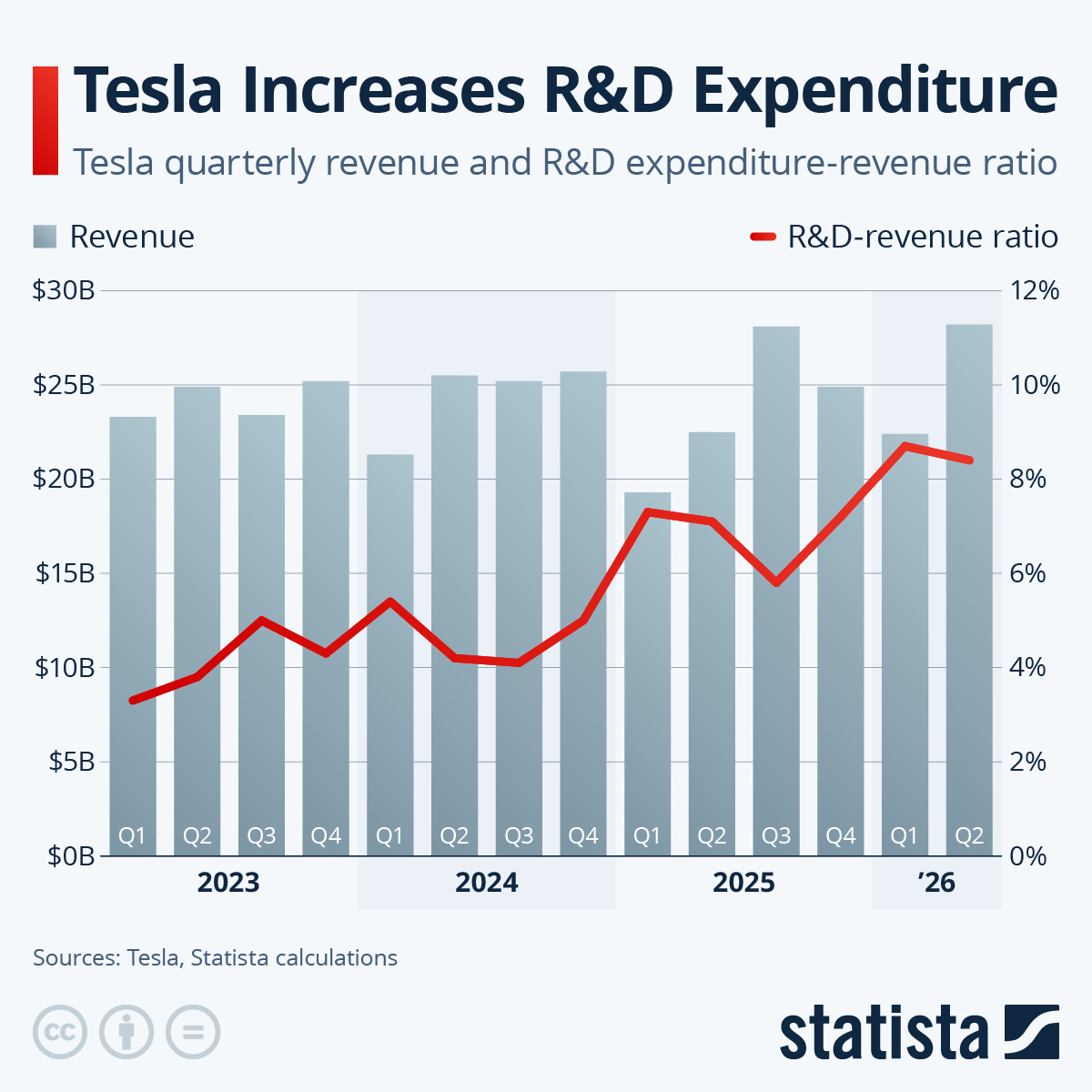
Tesla’s research and development spending is rising significantly faster than its revenue. In the first quarter of 2026, the company's R&D-to-revenue ratio reached a new high of 8.7 percent, up from 3.3 percent in early 2023. By the second quarter of 2026, the ratio had dipped, if only slightly, to 8.4 percent. The company reported its financial results for the past quarter yesterday, also saying that it was pushing back the release of its full self-driving mode to Q2 of 2027 and that it would come available in certain areas only.
While revenue fluctuated between $19.3 billion and $28.1 billion per quarter between 2023 and 2026 to-date, absolute R&D expenditure has also grown continuously, climbing from $771 million in the first quarter of 2023 to almost $2.4 billion in the second quarter of 2026. The ratio has seen a marked increase since 2025, repeatedly exceeding the seven percent mark, a development pointing toward a strategic shift inside the company.
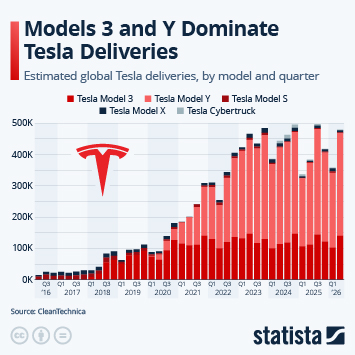
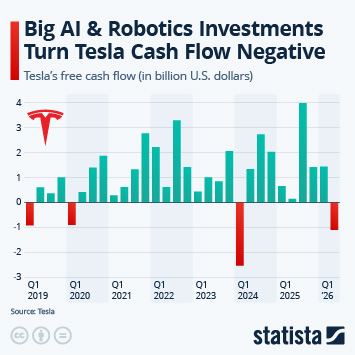
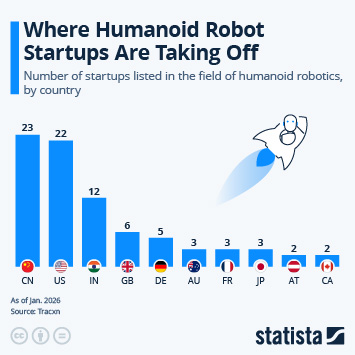
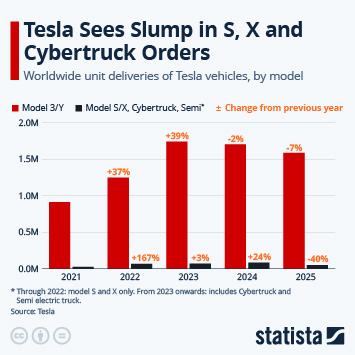
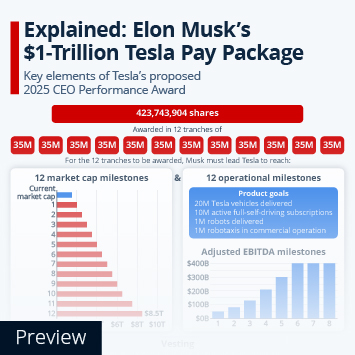
This rising share of R&D spending suggests that Tesla is investing more heavily in future technologies. Beyond autonomous taxis and battery research, the company is also focusing on humanoid robots, with plans for the mass production of its Optimus model. While a consistently higher R&D ratio may weigh on short-term profitability, it could strengthen the company’s competitive position in the long term. Some critics, however, caution that Tesla has not focused enough on new mass market models in its core car business, despite its main sellers, the Model 3 and the Model Y, still selling well even after several years on the market.