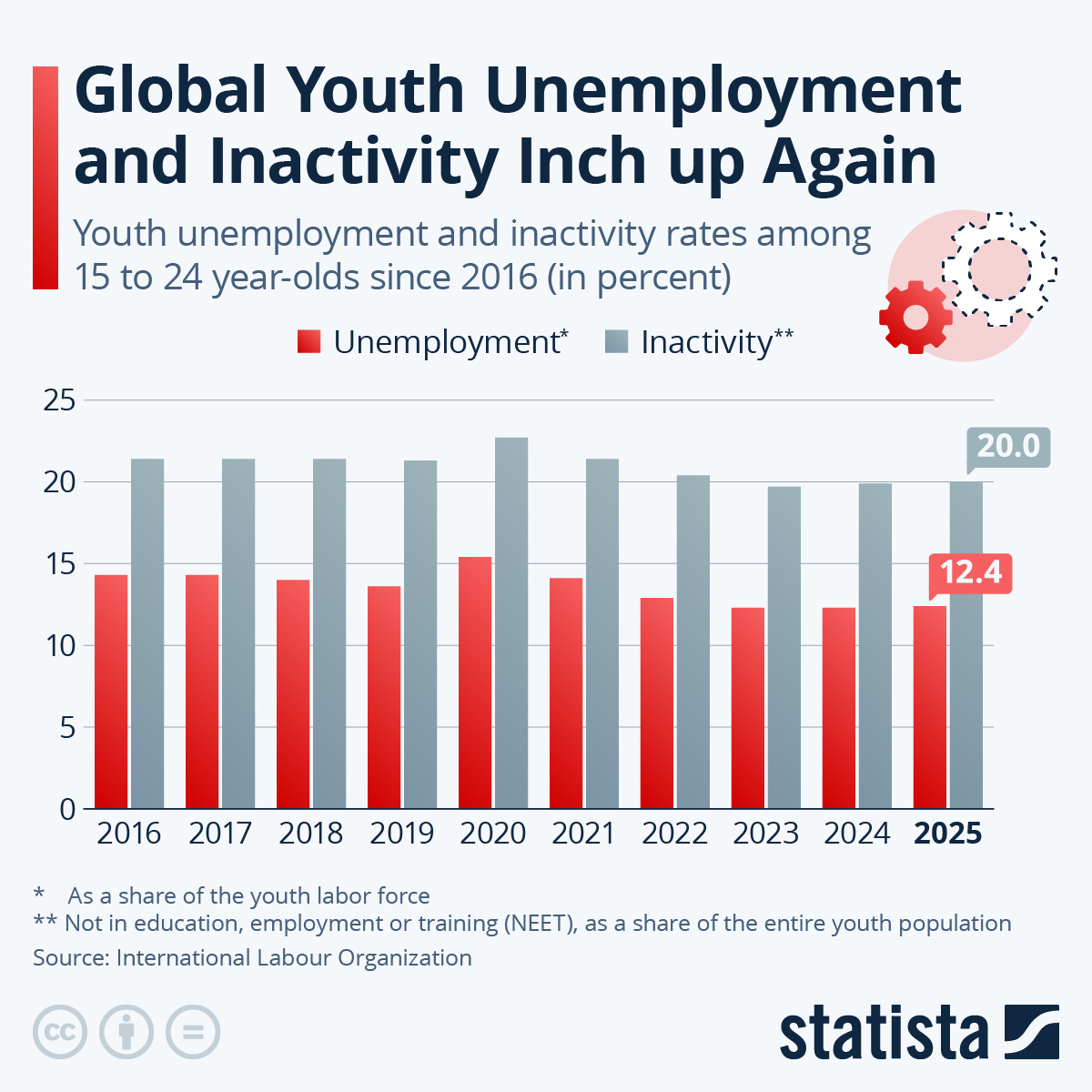
For two years in a row, global unemployment and inactivity among youths aged 15 to 24 has inched up again across world regions. As seen in data by the International Labor Organization, the coronavirus pandemic caused these rates to go up in 2020, but the situation improved again gradually, in 2022 and 2023 falling below pre-pandemic levels. Since then, rates have been on a slow upswing once more, reaching 12.4 percent of youths in the labor force who are unemployed and 20 percent of youths overall who are either unemployed or not engaging in any activity like education, training, employment or looking for work.
According to the recently released ILO report Global Employment Trends for Youth 2026, progress made in the area of youth employment post-Covid has come to an "abrupt halt" as uncertainty and fragility have taken over global economies, GDP growth has remained subdued and inflation has been high. The report also points out that there has not only been a deterioration in the quantity, but also the quality of jobs for youths globally, meaning that many are underemployed or work jobs that don't match their qualifications. Especially the group of NEETs (who are neither in employment, education or training) is made up of a high number of women and girls, who tend to focus on housework and family care responsibilities more often.
12.4 percent unemployed young people between the ages of 15 and 24 equal 67 million individuals worldwide, while the NEET rate of 20 percent translates to 257 million youths. Unemployment rates were higher among young men, while NEET status was more widespread among young women.