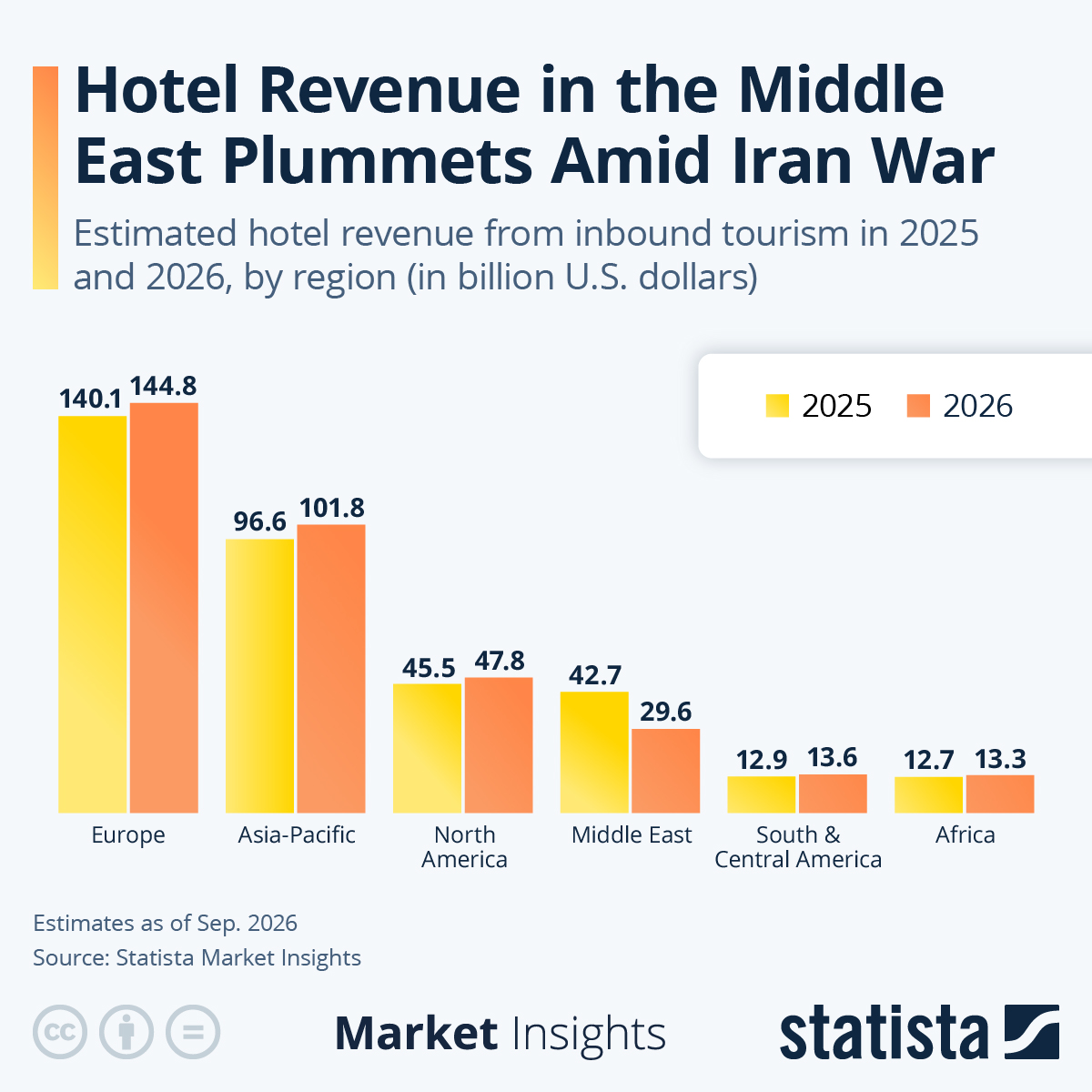
International tourism grew modestly in the first half of 2026, as most world regions saw a low single-digit increase in international tourist arrivals compared to the same period of last year. According to the UNWTO’s latest World Tourism Barometer, an estimated 690 million tourists traveled across borders between January and June, marking a slight increase over the previous year. While tourism in most regions proved quite resilient in the face of high oil prices and broader inflationary pressures, the Middle East saw visitor numbers plummet due to the Iran war. According to UN Tourism, international arrivals in the Middle East dropped 22 percent in the first half of the year, as the entire region felt the impact of the conflict.
Analysts from Statista Market Insights expect hotel revenue from international guests to plummet 31 percent this year, with Iran, Lebanon and Israel – all directly affected by the war – seeing even steeper declines. As our chart shows, the region stands out in an otherwise resilient tourism sector, which is expected to see minimal growth, undoubtedly dampened by geopolitical tensions, price pressures and widespread economic uncertainty. “The latest data shows a sector absorbing real pressure and finding a way forward,” UN Tourism Secretary-General Shaikha Al Nuwais said. “The Middle East situation has touched destinations far beyond the region itself and serves as a clear reminder that, in such a connected world, resilience needs to be built everywhere and not just when a crisis begins.” Reflecting the latest market dynamics, Statista now expects global hotel revenue from international travelers to grow just 0.3 percent this year, down from 3.2 percent growth in 2025 and 11 percent growth the year before that.