According to advance estimates from the U.S. Census Bureau, U.S. retail and food services sales, which include spending at stores, online and in restaurants, amounted to $773.9 billion in August, up 1.2 percent from the previous month and 6.0 percent from August 2025. Through the first eight months months of 2026, retail sales increased 5.2 percent compared to the same period of last year, indicating that consumer spending – the largest component of GDP – has remained remarkably robust despite the uptick in inflation, mostly related to the war in Iran.
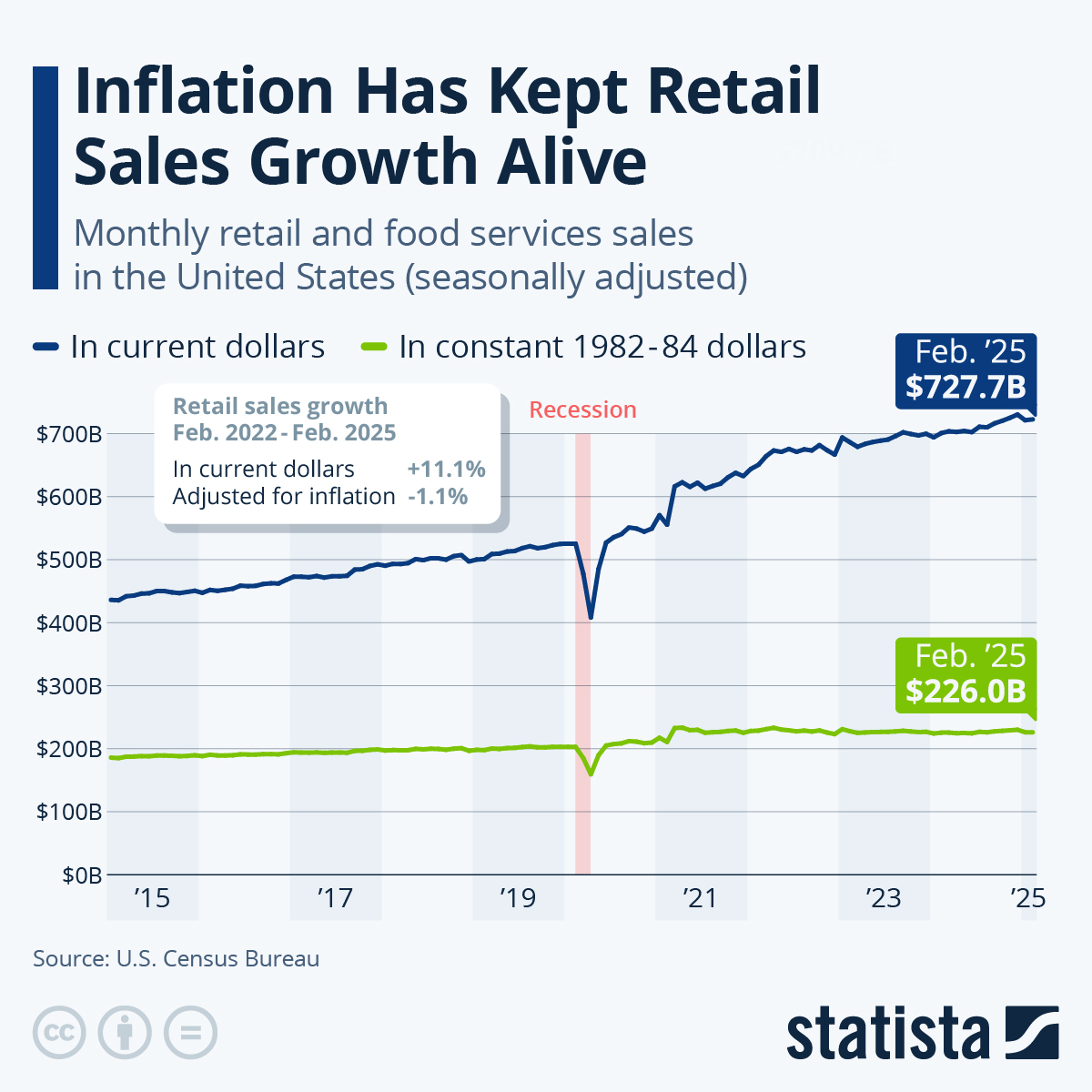
Speaking of inflation, retail sales, which are expressed in nominal terms, grew 1.2 percent in August while consumer prices increased 0.4 percent. In real terms, i.e. adjusted for inflation, retail sales still increased by 0.8 percent, meaning that consumers were actually buying more, even at higher prices. In terms of year-over-year growth, retail sales grew 6.0 percent, while consumer prices climbed 3.4 percent. That leaves 2.6 percent in "real" spending growth because retail sales outpaced inflation over the past 12 months.
The same cannot be said when looking back further. As our chart shows, real retail sales have barely gone up since 2021, while nominal sales have surged. Most of the increase in retail sales can be attributed to price increases, meaning that Americans are paying a lot more for roughly the same amount of goods. From a positive perspective, that means that Americans haven’t really cut back on their purchases despite the financial pain that inflation has inflicted on many households. From a more negative viewpoint, it means that Americans are just holding on to their living standard, while spending a lot more to do so.