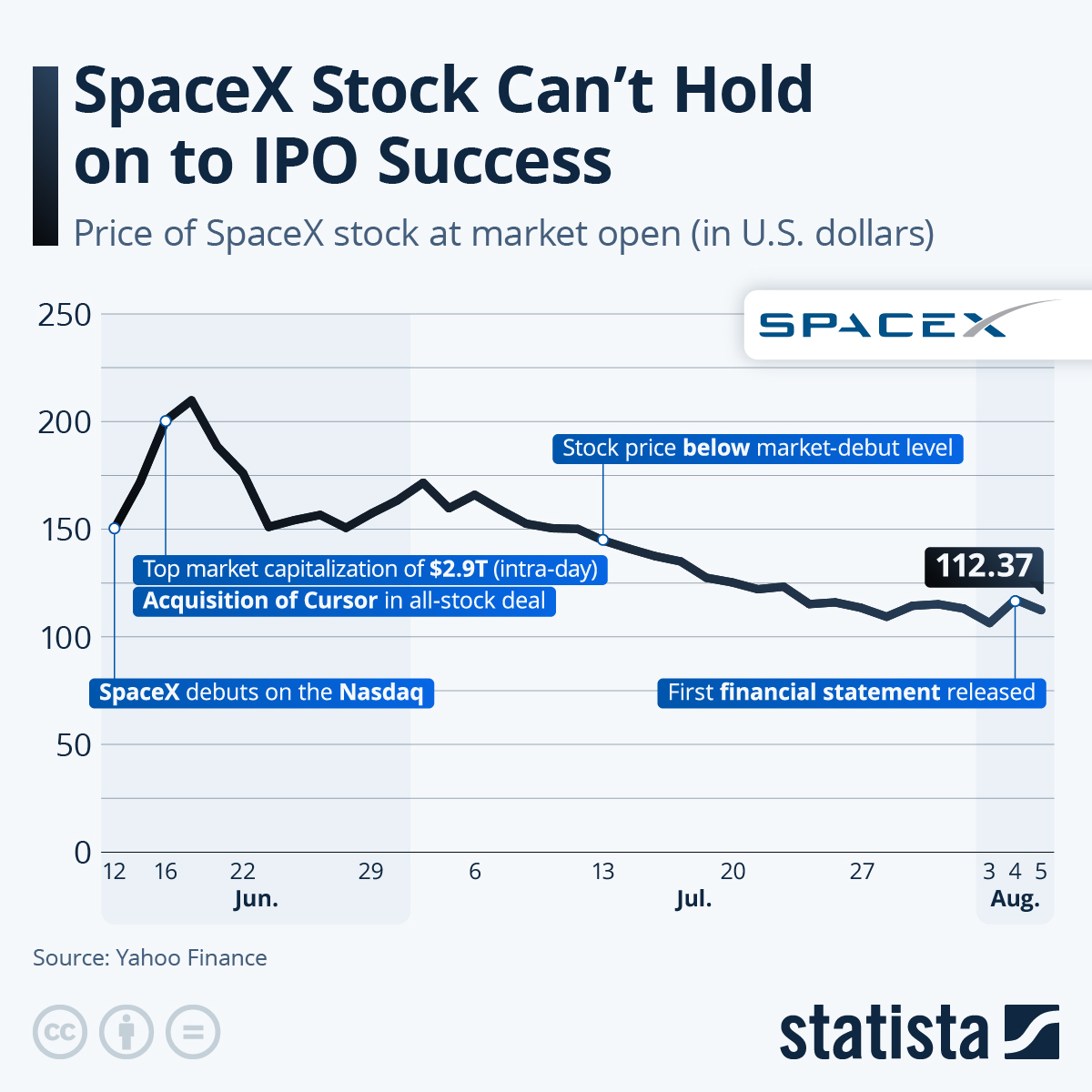
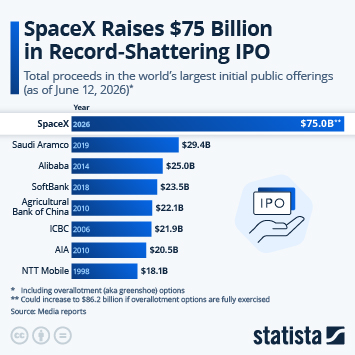
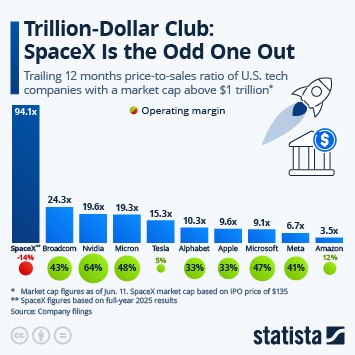
SpaceX stocks debuted on the Nasdaq on June 12 in the biggest IPO of all time and climbed to a valuation of $2.9 trillion momentarily on June 16, surpassing the market caps of Amazon and Microsoft for a moment and making Elon Musk the world's first trillionaire for a hot second.
However, reality has since set in and SpaceX stock as of market open on August 5 had lost 25 percent of its initial value of $150, while being 46 percent below its highest open price. A first shock came when SpaceX, also on June 16, announced it was acquiring AI tool Cursor in an all-stock deal, diluting existing shares for stockholders due to the issuance of new shares.
On August 4, the company released its first financial statement, upon which stocks dropped again upon market open. Investors were taken aback by large AI capital expenditures disclosed in the filing, fearing the company was spending too much money.
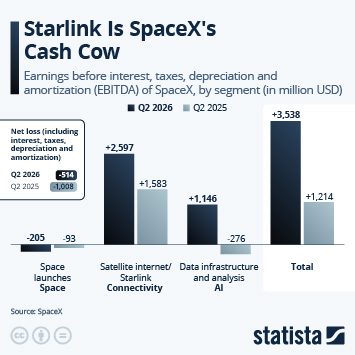
The release showed the EBITDA of SpaceX's satellite internet/Starlink and the AI segments as positive but that of the spaceflight segment as negative. Despite a positive EBITDA overall, SpaceX still posted a net loss when taking into account interest, taxes, depreciation and amortization. High depreciations took a bite out of earnings as former investments in rocket development, satellite fleets and infrastructure are now being taken into account.
On Thursday, the next event is already coming up for SpaceX's stock: Almost 1 billion shares currently held by employees and early investors can be sold from this date forward. As SpaceX held its IPO with an unusual small share of the company available as stock, Thursday's end of the so-called lock-up period means that scarcity, also a driver of high stock prices, is lowered.