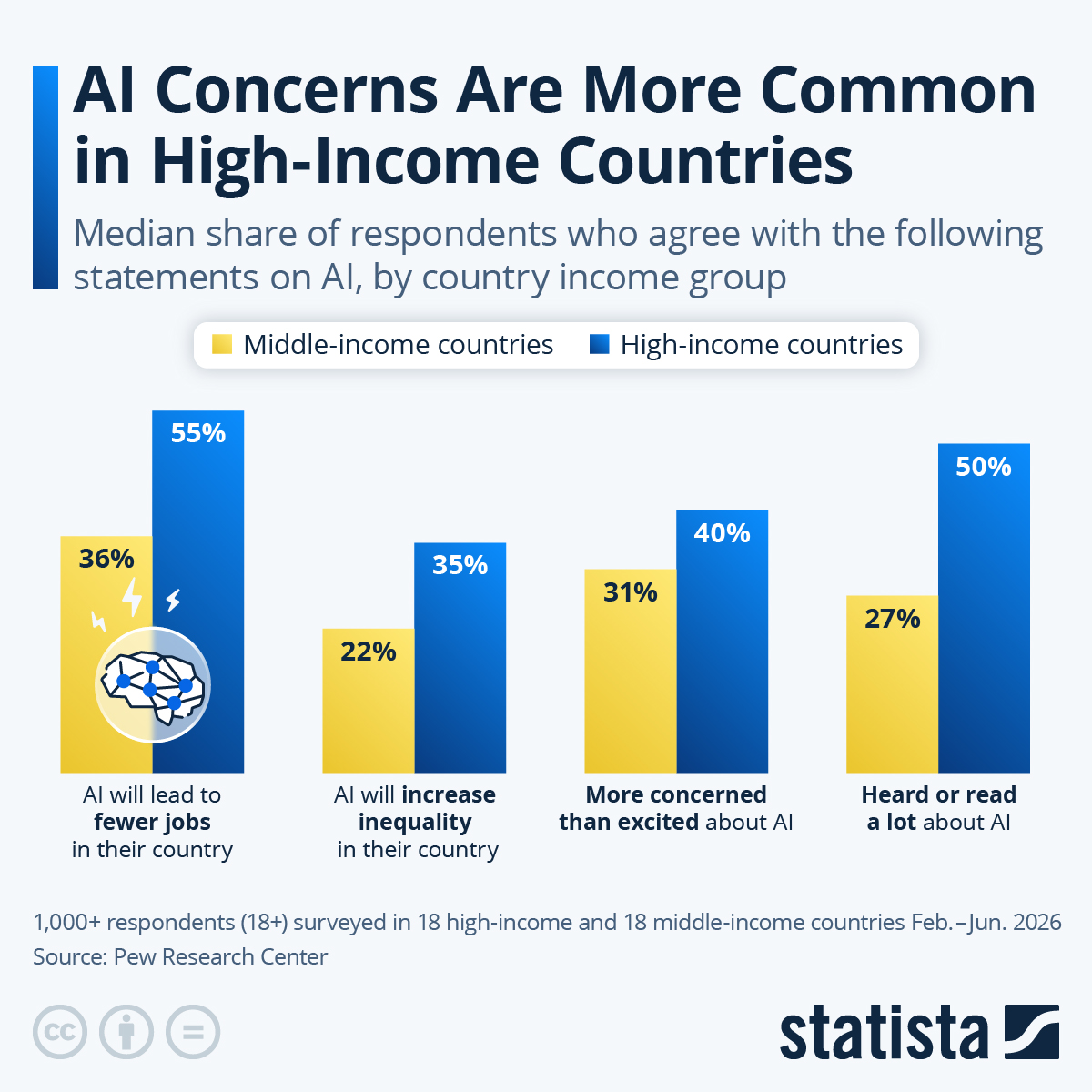
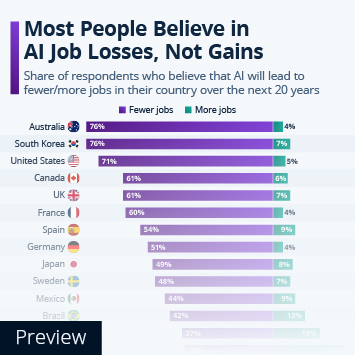
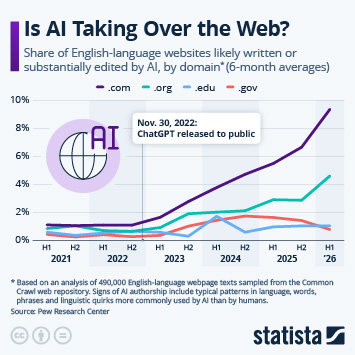
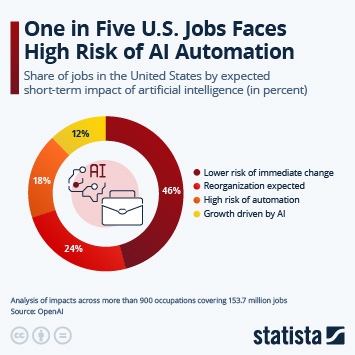
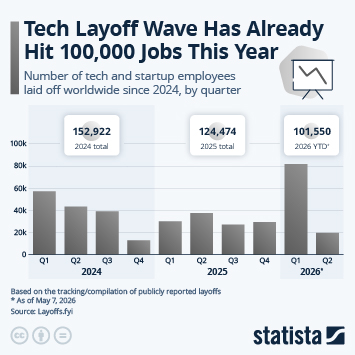
Concerns about job losses and rising inequality related to growing AI adoption are particularly widespread in high-income countries where AI awareness is also high. That’s the result of a 36-country survey conducted by the Pew Research Center. A median of 55 percent of adults across 18 high-income countries expect AI to lead to fewer jobs over the next 20 years, compared to 36 percent in 18 middle-income countries. The same pattern can be observed for inequality, with a median of 35 percent of respondents in high-income countries expecting the gap between the rich and the poor to increase, versus 22 percent of respondents in middle-income countries.
At the same time, the share of respondents who heard or read a lot about AI is almost twice as high in high-income countries, at least partly explaining the higher levels of concern in high-income countries. In terms of AI’s impact on jobs in their country, 34 percent of respondents in middle-income countries said they weren’t sure, versus 22 percent of respondents in better-informed high-income countries. Considering that a median of 28 percent of respondents in middle-income countries say that they have heard nothing at all about AI, it’s understandable that there’s a lot of uncertainty about the possible impact of the new technology.