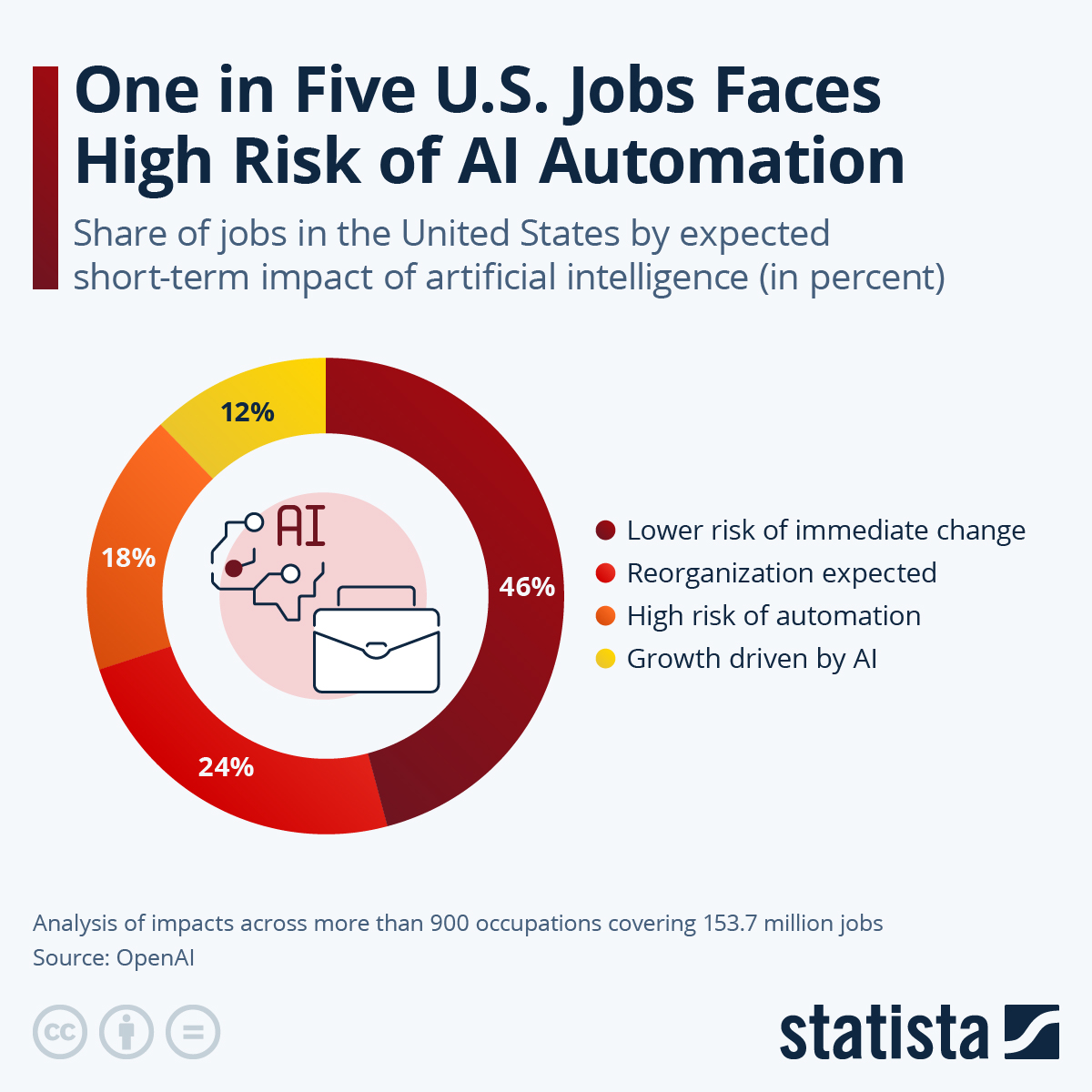
As concerns about AI-driven job losses grow, new research sheds light on how artificial intelligence could impact the U.S. labor market in the short term. According to an OpenAI framework analyzing how AI affects different occupations, published last April, nearly half of all jobs (46 percent) are expected to see little immediate change, while around 24 percent are likely to be reorganized as tasks shift rather than disappear.
As our chart shows, a smaller but still significant share of roles face more direct disruption, with roughly one in five jobs (18 percent) categorized as being at high risk of automation. At the same time, only about 12 percent of roles could actually grow with AI, as lower costs and increased productivity expand demand for certain services.
The findings suggest that exposure to AI does not automatically translate into job losses. Instead, outcomes depend on factors such as how essential human input remains and whether increased demand for a product or service is sufficient to offset lower labor demand from efficiency gains. In many cases, AI is therefore likely to reshape tasks and workflows rather than eliminate entire occupations. While other recent studies have pointed to a higher risk for job displacement, OpenAI’s analysis suggests a more nuanced picture of how the labor market may evolve.