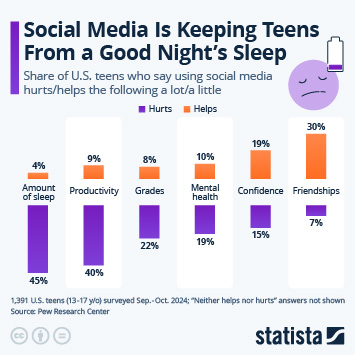
Teenage mental health in the United States continues to show signs of improvement after having fallen to multi-decade lows during the Covid-19 pandemic. According to new CDC data published this week, teenagers surveyed at high schools across the United States last year showed notable improvements in several key measures, including persistent and debilitating feelings of sadness and hopelessness as well as serious suicide thoughts.
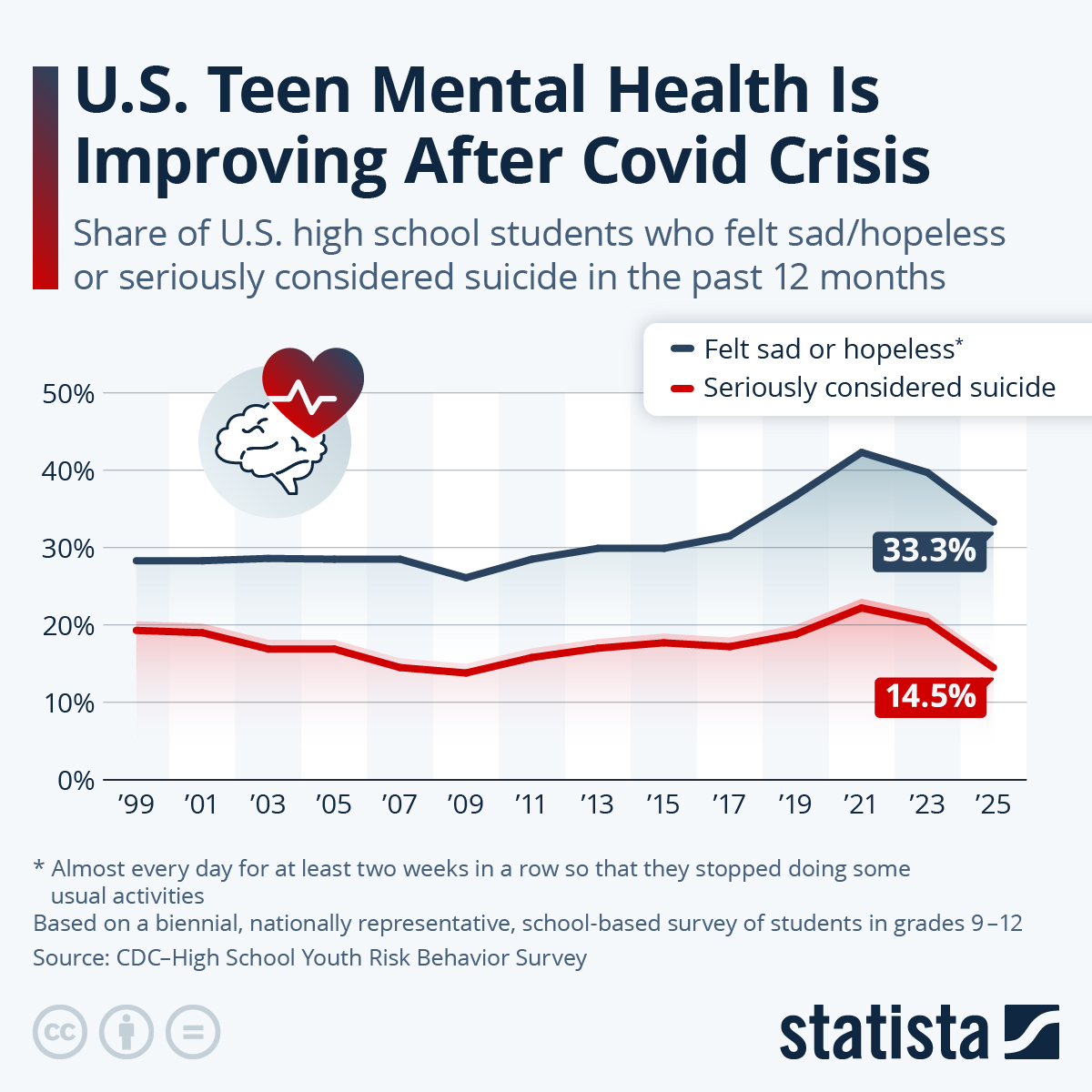
It’s the second consecutive time that the biennial survey has shown improvements to teens’ mental health after the 2021 edition had painted a grim picture of a generation in crisis, widely attributed to the Covid-19 pandemic and the many disruptions that came with it. Back then, 42.3 percent of students had reported feeling sad or hopeless almost every day for at least two weeks at some point in the year leading up to the survey. That share has fallen 33.3 percent in the latest survey. Even more dramatically, though, 22.2 percent of students had admitted to having seriously considered suicide in the past 12 months in 2021 – an alarming rate, which has fallen to 14.5 percent in 2025.
The CDC’s Youth Risk Behavior Survey has been conducted every two years since 1991. As our chart shows, rates of mental health issues had gradually increased since 2009 before peaking in 2021. And while the latest trend is positive, there are still causes for concern in the CDC’s latest data. Not only does the survey reveal that girls are struggling mentally at a much higher rate than boys, but it also highlights that mental health outcomes are dramatically worse for teenagers who do not identify as heterosexual. 59 percent of those who identified as gay, lesbian or bisexual reported feelings of sadness and hopelessness, compared with 28 percent of heterosexual teens. Moreover, 32 percent of gay, lesbian or bisexual students said they had seriously considered suicide, versus just 11 percent of heterosexual students. The latter findings are particularly alarming at a time when the current administration has normalized anti-LGBTQ rhetoric, which could further ostracize and marginalize a group of young Americans that is already evidently struggling.