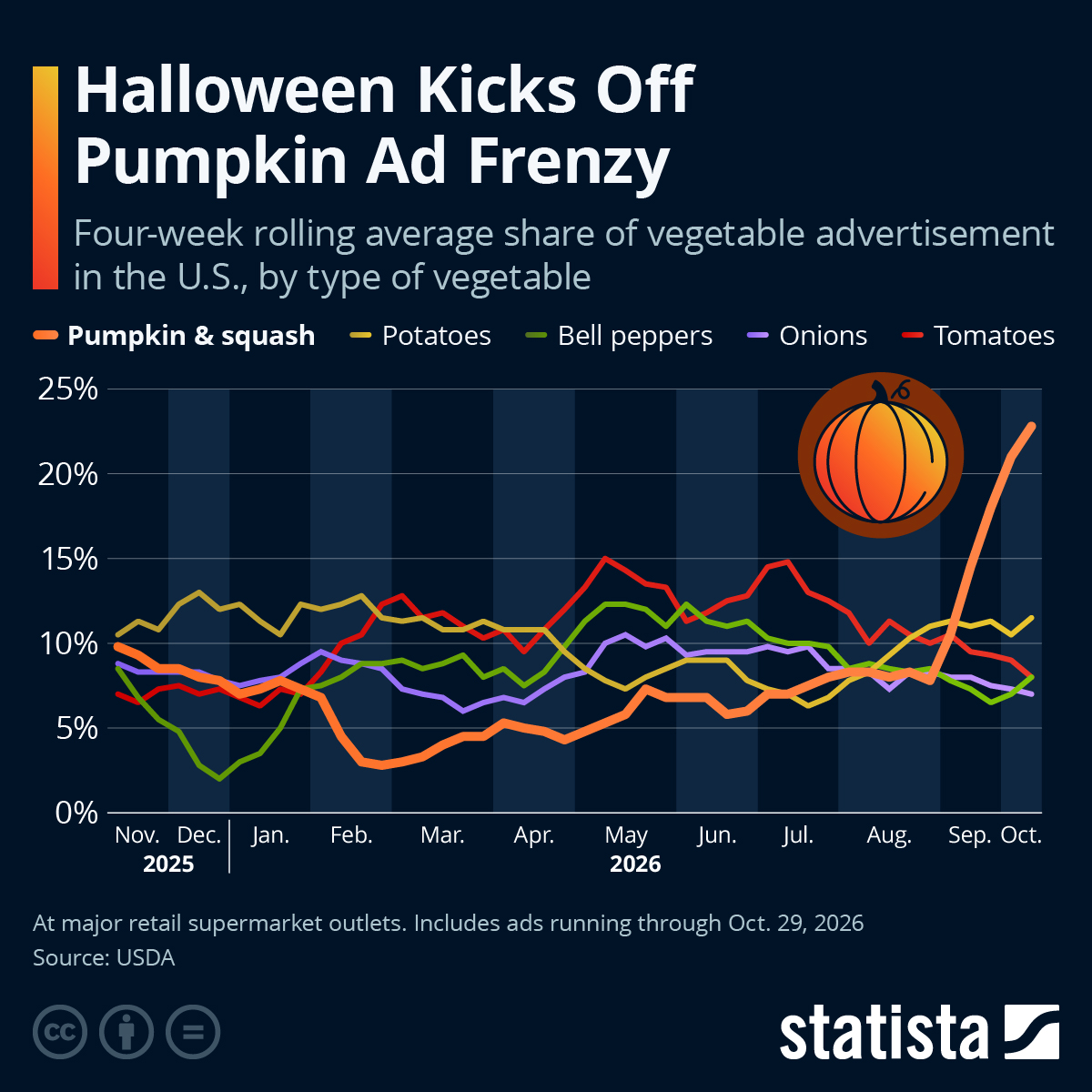
Data from the USDA shows that Halloween kicks off a pumpkin (and squash) advertising frenzy in the U.S. that is unique throughout the year. Squash ads are active year-round while pumpkin ads focus on fall. Together, the two gourds made up more than a fifth of vegetable ads in major U.S. supermarkets tracked by USDA in mid-October 2026. The most advertised vegetables in the U.S. year-round are potatoes, onions, bell peppers and tomatoes – with ads for the latter two peaking in the summer months. However, neither of these produce staples surpassed a weekly advertisement share of 15 percent throughout the past 12 months at any point (four-week rolling averages).
Additional varieties that appear among the top 10 of the most advertised vegetables in the United States most weeks are salad mixes (up to 11 percent of ads) cucumbers and carrots (up to 8 percent each), lettuce (up to 7 percent) and broccoli (up to 6 percent). Other types of vegetables that like pumpkins have distinct seasons are sweet corn, which is responsible for up to 14 percent of ads over the summer months, as well as asparagus, which fills up to 7 percent of ads from late winter into spring. The first weeks of March, when winter stocks have been depleted and the spring harvest has not yet started is the time to shine for cabbage, which made up 12 percent of ads in the week starting March 8, 2026.
U.S. vegetable advertisements also reflect shopping needs around holidays other than Halloween. For Cinco de Mayo, Jalapeños and Cilantro made the top 10 of the most advertised vegetables in early 2026, at 4–5 percent of weekly ads. Around Thanksgiving and Christmas, sweet potato ads surged to a maximum of 11 percent of weekly ads, while celery appeared among the top 10 in the same weeks, too, at 7–9 percent of ads. Christmas 2025 also saw beans enter the top 10 of ads for the only time in the past 12 months at 4 percent, while Thanksgiving last year had a similar effect on Brussels Sprouts at 3–5 percent.