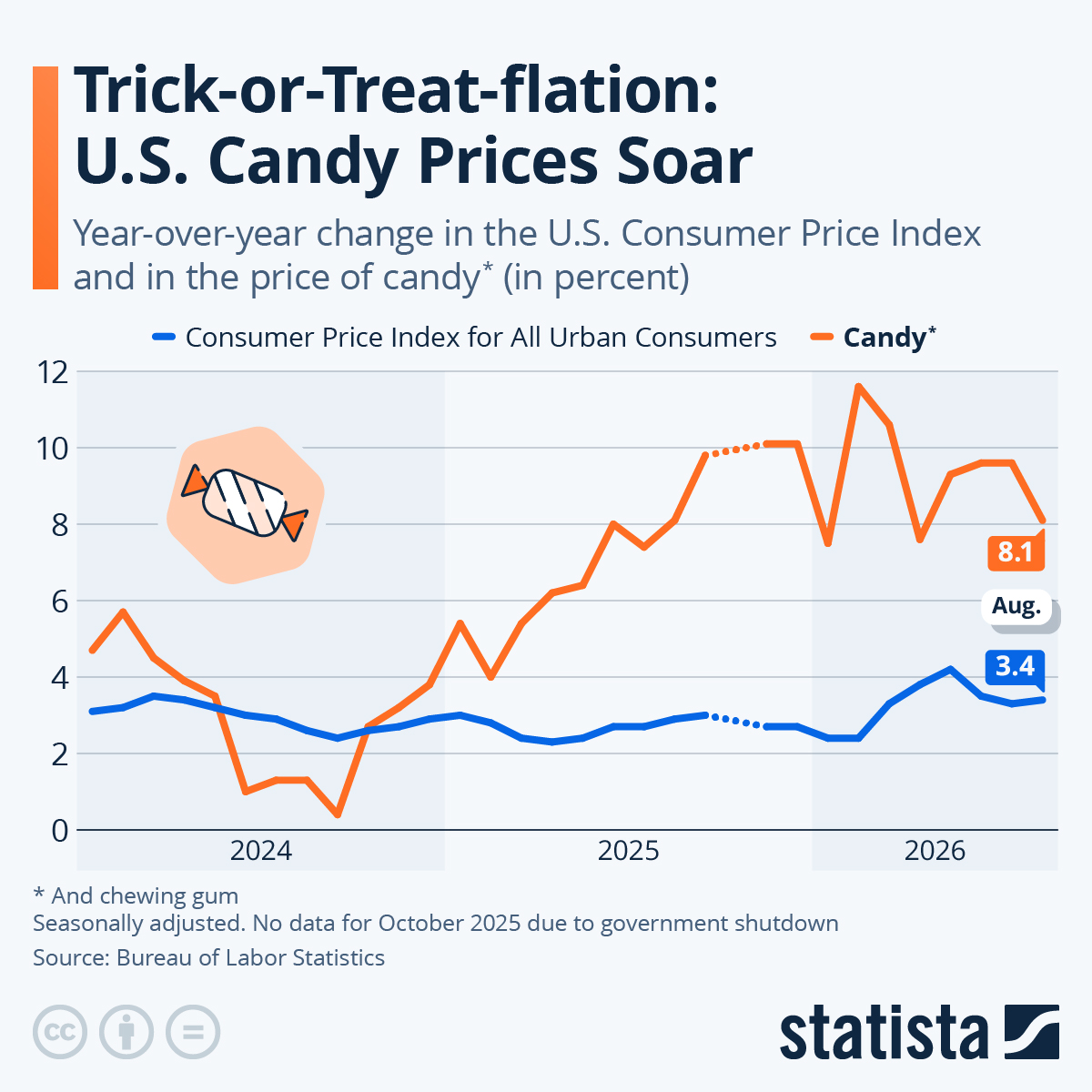
When handing out treats does not prevent feeling tricked this Halloween, this might be due to soaring candy prices. According to the U.S. Consumer Price Index, candy and chewing gum in the United States was 8.1 percent more expensive in August, the latest month on record, than a year earlier. This is compared to all consumer prices rising by 3.4 percent over the same time period.
The Bureau of Labor Statistics notes that price increases are in connection with raw material costs rising due to weather-related low crop yields in cocoa and sugar-producing countries like Ghana, Cote d`Ivoire, Mexico, Brazil and India. In the case of cocoa, speculation in the futures market is another factor pushing prices higher. The numbers also show that candy has traditionally been one of the categories most affected by so-called shrinkflation, i.e. the lowering of package size for the same price. As the CPI takes into account spend per unit size, this still counts as an item becoming more expensive in the eyes of the index.
The above-average price increases for candy are not a Halloween-specific phenomenon, however, as higher inflation in the segment has been around for about two years. It reached its peak in the winter of 2025/26, when year-over-year candy inflation stood at above 10 percent compared to an overall inflation rate of just 2.4 to 3.3 percent. While the worst of the crisis for cocoa prices is over according to industry experts, changes are slow to trickle down to consumers and price increases have remained high in the sector nevertheless.