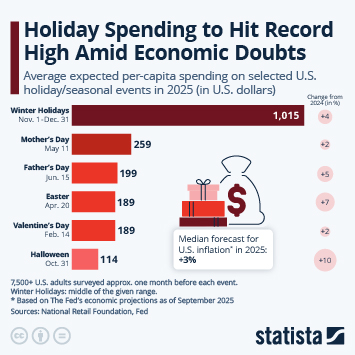
Data from the National Retail Federation shows that $13.5 billion will be spent on Halloween in the United States this year, whether that’s in the form of nightmarish costumes, spooky decorations for the house or candy for trick-or-treaters. Compared to 2024, this is an increase of almost $2 billion, showing how consumer spending patterns are back on track after a comparatively quiet Halloween in the pandemic year of 2020 as well as in 2024.
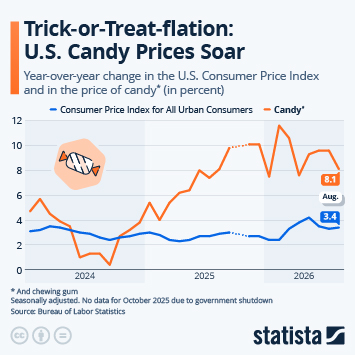
Yet, while expenditures were up in 2025 and 2026, they actually haven't risen significantly when taking inflation into account. In 2026, expected Halloween spending increases are even being eaten up entirely by inflation. This means that while customers are spending more on Halloween, the additional funds are only covering higher prices and are not actually showing a willingness to make additional Halloween purchases.
While Halloween originated in Ireland, a highly commercialized and lucrative version of the tradition has been embraced in the U.S., with around seven in 10 adults saying they would be celebrating Halloween this year, whether that’s through dressing up, pumpkin carving or going out at trick-or-treating.