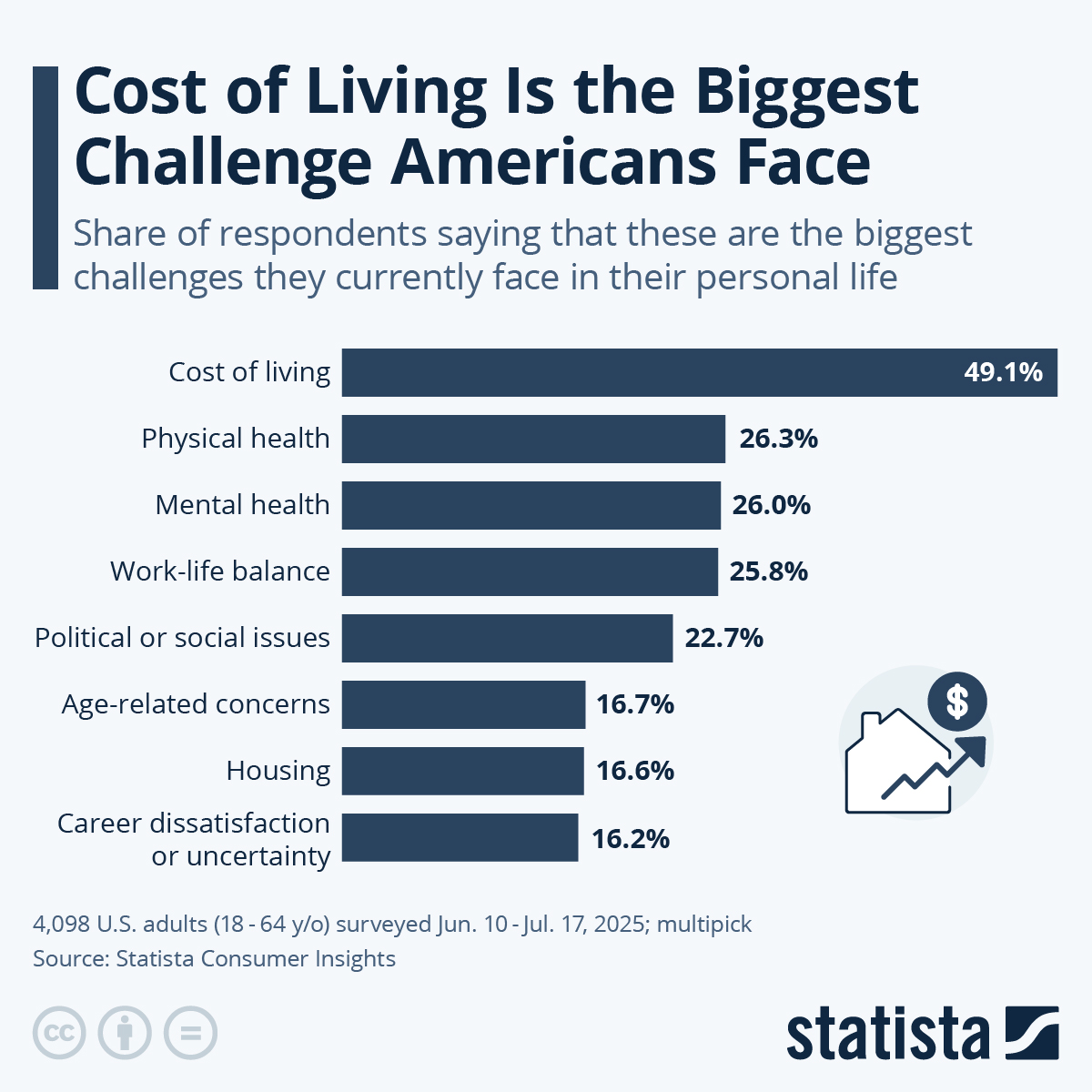
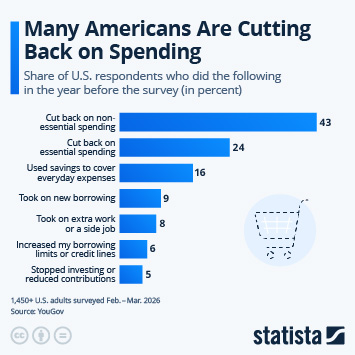
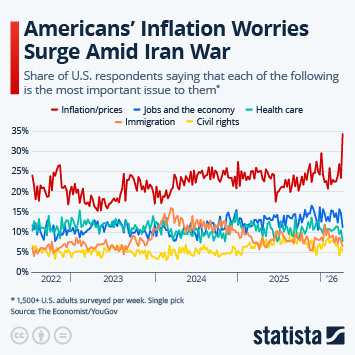
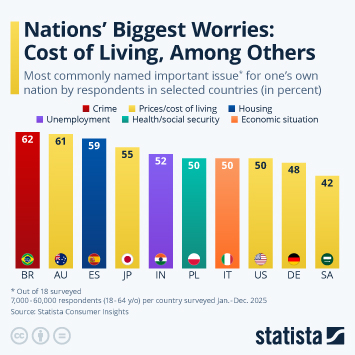
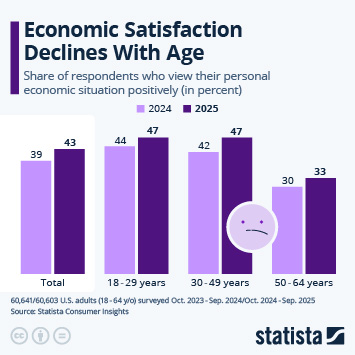
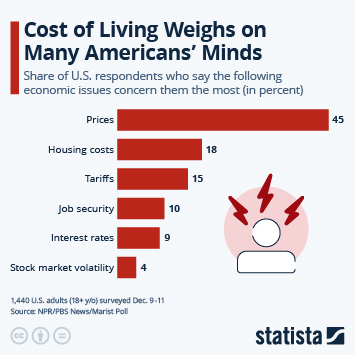
The war in Iran marked a significant setback in Americans' year-long battle with high prices. While inflation has long come down from its 2021/2022 highs, when it peaked at 9 percent, it remains elevated at 3.4 percent. More importantly though, people are still struggling to cope with the lasting effects of the inflation crisis. According to a Statista Consumer Insights survey conducted between January and July 2026, 53 percent of U.S. adults said that the high cost of living was one of the biggest challenges they currently face – making it by far the most common answer ahead of mental and physical health at 26 percent each.
It is a common misconception that prices come down when inflation cools, when in reality a period of high inflation leaves a legacy of high prices. According to the Bureau of Labor Statistics, U.S. consumer prices have increased 26.7 percent since January 2021, with some categories seeing even steeper price increases than that. Food prices are up 27.2 percent, rents have increased more than 30 percent and transportation prices are up 35 percent. And yet, nominal wages have only grown 25.7 percent since January 2021, leaving many people worse off than they were five years ago.