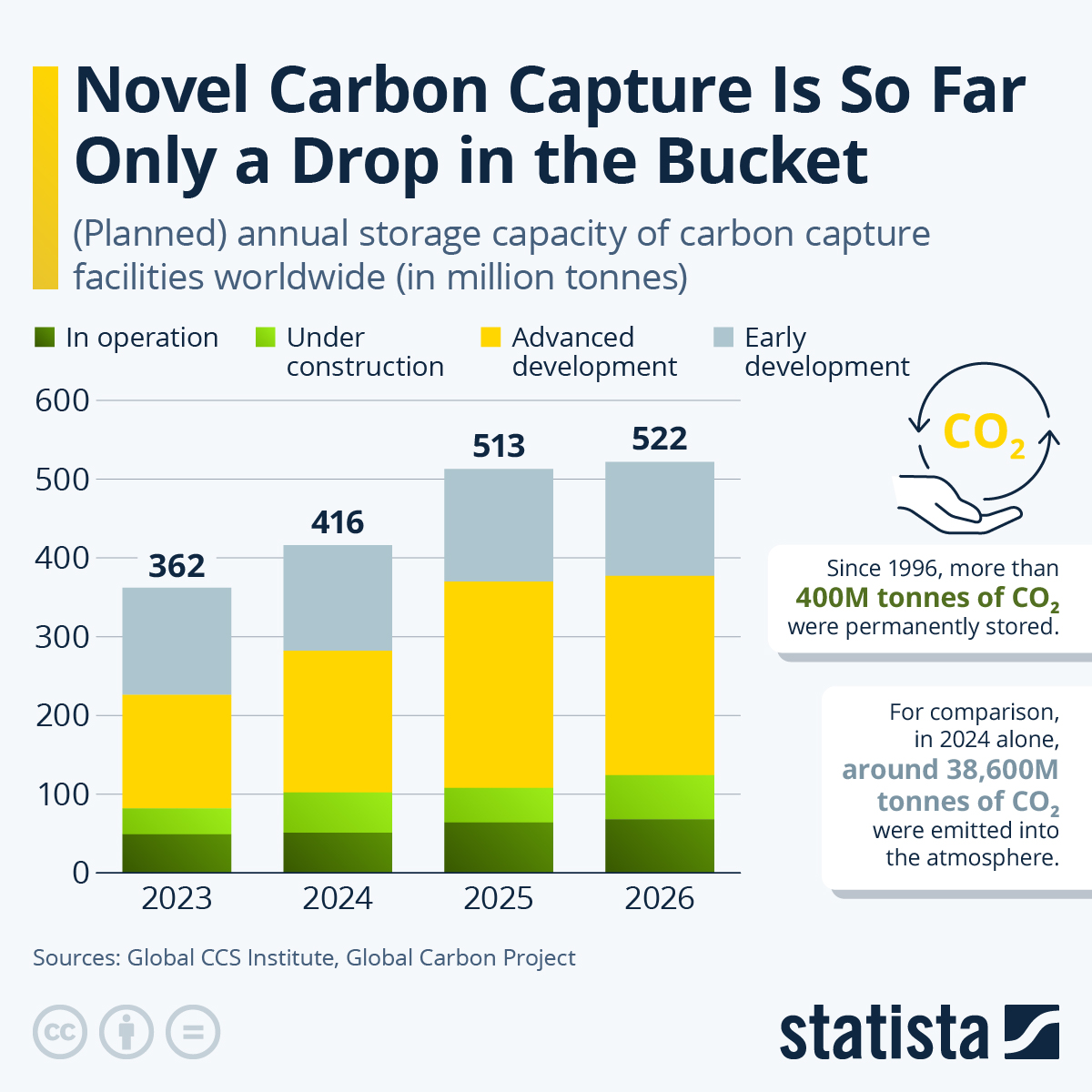
According to the Global Status of CCS (Carbon Capture and Storage) report, there are currently 132 commercial CCS projects in operation around the world. Together, these facilities are capable of removing 68 million tonnes of CO₂ from the environment annually. Since 1996, a total of 400 million tonnes of CO₂ have been sequestered in this way worldwide. For comparison, global CO₂ emissions have recently reached over 35,000 million tonnes per year.
The numbers show that carbon capture and storage is still in its infancy and is currently barely able to make a significant contribution to combating climate change. The majority of active facilities (50) are located in the United States, followed by China (27) and Canada (12). In Europe, there are currently 15 facilities in operation, five of which are in Norway.
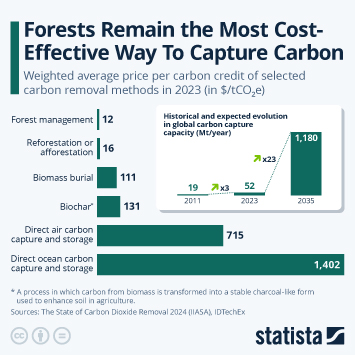
Projects encompass the popular sectors of biomass and ethanol production, power and heat generation, natural gas and LPG processing as well as hydrogen, ammonia and other fertilizer production, among others, where CO₂ created in the production process is captured or filtered out, liquefied or solidified and then stored or used otherwise. Direct air capture mechanisms also exists already, but are much less widespread and remain costly.