Anyone hoping to get a shiny new video game console for Christmas this year better make sure to be extra nice, as the latest generation of consoles has gotten a lot more expensive. Unlike previous generations, which became more affordable the longer they were on the market, the latest versions of Microsoft’s Xbox, Sony’s PlayStation and Nintendo’s Switch are currently moving in the opposite direction. Both the Xbox Series S/X and the PlayStation 5 saw two rounds of price hikes in the U.S. in the past 18 months, as tariffs and the AI-related global shortage of memory chips contributed to a surge in component costs that are partially being passed on to consumers.
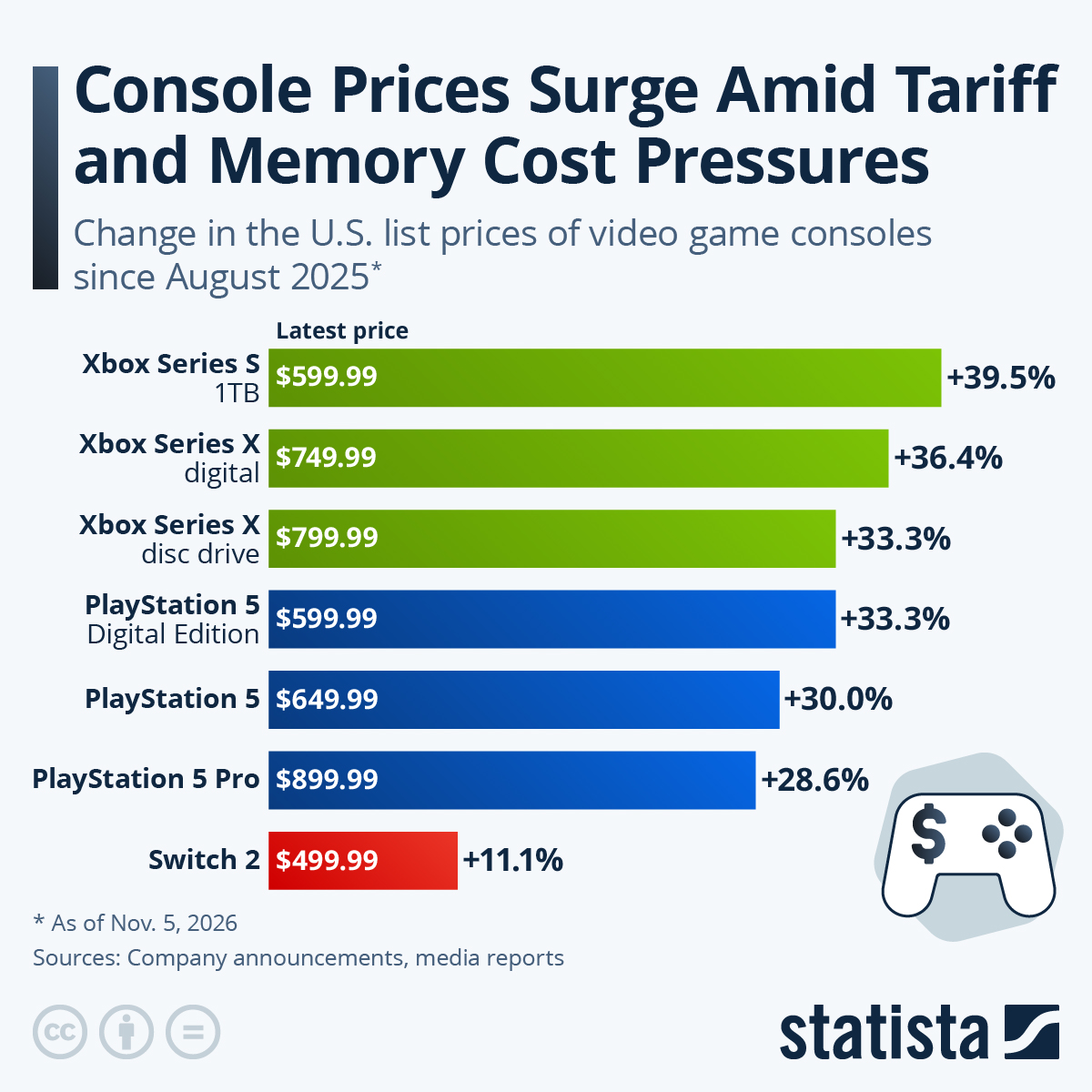
As our chart shows, the Xbox Series S with 1 terabyte of storage saw the largest relative jump: its recommended retail climbed from $429.99 to $449.99 in October 2025, before being raised to $599.99 on August 1, 2026 for a total increase of nearly 40 percent. The digital edition of the Xbox Series X went up 36 percent to $749.99 and the Series X with a disc drive now retails for $799.99 – an increase of 33 percent. Sony also raised PlayStation 5 prices in two rounds by up to 33 percent (for the digital edition), with the flagship PlayStation 5 Pro now retailing for $899.99, making it the most expensive PlayStation ever. Even Nintendo, which launched the Switch 2 as recently as June 2025, was forced to raise the price of its new flagship console by $50, or 11 percent.
Consoles are particularly affected by the current component crisis. Not only are the affected components – most importantly memory chips used in RAM and storage – key parts of any high-performance game console, but the economics of consoles are also different compared to other consumer electronics. Consoles are typically sold at very thin margins or even at a loss to be monetized through software, subscriptions and services. When component costs rise dramatically, that business model is no longer sustainable. According to Microsoft’s estimates, storage and memory prices have already increased more than 2.5-fold, with another doubling expected by fall 2027, dimming hopes of console prices coming back down anytime soon.