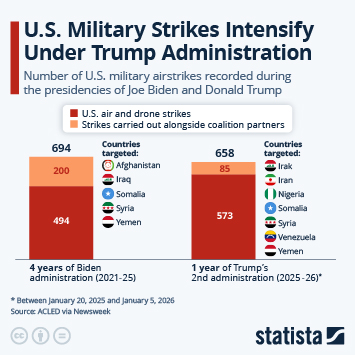
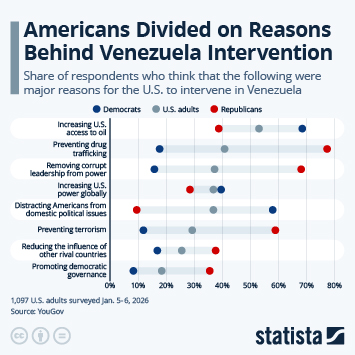
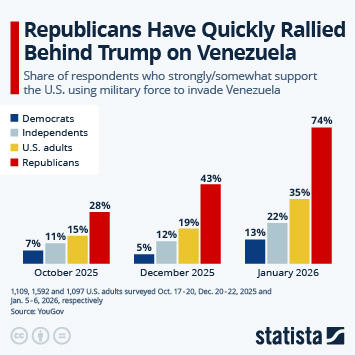
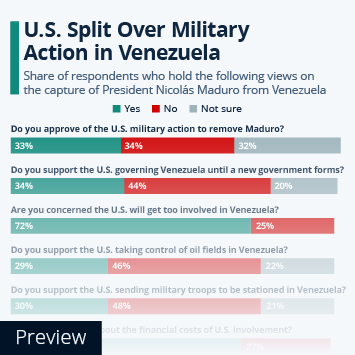
On January 3, the U.S. military conducted a series of strikes across northern Venezuela including in the capital, Caracas, and extrajudicially captured Venezuelan President Nicolás Maduro and his wife, Cilia Flores. The military operation, estimated to have killed at least 80 people, marks a dramatic escalation in the tensions between the two nations. Over the past months, Washington had expanded its presence in the Caribbean. President Maduro and his wife were flown to New York, where the Venezuelan leader faces four criminal charges: narco-terrorism conspiracy, cocaine importation conspiracy, possession of machine guns and destructive devices and conspiracy to possess machine guns and destructive devices. While U.S. President Donald Trump has long maintained that his country's targetting of Venezuela is part of a campaign against drug trafficking, he has since been inambiguous that the country's large oil reserves were a primary factor for the removal of President Maduro.
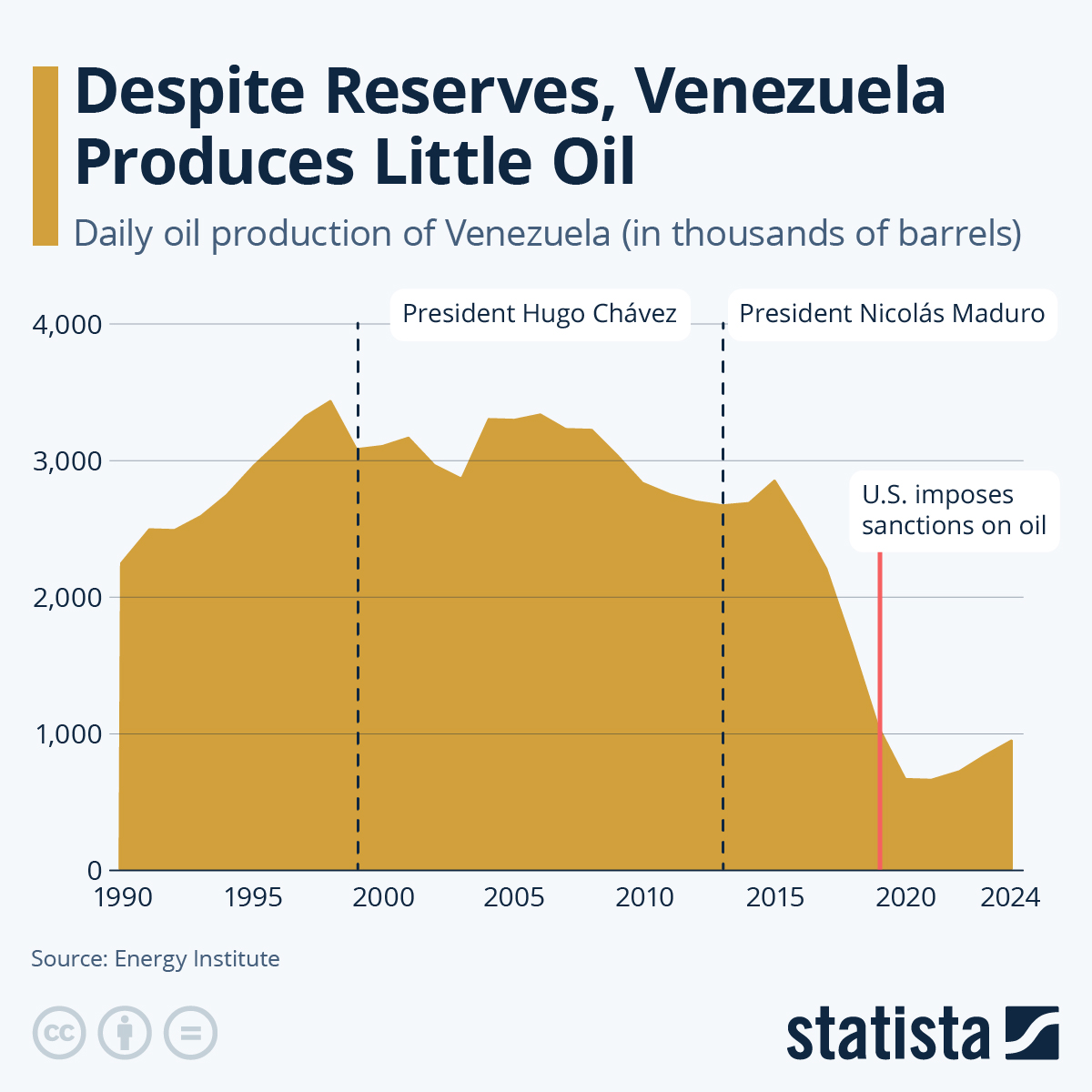
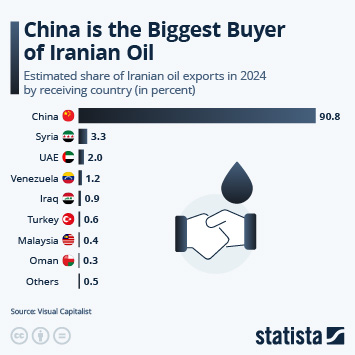
Venezuela holds the world's largest crude oil reserves: more than 300 billion barrels, or nearly one fifth of the world's proven reserves. Despite this, Venezuela's oil production is relatively small, and has seen a sharp decrease in the last decade. This is due in part to the country's declining oil infrastructure, which has suffered from a lack of investment, but also to the sanctions imposed by the U.S. from January 2019 during the Venezuelan presidential crisis. Today, Venezuela produces less than a million barrels of oil a day; comparaively, the U.S. produces over 20 million barrels a day, and Saudi Arabia just under 11 million. Venezuela exports most of its oil production to China.