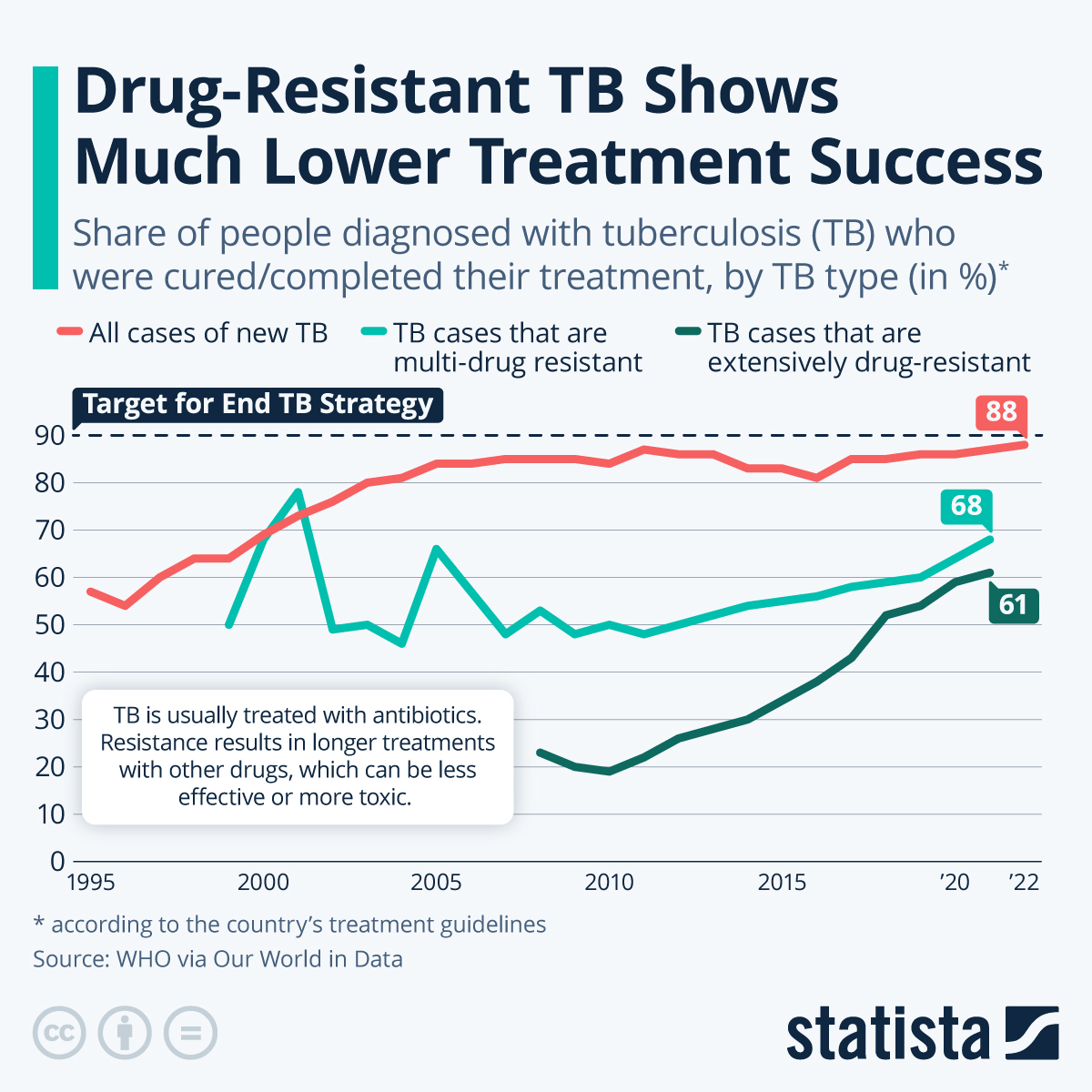
The World Health Organization (WHO) is on a mission to end the tuberculosis (TB) epidemic by 2035. Part of its strategy includes reaching a TB treatment success rate of 90 percent by 2025. This means that 90 percent of all people who have been notified of having TB will have been either cured or completed their treatment.
While significant progress has been made towards meeting this milestone, with the figure at 88 percent as of 2022, outcomes were notably worse for drug-resistant forms of TB. People with multidrug-resistant TB (MDR-TB) achieved a 68 percent treatment success rate as of the latest available data (2021), while those with extensively drug-resistant TV (XDR-TB) had only 61 percent cure or treatment completion (2021). These figures are drawn from WHO data compiled by Our World in Data.
According to the WHO, multidrug-resistant tuberculosis (MDR-TB) is a form of TB caused by bacteria that do not respond to isoniazid and rifampicin. It is treatable and curable by using second-line drugs, but these tend to be expensive and toxic. TB caused by bacteria that do not respond to even these additional drugs, i.e. XDR-TB, can leave patients with very limited treatment options.
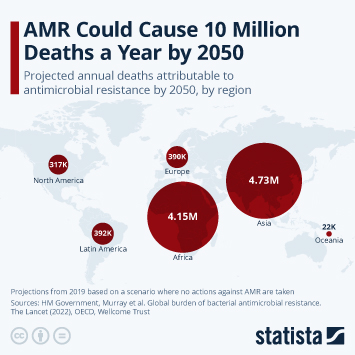
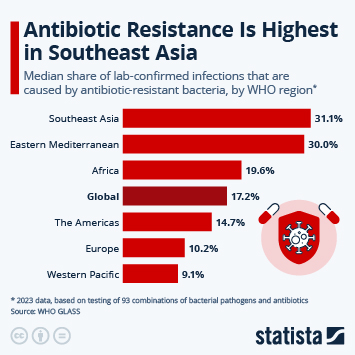
Drug-resistant TB is currently one of the leading causes of death from antimicrobial resistance, accounting for around one in three deaths from AMR. According to the Stop TB Partnership, some 160,000 lives were lost to drug-resistant TB in 2022.