The 20th Convention on International Trade in Endangered Species meeting, also known as the World Wildlife Conference, opens today in Samarkand, Uzbekistan. This year's meeting, which marks the 50th anniversary of the convention, is happening under the motto "CITES at 50 in Samarkand: Bridging Nature and People". Uzbekistan's Minister of Ecology, Environmental Protection and Climate Change explained the choice of the phrase, saying: "This is more than a slogan. It encapsulates our vision for the future - where conservation is not seen as separate from people, but as a shared path forward".
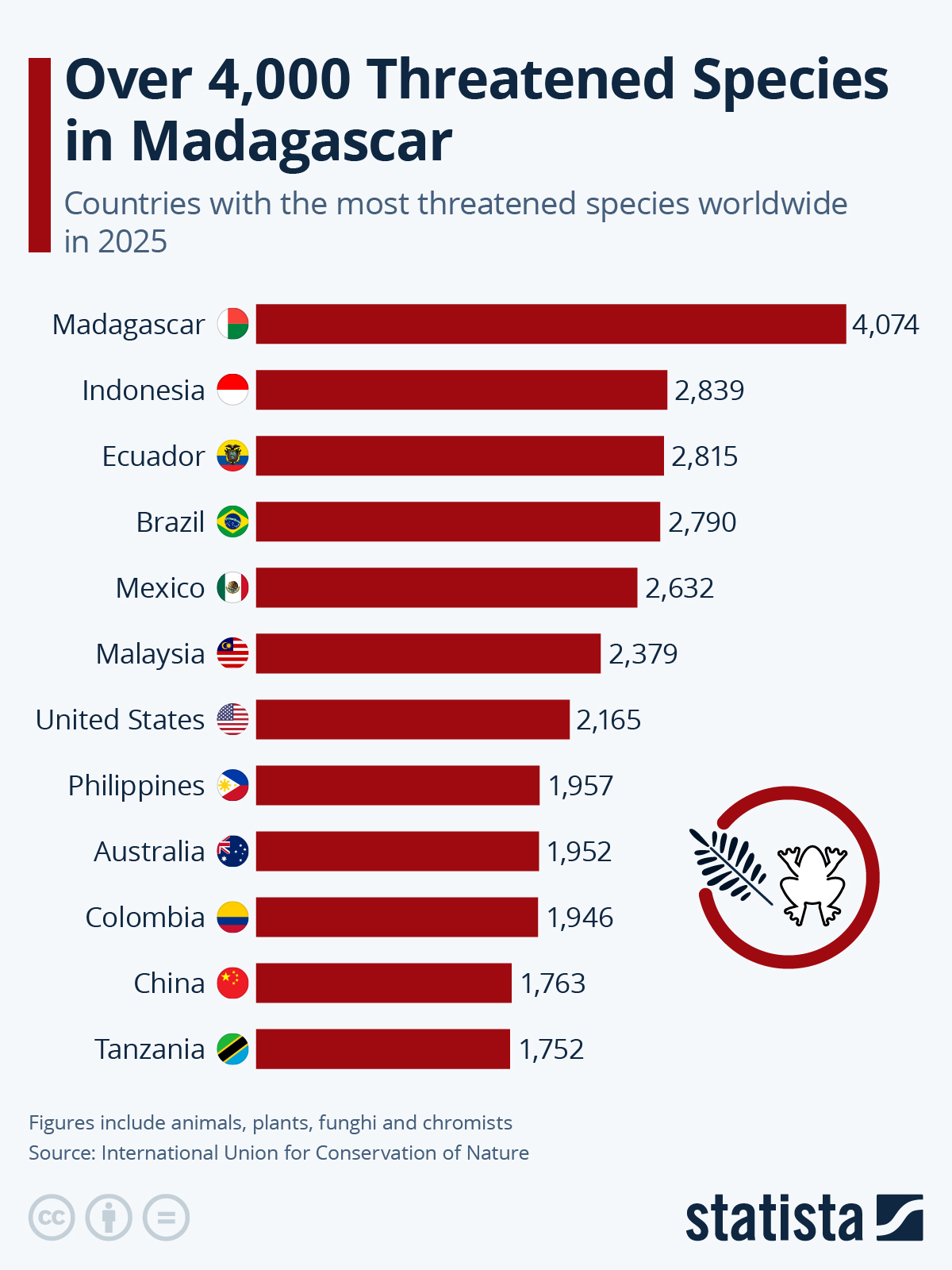
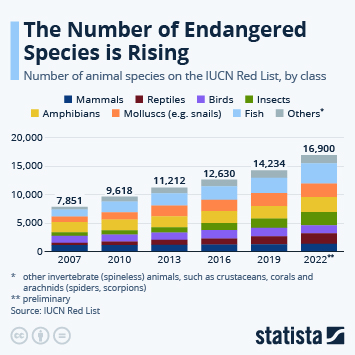
Many species of animals, plants and funghi are considered endangered or threatened (likely to become endangered in the near future) today. According to the International Union for Conservation of Nature (IUCN), more than 18,000 animal species are now endangered. As our chart shows, some countries in the world count really high numbers of threatened species. The IUCN identified 4,074 threatened species of animals, plants, funghi and chromists (a proposed category of single-celled and multicellular eukaryotic species) in Madagascar alone, making it the country in the world with the most threatened species. In second place was Indonesia, with 2,839 species at risk of being endangered soon, followed by Ecuador, with 2,815 species.
The IUCN has so far identified more than 48,600 species threatened with extinction worldwide, whice represents 28 percent of all the species assessed. Several threats to biodiversity are man-made: in 2024, agriculture and aquaculture were considered to be the biggest threat to key biodiversity areas around the world.