A week after „Operation Absolute Resolve”, which saw the U.S. military attack targets in Venezuela to capture and extract President Nicolás Maduro, the international community is still grappling over the legality of the U.S. intervention. While some experts are saying that the illegality of the U.S. attack is beyond doubt, U.S. allies are hesitant to openly denounce the U.S. actions. The European Union, for example, issued a statement calling for calm and restraint by all parties involved. While acknowledging that Maduro lacked the legitimacy of a democratically elected president, the statement backed by 26 EU member states stressed that it was the right of the Venezuelan people to determine their own future. While calling for everyone, under all circumstances, to uphold the principles of international law and the UN Charter, the EU stops short of openly accusing the U.S. of violating these rules.
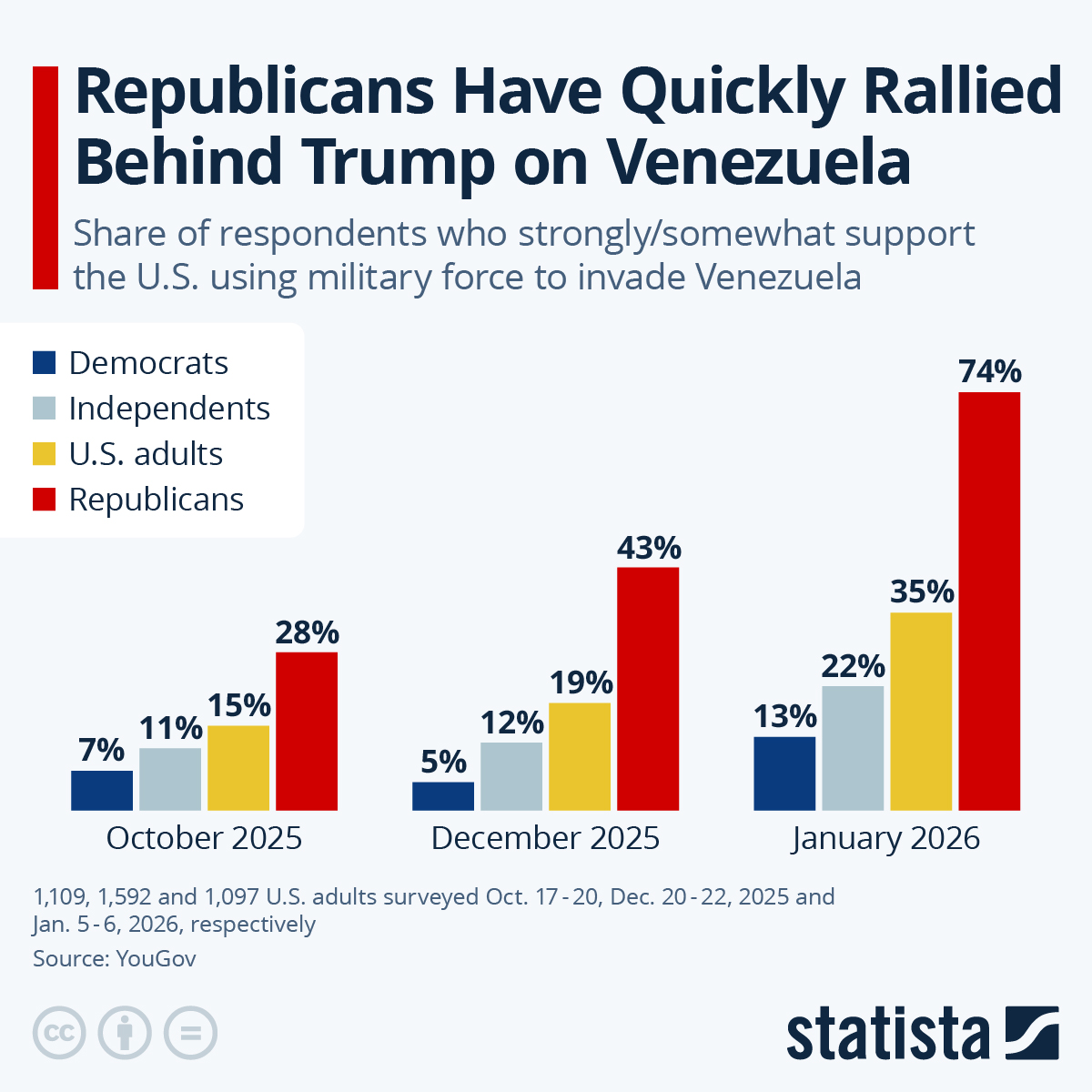
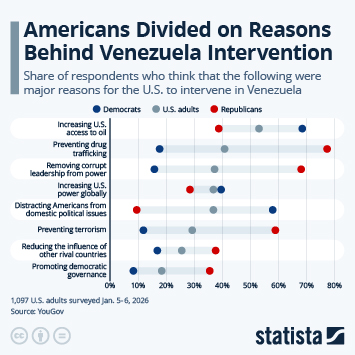
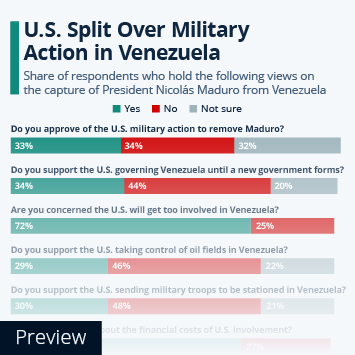
Meanwhile, in the U.S., we saw a familiar story unfold, with a strong partisan divide opening up on a question that most Americans agreed on just a few months ago. “Would you support the U.S. using military force to invade Venezuela?”, YouGov asked in October 2025. Back then, just 15 percent of respondents – 7 percent of Democrats and 28 percent of Republicans – voiced their support. When YouGov posed the same question this week, i.e. after the raid that captured Maduro, replacing “would you” with “do you”, the picture looked entirely different: While support among Democrats was still very low at 13 percent, 74 percent of Republicans now said that they somehow or strongly supported the U.S. using military force in Venezuela.
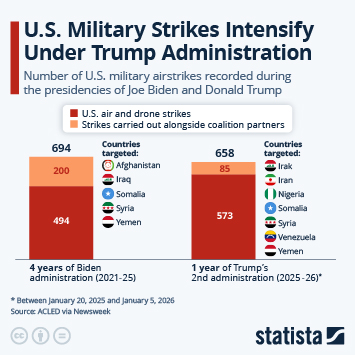
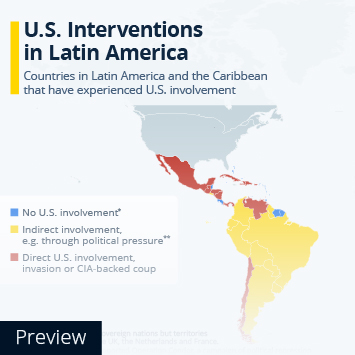
These results highlight Trump’s still-intact ability to rally his supporters behind him by spinning the narrative in a way works in his favor. Back in 2024, Trump ran on the promise to avoid getting dragged into wars overseas, much to the liking of his base. A little more than a year later, the Trump administration appears to have abandoned this non-interventionist stance in favor of a new America-First foreign policy that stretches across the entire Americas, all the way from Greenland to Cape Horn.