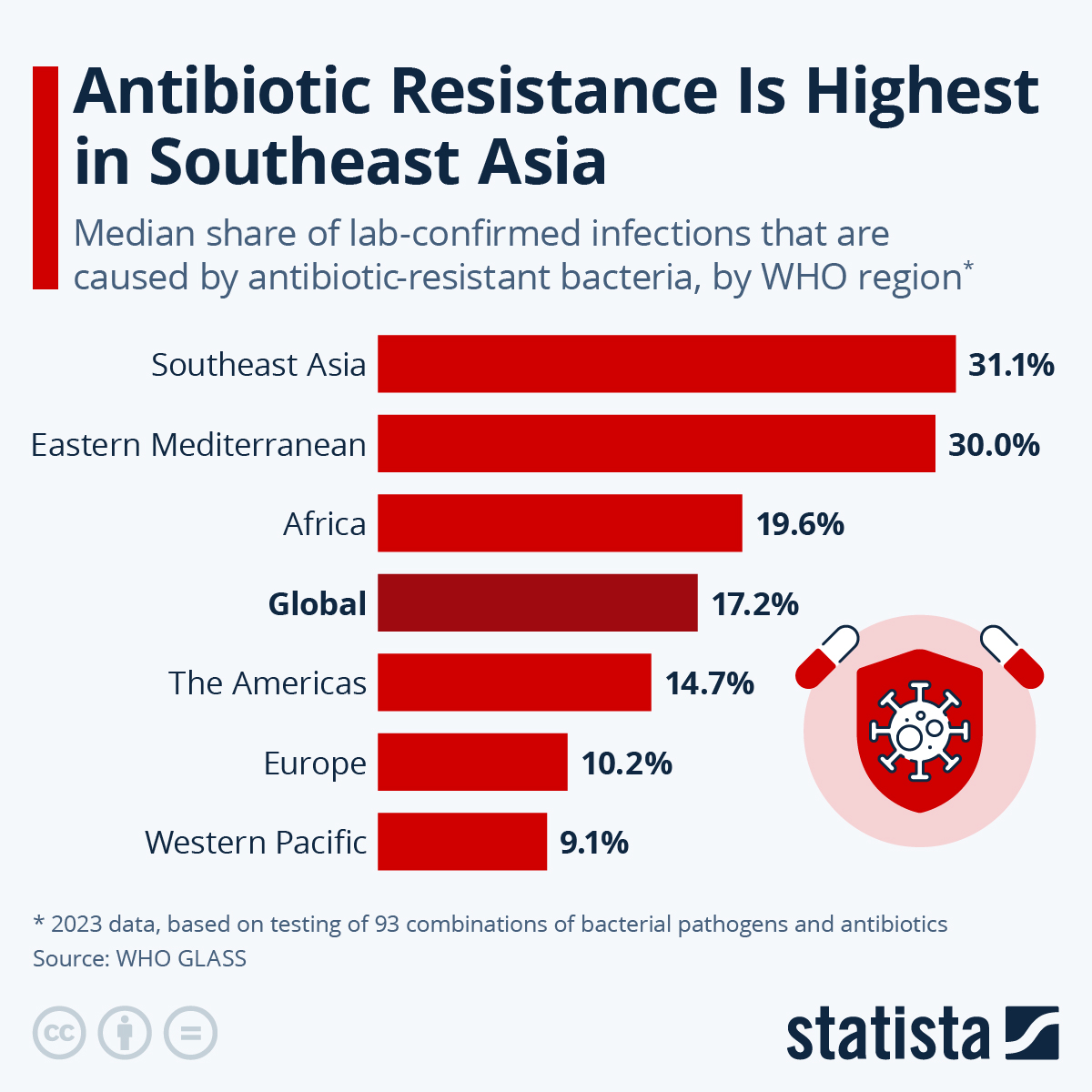
Resistance to essential antibiotics is widespread and growing, according to research newly published by the World Health Organization. At the same time, antimicrobial resistance (AMR) is unevenly distributed, with the burden highest in low- and middle-income countries, disproportionately impacting the most vulnerable populations.
Antibiotic resistance is highest in the WHO Southeast Asian and Eastern Mediterranean regions, where around one in three reported infections were caused by antibiotic resistant bacteria. In the African region, around one in five lab-tested infections were found to be resistant to antibiotics, while in Europe it was closer to one in ten.
Worldwide, resistance was particularly common in urinary tract infections (approximately one in three) and bloodstream infections (one in six), while it was less common in gastrointestinal (one in 15) and urogenital gonorrheal infections (one in 25). These are median figures and therefore hide the full variation of resistance in certain causes. For example, for urogenital gonorrhoea, the level of global resistance to the commonly used antibiotic ceftriaxone is low (0.3 percent) but much higher to ciprofloxacin (75 percent).