Antimicrobial resistance (AMR) occurs when bacteria, viruses, funghi and parasites evolve to resist antimicrobial drugs (antibiotics, antivirals, antifungals and antiparasitics). As a result, infections become difficult or impossible to treat, leading leading to the possible spread of disease, as well as serious illness or death. Since 2015, November 18-24 marks World Antimicrobial Awareness Week, a global campaign spearheaded by the World Health Organisation to spread awareness and promote global action against this growing health threat.
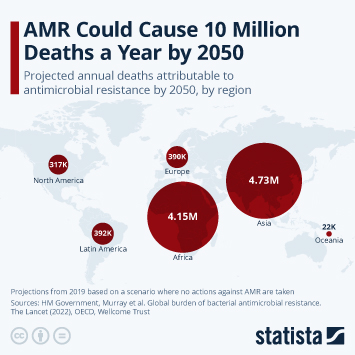
As our infographic shows, if no actions are taken to prevent the development of AMR, it could be responsible to 10 million deaths globally every year by 2050. Asia could be the continent most affected, accounting for around 4.73 million of the yearly fatalities attributable to AMR, followed by Africa (4.15 million).
The main measures the public can take to prevent AMR are to only take antibiotics when they are prescribed by a doctor, practice good hygiene, get vaccinated, and try and limit the spread of infections. Animal agriculture is also regularly criticised for its possible role in the spread of AMR due to its heavy use of antimicrobial drugs. It is believed that reducing the antibiotic use in farming could have an impact on the development of AMR.