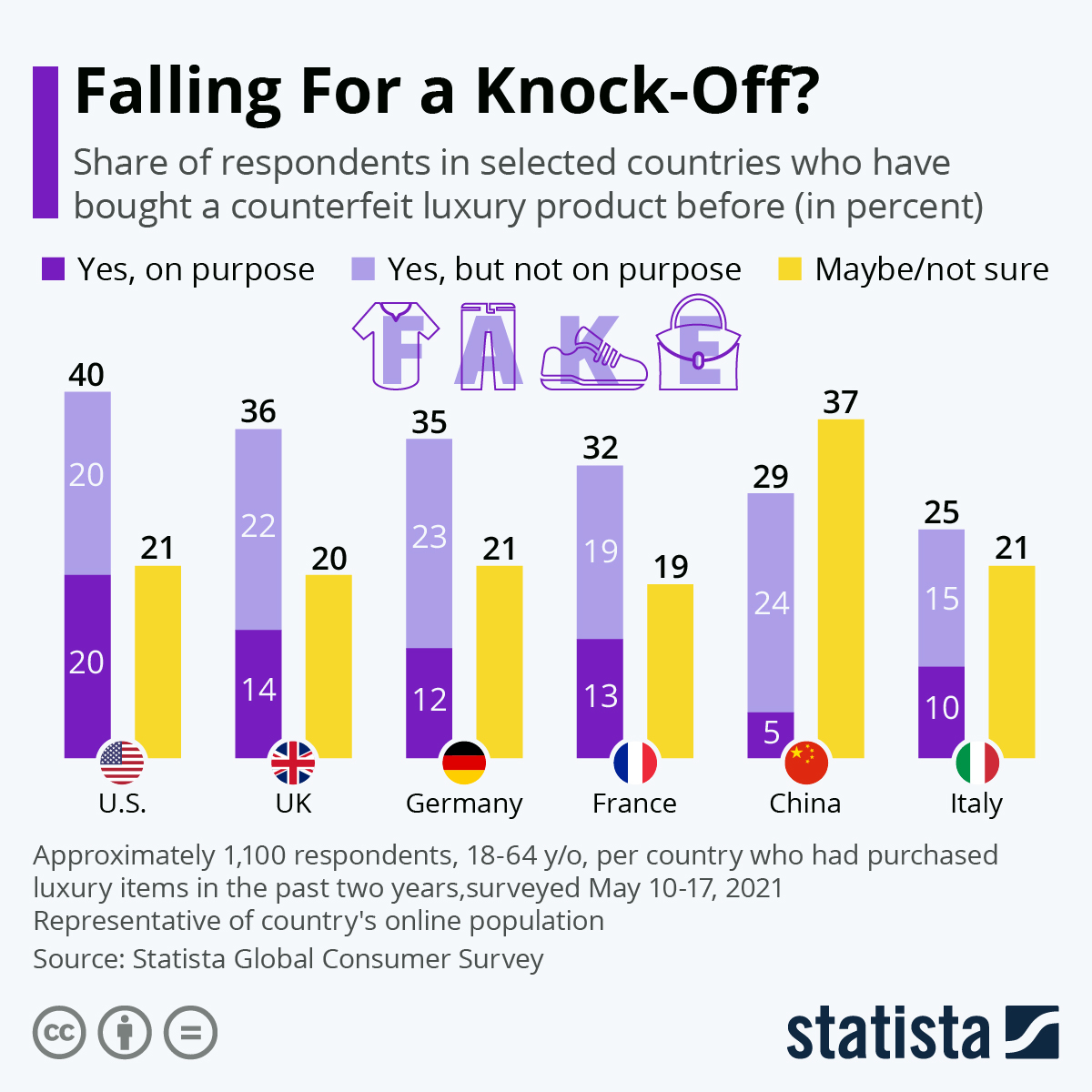
According to Statista Consumer Insights, 40 percent of Americans might have purchased – intentionally or not – a counterfeit luxury item before. This ratio was similar in the United Kingdom and as high as 50 percent in Germany, the data from a recent survey shows.
Many consumers were not very open about purchasing luxury knock-offs, with many going for a "maybe" that might signal genuine confusion or rather avoidance of the topic. Americans were the most outspoken when it comes to purchasing counterfeit luxury products – 18 percent of surveyed U.S. participants said they had done so on purpose. This number stood at 13 percent in the United Kingdom and 16 percent in Germany. Germans, on the other hand, went for the maybe more often – 20 percent of the time – compared to just 12 percent in the United States and 14 percent in the United Kingdom. Brits, finally, owned up to unintentional purchases most often.
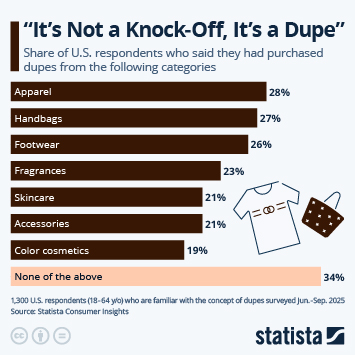
These results come at a time when attitudes about fakes and their desirability (or lack thereof) are changing. Dupes, a term pioneered in the beauty and fashion segments, describes a knock-off item of good quality and functionality without the negative connotations of other, previously used expressions for fake branded goods. While dupes usually don't use fake labels, they can nevertheless be illegal if they falsey claim to posess all the same qualities as the original or if that original is so distinct that copying it infringe on copywright or interlectual property laws.