Today marks 25 years of the New START treaty coming into effect, as well as its expiration date. Signed in 2010 by Barack Obama and one-term Russian President and Putin ally Dmitry Medvedev, the treaty set limits on strategic nuclear weapons, capped the number of deployed strategic warheads, and aimed to create transparency and predictability through verification measures - notably data exchanges and on-site inspections - so each side could monitor the other’s strategic arsenal and reduce worst-case assumptions. While the UN Secretary General António Guterres has urged the U.S. and Russia to quickly sign a new treaty for the control of nuclear weapons, U.S. President Donald Trump has indicated he would like a new deal to also include China.
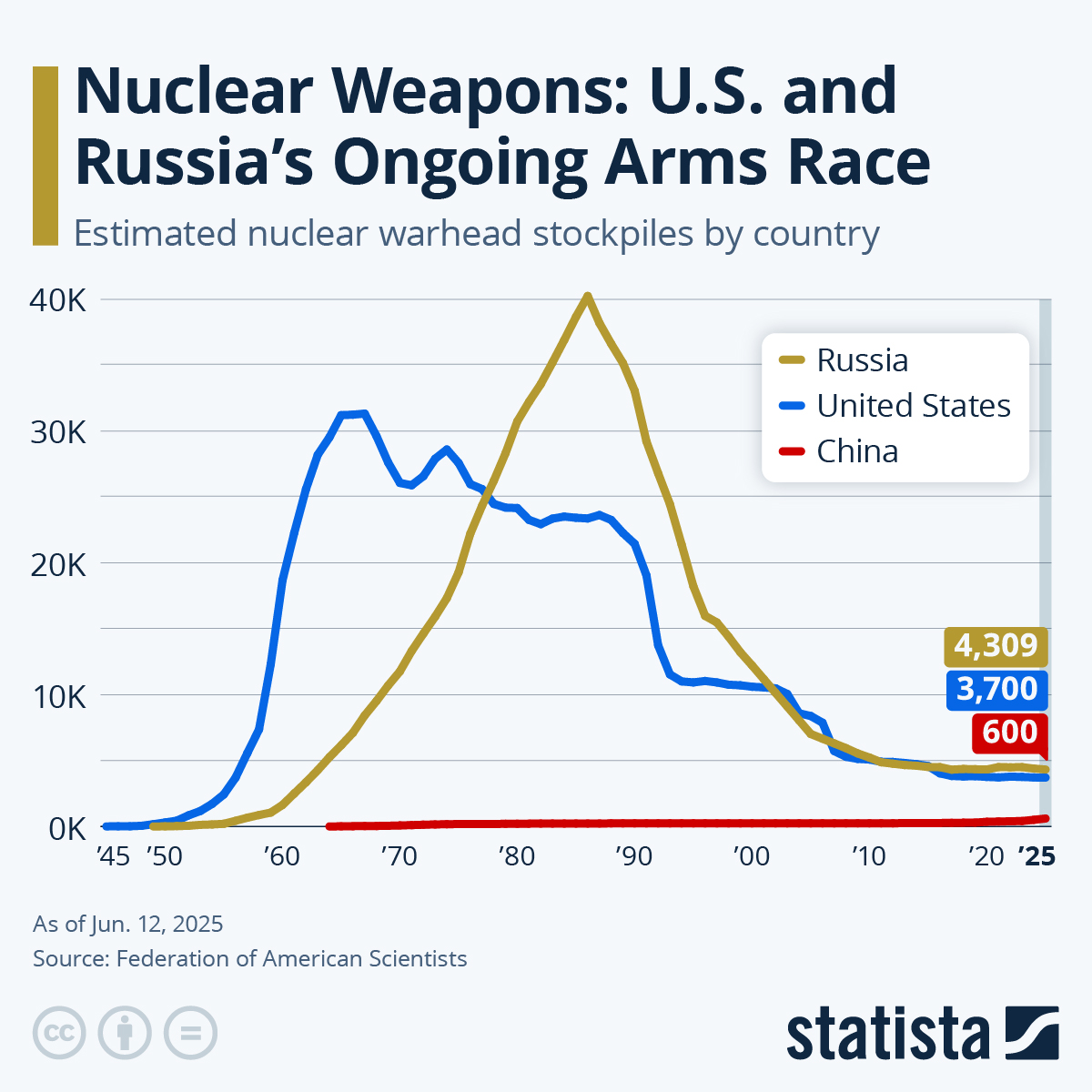
China has increased the size of its nuclear arsenal in recent years: it has more than doubled in the space of a decade, going from an estimated 260 warheads in 2016 to 600 last year. While the rapid expansion of China's strategic arsenal has been described by U.S. sources as changing the world's nuclear balance, the country remains far behind the U.S. and Russia in terms of nuclear capabilities. According to the Federation of American Scientists, the two countries hold over 8,000 nuclear warheads in total as of last year, and this figure doesn't take into account retired but still intact warheads in the queue for dismantlement.
According to Politico, Russia made initial overtures about a renewed pact in September, but the Trump administration is yet to respond.