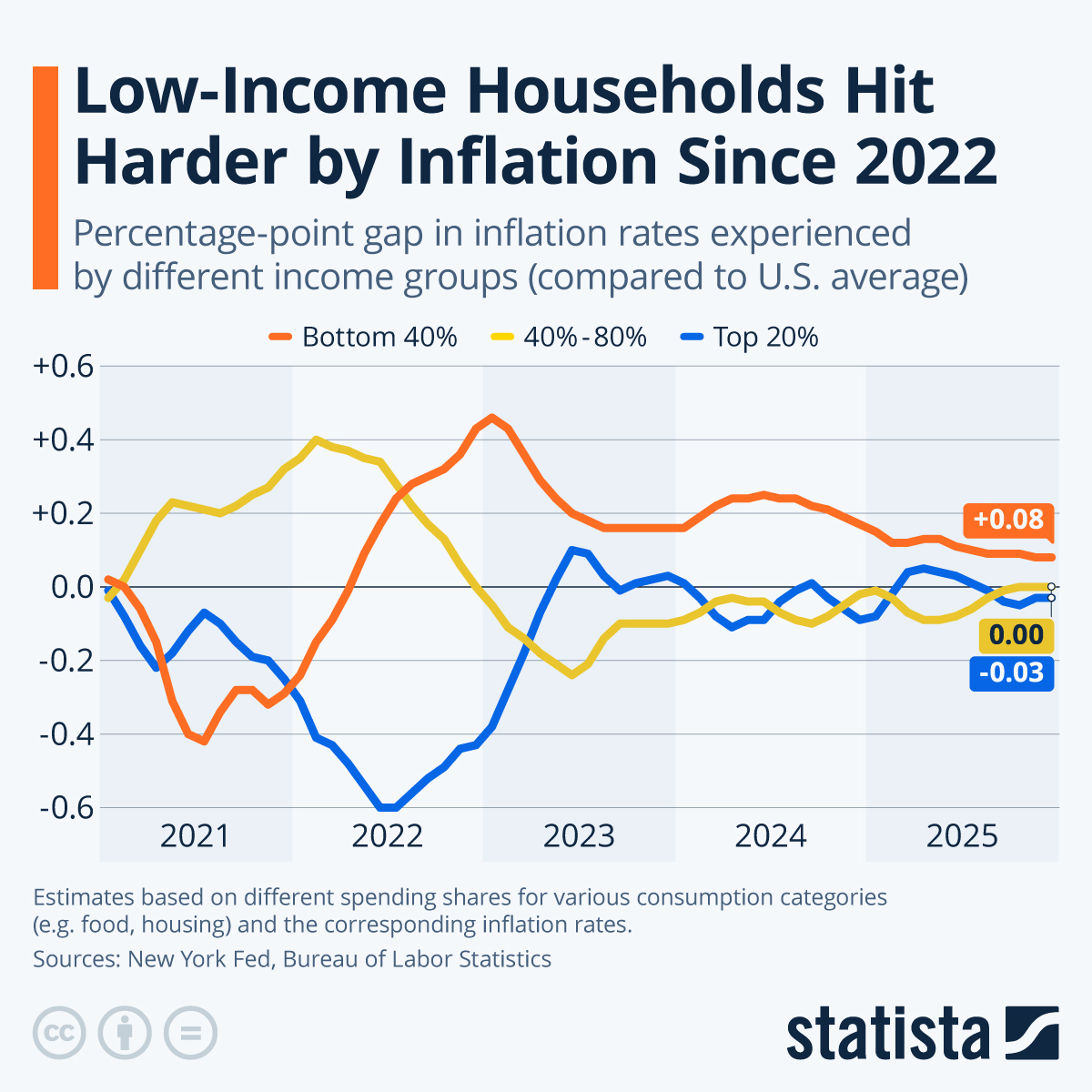
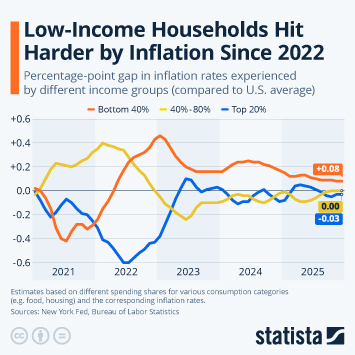
As if the inflation crisis of the past few years hasn’t been hard enough on Americans, it has also affected low-income households disproportionately hard. Not only because those households have less money to begin with, but because their spending patterns meant that they actually experienced higher inflation. That’s according to the New York Fed’s Economic Heterogeneity Indicators, a quarterly report that breaks down macroeconomic trends and outcomes across various groups of people, regions and businesses.
The latest report, published on February 3, shows that households in the bottom 40 percent in terms of household income have experienced the highest inflation over the past three and a half years. On average, the inflation rate for this demographic was 0.21 percentage points higher than the headline inflation rate since June 2022. This is due to the fact that low-income households spend a higher share of their overall expenses on housing and food, two categories that saw above-average price increases over the past few years.