U.S. GDP growth bounced back stronger than expected in the second quarter of 2025, as the same mechanisms that had dragged GDP growth into contraction territory in the first quarter - only in reverse - now drove the expansion. The third and final estimate published on Thursday showed that the gross domestic product grew at an annual rate of 3.8 percent between April and June, a significant upward revision from previous estimates.
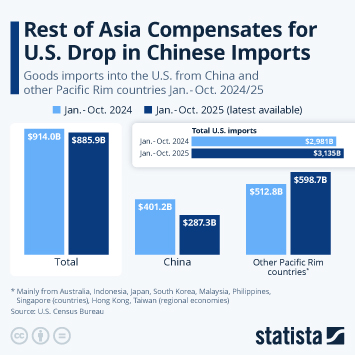
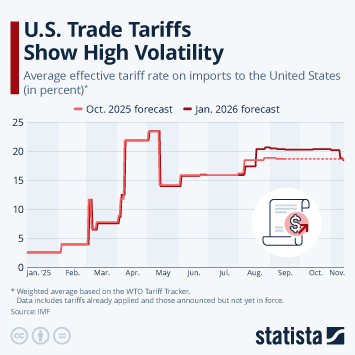
Like the first quarter contraction wasn't indicative of a coming recession, the second quarter expansion is not a sign of a booming economy. Both readings have to do with Trump's tariff policy and the reaction to it. In the first quarter, it was a steep increase in imports in anticipation of upcoming tariffs that drove the GDP decline. As imports are a subtraction in the calculation of GDP, a surge in imports actually hurts GDP growth, even if only in the short run. Conversely, imports declined at an annual rate of 29 percent in the second quarter, which boosted GDP growth by more than five percentage points.
In the first quarter, as businesses were anticipating new tariffs, they stockpiled goods and inputs sourced abroad to avoid the levies, building up inventory. In the second quarter, instead of importing at higher prices, businesses drew from the inventory they had built up. As the U.S. Federal Reserve explained in a blog post in 2018, imports are merely an accounting variable in the calculation of GDP and the purchase of imported goods and services has no direct negative impact on U.S. GDP.
With that in mind, the latest GDP readings shouldn't be taken at face value, because both the first-quarter contraction and the second-quarter expansion were distorted by tariff frontloading and tariff avoidance. Still, there were encouraging signs in the latest release: As the BEA noted, real final sales to private domestic purchasers, i.e. the sum of consumer spending and private investment, an indicator sometimes referred to as "core GDP", increased 2.9 percent in the second quarter, up sharply from a previous estimate of 1.2 percent and an acceleration from 1.9 percent in the first quarter.