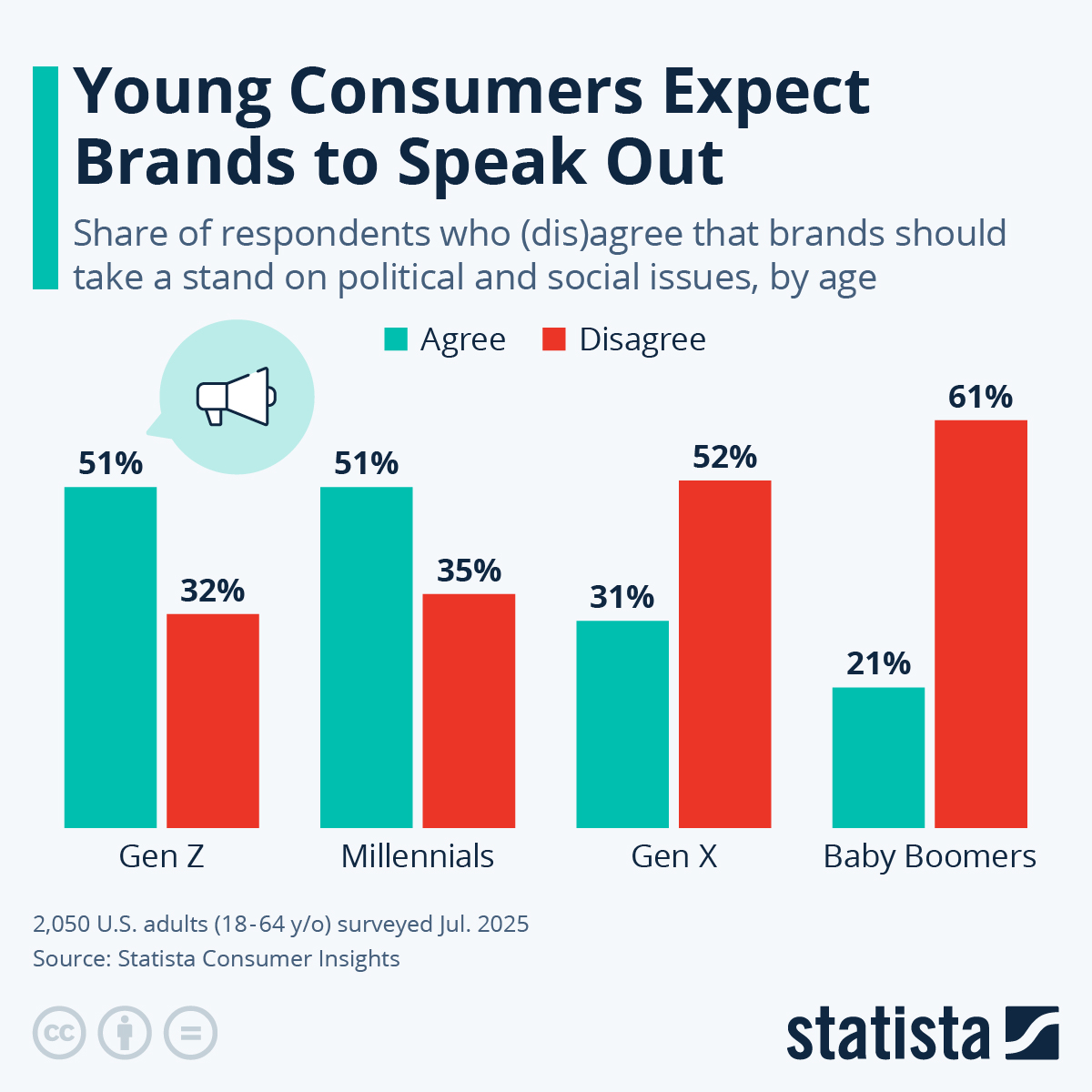
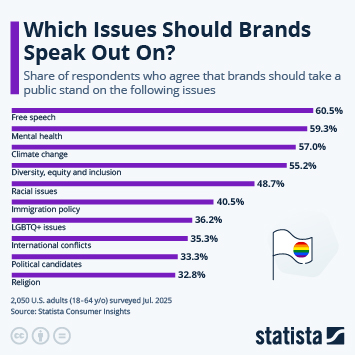
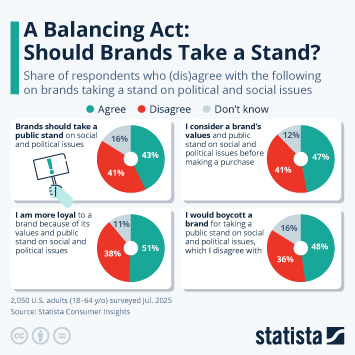
Interestingly, young Americans expect more from brands in terms of political engagement than their older compatriots. According to Statista Consumer Insights, 51 percent of Gen Z and Millennials agree that brands should take a public stand on political and social issues, while just 32 and 35 percent of young respondents disagree. Meanwhile the opposite is true for older Americans, with 61 percent of Baby Boomers saying that brands should stay out of political and social debates. Likewise, young Americans are significantly more likely to say that they’re loyal to brands that take a public stand on issues that they care about.
These findings reflect a broader shift in how younger generations view the role of businesses in society. Having grown up in an era defined by transparency, social media and global interconnection, Millennials and Gen Z consumers tend to see brands not just as providers of goods or services, but as powerful cultural actors with the influence and resources to drive change. For them, silence on pressing issues - from climate change and racial justice to gender equality - can be interpreted as complacency or even complicity.
Several factors underpin this trend. First, digital platforms have blurred the boundaries between commerce, culture and politics: consumers engage directly with brands online and expect authenticity and shared values. Second, trust in traditional institutions such as government and media has declined, leaving corporations to fill a perceived leadership vacuum on ethical and social matters. Finally, younger generations tend to align spending with identity - they “vote with their wallets”, rewarding companies that reflect their ideals and boycotting those that don’t.