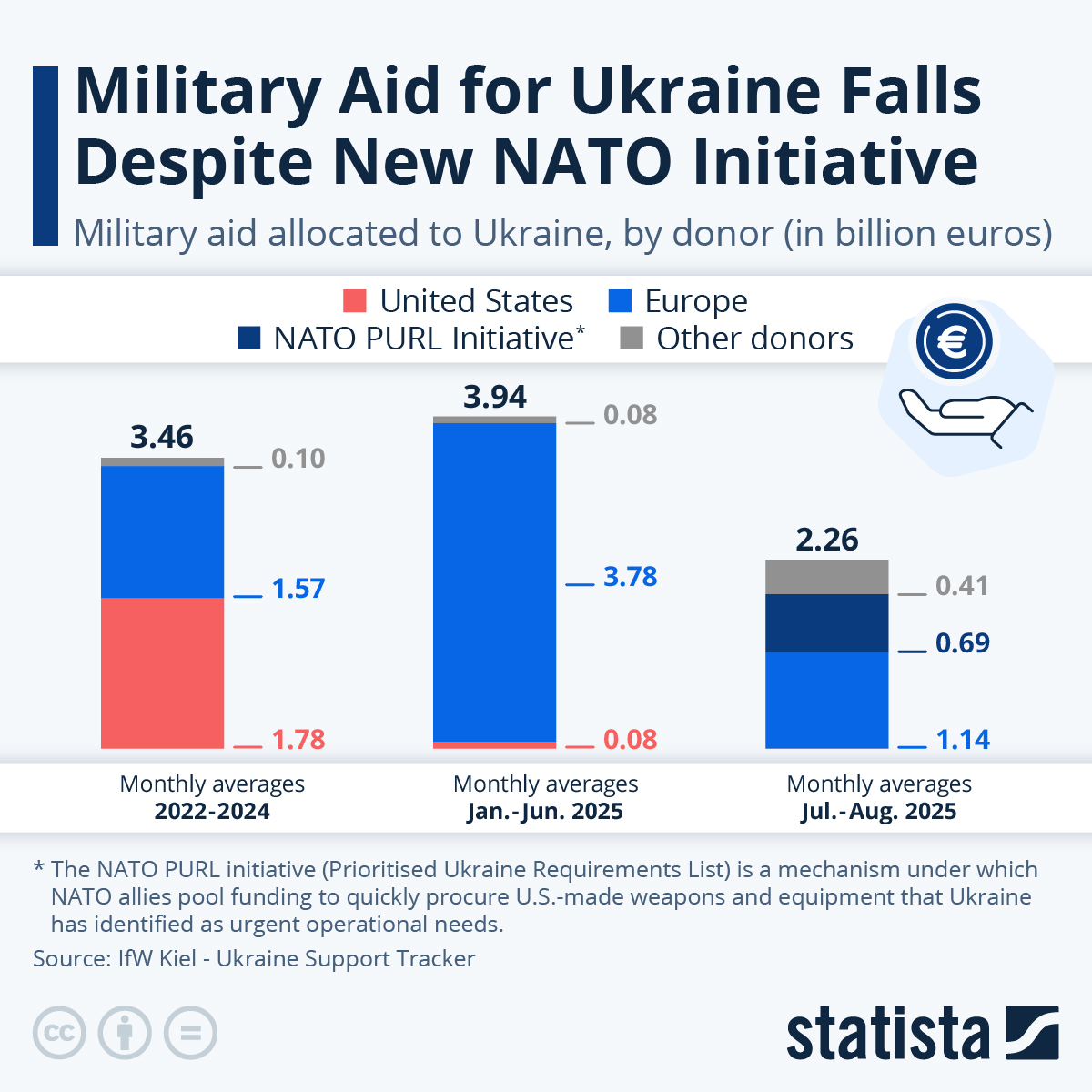
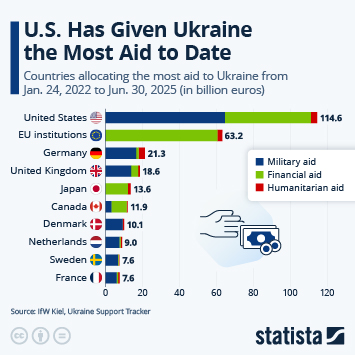
As European policy makers and defense industry leaders came together on Tuesday to discuss current and upcoming challenges at the fifth European Defence & Security Conference in Brussels, the Kiel Institute for the World Economy published the latest update of its Ukraine Support Tracker. The researchers, who have been tracking aid to Ukraine since Russia’s invasion in February 2022, found that military aid to Ukraine dropped sharply in July and August compared to previous months, despite the implementation of the NATO PURL (Prioritized Ukraine Requirements List) initiative.
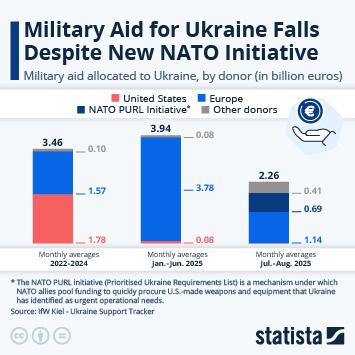
The program, devised by NATO Secretary General Mark Rutte and U.S. President Donald Trump in July, enables NATO allies to fund the acquisition of “ready-to-use” weapons from U.S. stockpiles for Ukraine, potentially fast-tracking the supply of urgently needed military equipment to the country. By August, eight NATO countries, namely Belgium, Canada, Denmark, Germany, Latvia, the Netherlands and Sweden had made use of the new mechanism, providing a total of €1.9 billion in funding. And yet, total military aid to Ukraine declined significantly in July and August, falling 43 percent compared to the monthly average in the first six months of 2025.
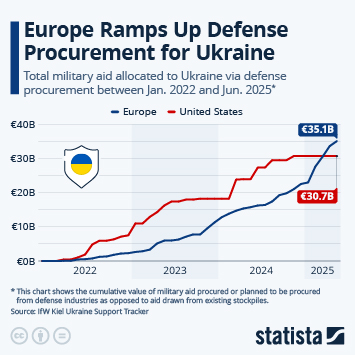
In the first half of 2025, Europe had ramped up its contributions significantly to make up for the suspension of U.S. military aid. This momentum didn’t carry into July and August, however, when European aid fell more than 50 percent, even when accounting for Europe’s contributions to the NATO PURL program. “The decline in military aid in July and August is surprising,” Christoph Trebesch, head of the Ukraine Support Tracker and Research Director at the Kiel Institute, said in a statement. “The overall level of financial and humanitarian support has remained comparatively stable – even in the absence of U.S. contributions,” Trebesch noted. “It is now crucial that this stability extends to military support as well, as Ukraine relies on it to sustain its defense efforts on the ground.”