World Food Day is observed annually on October 16 to raise awareness about global hunger, food insecurity and the importance of universal access to healthy and nutritious food. Established in 1979 to mark the anniversary of the Food and Agriculture Organization (FAO) in 1945, this year’s World Food Day celebrates the 80th anniversary of the UN agency specializing in fighting hunger and malnutrition across the globe. According to the FAO’s latest update on the State of Food Security and Nutrition in the World, around 670 million people experienced hunger in 2024, a slight improvement from more than 800 million at the turn of the millennium. At the same time, another form of malnutrition has arisen, however: overweight and obesity. As the FAO notes, we’re living in a world where abundance and absence coexist, pointing to a global food system that is out of balance.
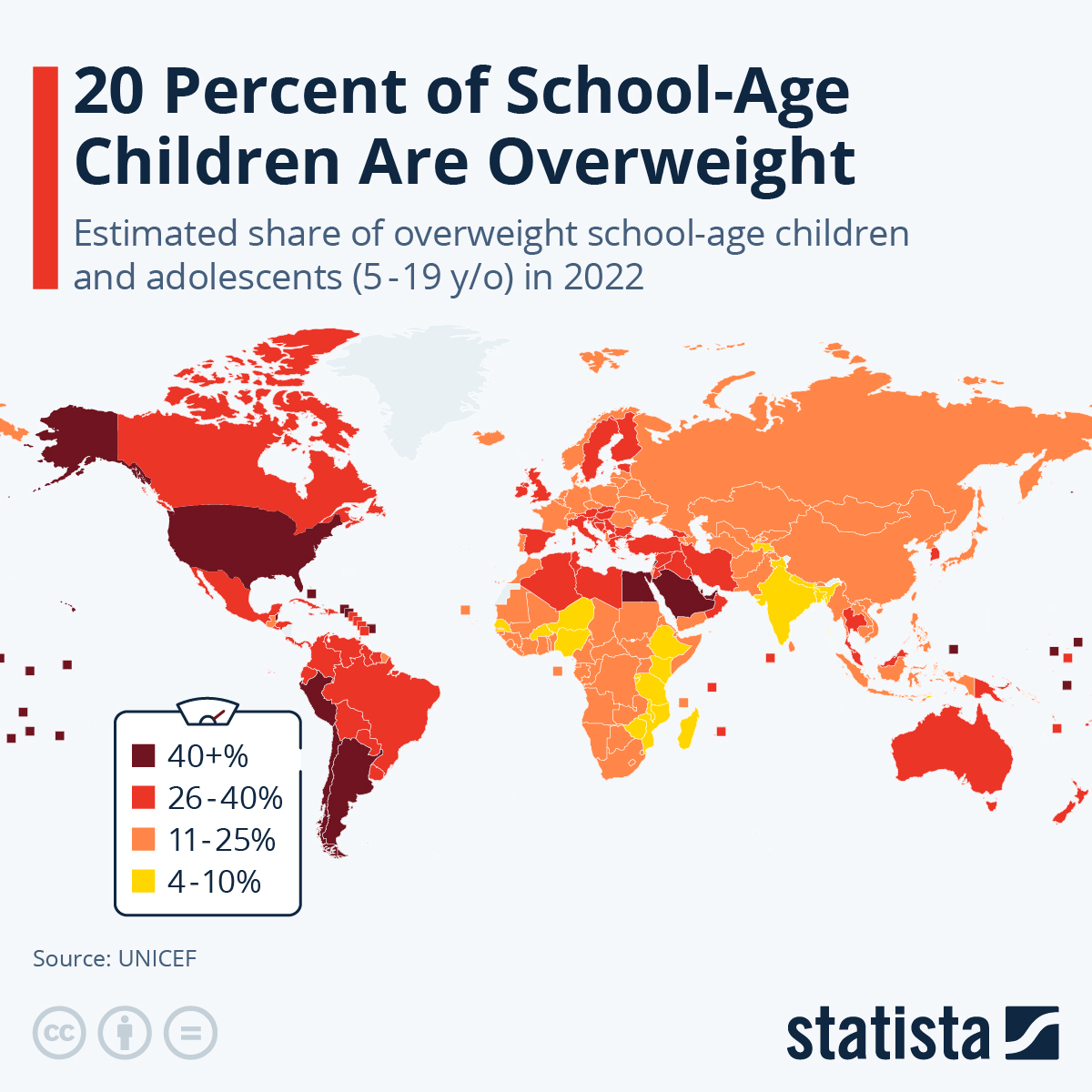
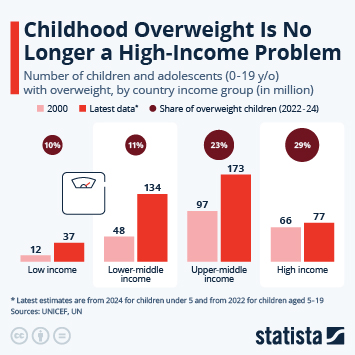
Children are also affected by this trend with 1 in 5 school-age children and adolescents wordwide considered overweight, while 1 in 10 are living are classified as obese. In absolute terms, that means 391 million children are overweight, meaning they are significantly heavier than what is healthy for their age, sex and height. 188 million children are living with obesity, which is a severe form of overweight that elevates the risk of cardiovascular disease, diabetes and other chronic diseases.
As our chart shows, children are affected by overweight in all parts of the world, with Latin America and the Carribbean, the Middle East and North Africa and North America standing out as the regions with the highest prevalence of overweight among children. At country level, Chile stands out with 58 percent of children estimated to be overweight. The country is joined by several islands in the South Pacific, each with child overweight rates of over 50 percent.