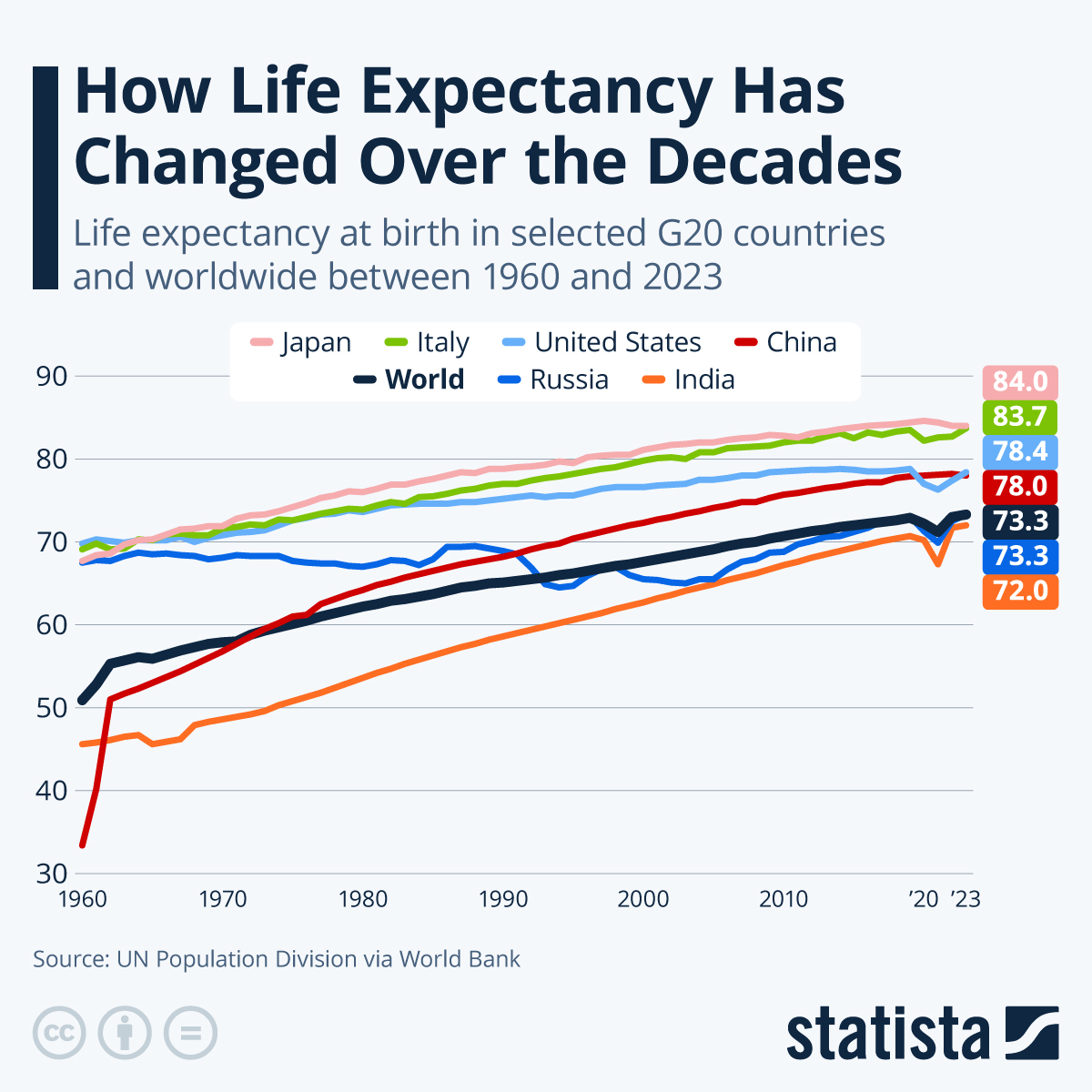
Since the 1960s, the world has witnessed a remarkable rise in life expectancy at birth, reflecting progress in healthcare, sanitation and living standards. Globally, average life expectancy increased from about 51 years in 1960 to 73.3 years in 2023, an average gain of more than 20 years in the space of six decades, despite a temporary setback during the coronavirus pandemic. The post-pandemic recovery has been steady, with global life expectancy returning to its upward trajectory by 2023.
As shown in our infographic, Japan stands out as a global leader in life expectancy. In 1960, its average was approximately 68 years, but by 2023, it had risen to 84 years - one of the highest recorded in the world (only surpassed by Hong Kong and Monaco), according to data from the UN Population Division. Elsewhere on the globe, reflecting the broader European trend of increasing longevity, countries such as Italy (83,7 years in 2023) are also among those with the highest life expectancy at birth. For both countries mentioned, universal and robust healthcare systems, as well as dietary habits, are often cited as key factors.
For its part, the United States saw its life expectancy increase from about 70 years in 1960 to 78.4 years in 2023. The country's slow progress during that period compared to other high-income nations is linked to several national health challenges, including the recent opioid crisis, obesity and healthcare disparities. In parallel, the second world's largest economy, China, has made a spectacular leap in longevity over the last decades: from just around 33 years in 1960 to 78 years in 2023, catching up with the current life expectancy of Americans. This transformation is largely due to economic growth, improved healthcare access and a reduction in infant mortality.