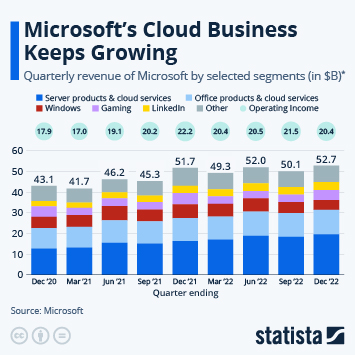
Even though Microsoft is best known for Windows and its productivity suite Microsoft 365 (formerly known as Microsoft Office), cloud services have been integral to the company's success over the last couple of years. In the quarter that ended December 31, Microsoft's cloud revenue surpassed $50 billion for the first time, accounting for 63 percent of the company's total revenue.
More impressively, though, Microsoft's diverse cloud offerings, most importantly Azure and Microsoft 365 Commercial and Consumer cloud have been responsible for more than 90 percent of the company's revenue growth over the past two years. While revenues from Intelligent Cloud and other cloud services have grown more than 50 percent between Q2 2024 and Q2 2026, revenue from Microsoft's other products and services have only increased 5 percent.
Microsoft's Intelligent Cloud segment alone generates more than $100 billion in annual revenue now, as global demand for cloud infrastructure continues to grow. The transition to AI has given another boost to the global cloud market, re-accelerating a market that has grown from less than $100 billion in 2019 to more than $400 billion in 2025. According to estimates from Synergy Research, Microsoft is one of the market leaders in the cloud infrastructure market, trailing only Amazon Web Services (AWS) in terms of market share.