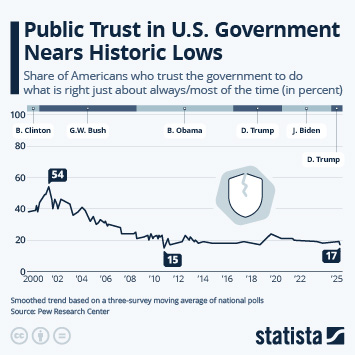
One of the main drivers of Donald Trump‘s political rise in the run-up to the 2016 presidential election was the fact that he was not a politician, at least not in the traditional sense. He didn't speak like a politician, he didn't act like a politician and as a consequence, he didn't face the same level of distrust that many career politicians face these days. He was going to be the one to "drain the swamp" as he promised his supporters, the political outsider that would move into the White House and clean up Washington D.C.
That is also why many of his supporters are so disappointed in Trump's handling of the Epstein affair. Wasn't he supposed to uncover all the secrets of the so-called elites and finally bring transparency to D.C.? His refusal to release the Epstein files in their entirety feels like a betrayal to those supporters, and perhaps more importantly, it makes him what they loathe most: a politician.
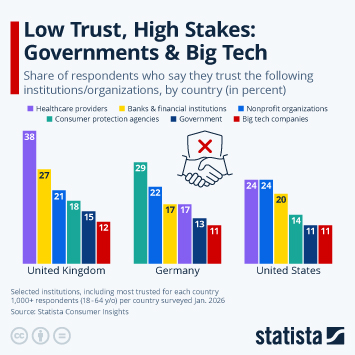
According to Statista Consumer Insights, people in the United States have shockingly little faith in politicians, with only 7 percent of U.S. respondents saying they trust politicians in their country. That makes politicians the least trusted profession in the U.S., trailing even online influencers, celebrities and financial services professionals who all face low levels of trust as well. The same can be observed in other countries included in the survey, with respondents from Germany and the UK expressing similarly low confidence in politicians.
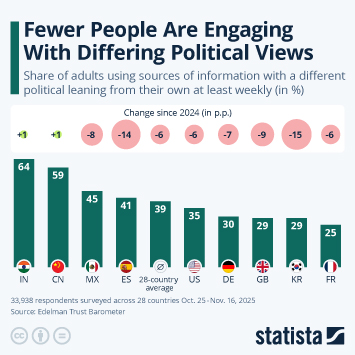
Another profession that has earned a bad reputation in recent years is journalists. With people like Donald Trump and Elon Musk relentlessly pushing the narrative of “fake news” and of the so-called “mainstream media” following an agenda, trust in journalism has eroded noticeably in recent years. The trend has only been exacerbated by social media echo chambers, which have made it very hard for people to distinguish between the actual truth and the truth most fitting to their belief system.