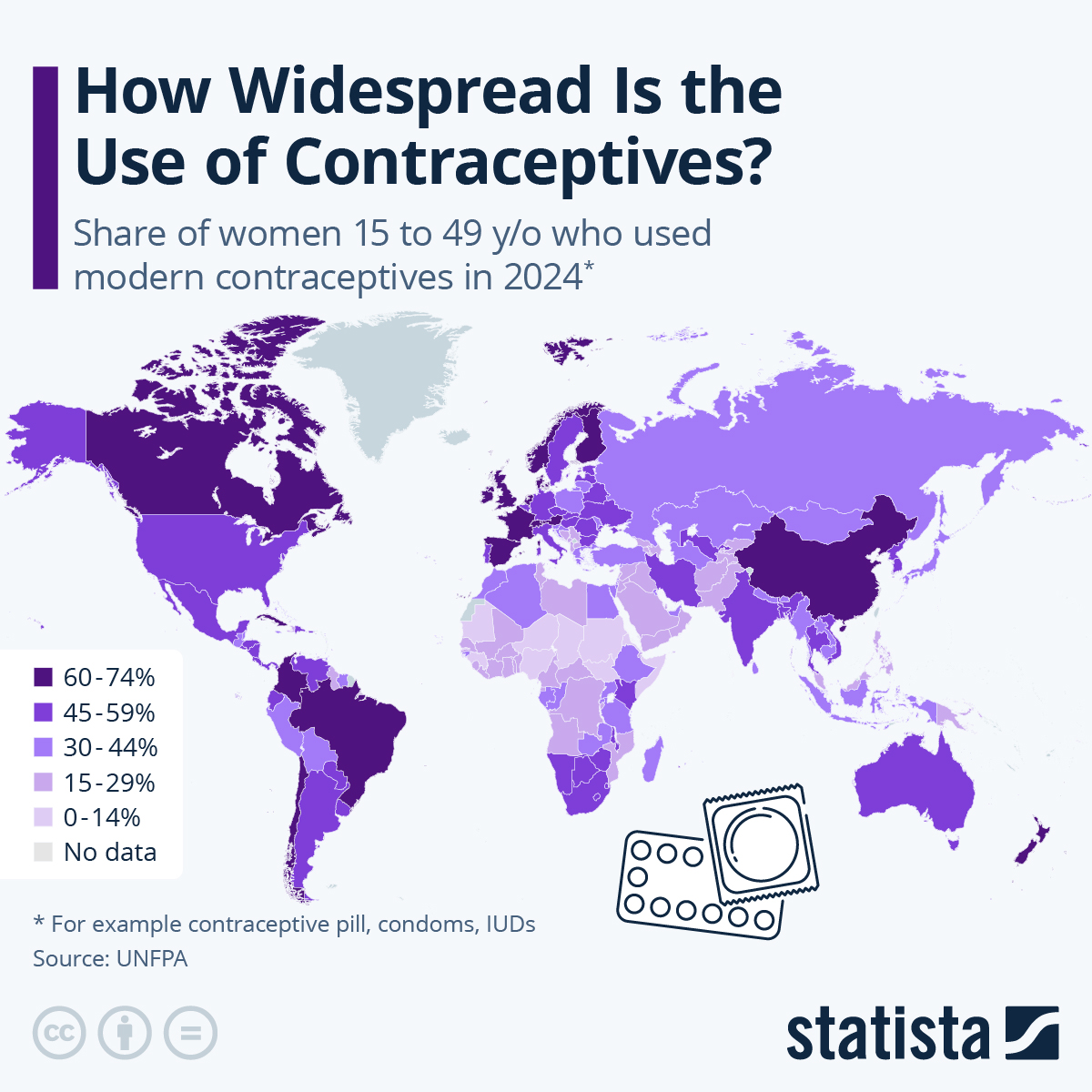
One important aspect of women's sexual and reproductive freedom is access to contraception. Data from the UN Population Fund shows how the rates of modern contraceptive use (e.g. condoms, birth control pills, IUDs) vary around the world. August 18 marks the anniversary of the first contraceptive pills going on sale in the United States in 1960.
The countries with the highest percentage of women aged 15 to 49 using any type of modern contraception are Finland (74 percent), Canada (71 percent), China (69 percent), Cuba (68 percent), and Switzerland (68 percent). The countries with the lowest rates of modern contraceptive use are Eritrea, Mauritania, Chad, Albania, South Sudan and Somalia, each with fewer than 10 percent of women of reproductive age using contraceptives.
There are 71 countries and territories where the pill, IUDs, condom or similar contraceptives are used by only one third of women of reproductive age (or even fewer) for family planning or to protect against sexually transmitted infections. These are primarily countries in the Middle East and Africa. In Afghanistan, for example, only one in five women uses contraception. In Nigeria, one of the ten most populous countries in the world, the figure is just 14 percent. Lack of contraception means women don't have the freedom to choose important aspect of their lives, but it is also a health risk in the case of pre-existing conditions, lack of pregancy care or for those who undergo unsafe abortion. Beyond pregnancy, the lack of condom use puts both sexes at a risk of dangerous and deadly diseases.