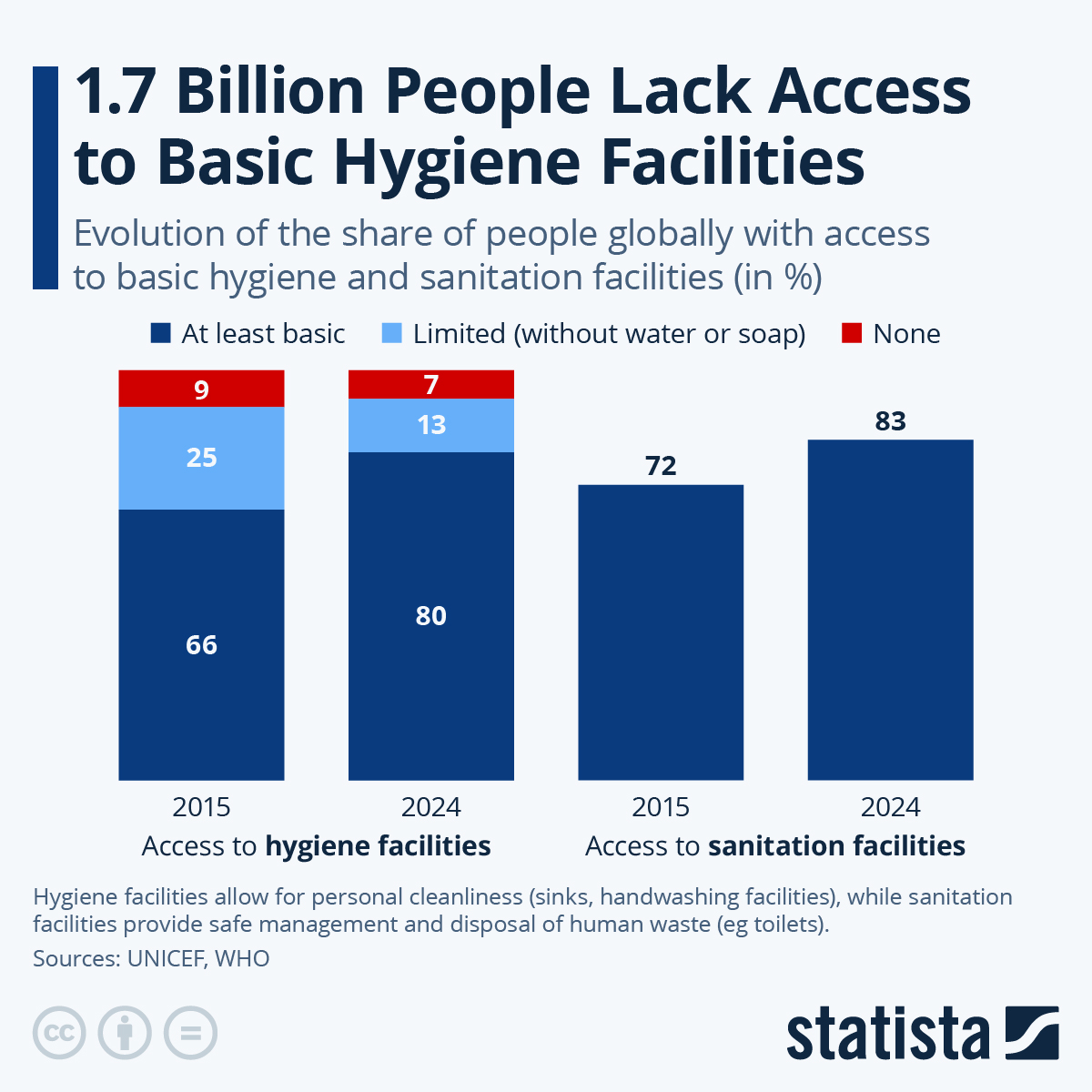
Every year, October 15 marks Global Handwashing Day, which aims to promote "awareness and understanding about the importance of handwashing with soap as an effective and affordable way to prevent diseases and save lives". Washing hands with soap can help stop the spread of disease and save lives: according to data from UNICEF and the WHO, unsafe hand hygiene is responsible for 394,000 deaths from diarrhoea and 356,000 deaths from accute respiratory infections every year.
Glogally, an estimated 1.4 million people, including 400,000 children under five, die each year from preventable diseases attributable to inadequate water, sanitation and hygiene. While progress has been made around the world, around 1.7 billion people didn't have access to basic hygiene facilities in 2024, including 611 million people with no handwashing facilities at all. In 2024, an estimated 83 percent of the population also had acces to sanitation facilities, which provide safe management and disposal of human waste (most commonly toilets). Unsafe disposal of human waste can lead to contamination from diseases such as diarrhea, cholera or thyphoid, which disproportionately affect children, and can cause lifelong issues and death.