Pesticide self-poisonings remain one of the most widespread causes of suicide worldwide, with a particularly high prevalence in rural areas of low- and middle-income countries. According to the Centre for Pesticide Suicide Prevention, the most effective way to prevent these deaths is to restrict access to highly toxic pesticides through strengthening government regulations, replacing them with less toxic alternatives.
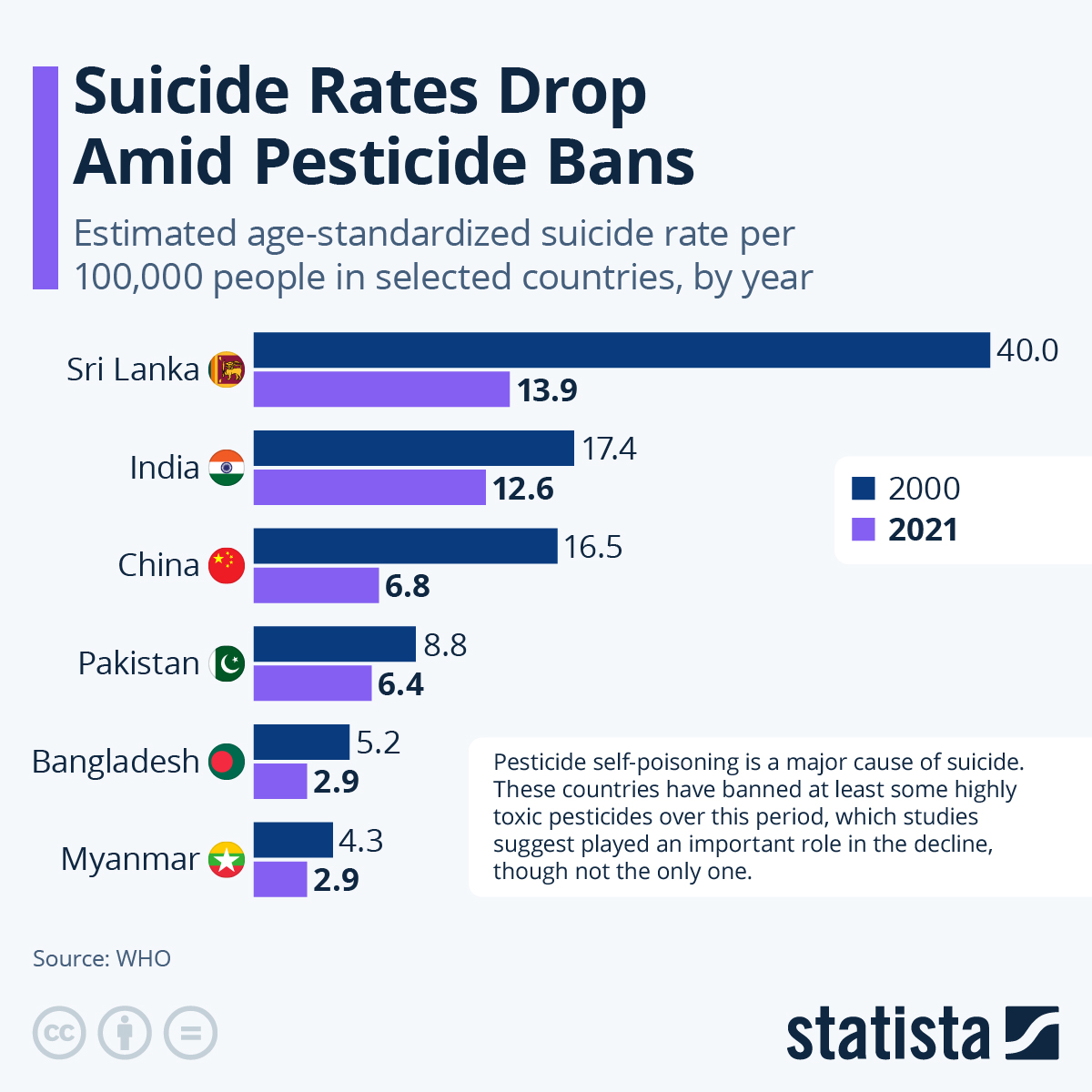
This has been successful in several countries, including Sri Lanka, which implemented a series of policies to limit access and availability of pesticides responsible for deaths between 1980 and 2010. This included bans of 36 highly toxic pesticides and, according to the Centre for Pesticide Suicide Prevention, is estimated to have resulted in 93,000 lives saved over two decades.
The following chart, based on WHO data was published and analyzed by Hannah Ritchie of Our World in Data, shows a similar trend of falling suicide rates in Bangladesh, which similarly took action to partially or completely ban 21 highly hazardous pesticides (HHPs) in the 1990s and 2000s. India, China, Pakistan and Myanmar also implemented such regulations.
Ritchie notes that one of the reasons that strengthening regulations can lead to fewer lives lost, is that in many cases self-poisonings are the result of an impulsive, short-term moment of crisis. By banning HHPs, it is likely that more people would survive due to ingesting less lethal pesticides, with studies showing that people usually do not try again. And so, while not the only factor, it is believed to play an important role.
Ritche also writes that in some countries, such as Nepal, the bans did not lead to a clear reduction in suicides, with studies indicating that the toxic pesticides are still entering the country illegally and being used.
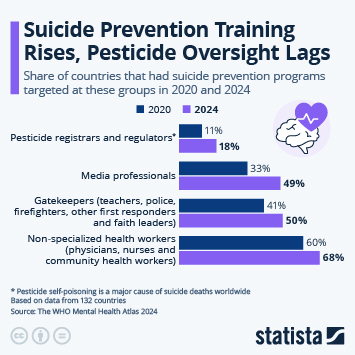
The Centre for Pesticide Suicide Prevention also states that beyond access to mental health services and overcoming stigma, additional important measures that should be being taken to protect communities include the implementation of guidance for the management of pesticide poisoning, as well as the training of pesticide vendors to act as “gatekeepers” within communities, by identifying people at risk of self-harm.
If you are feeling overwhelmed, anxious or depressed, please reach out to your family or friends, a mental health professional or contact a crisis line in your area. You are not alone, help is available.