India plans to include castes in its upcoming census for the first time since 1931 and it is causing a polarizing discussion in the country. While opponents say that castes are an outdated social construct that India should move beyond instead of legitimize, proponents argue that the country will be better off having more information about modern-day caste membership as it can be used to better steer equality initiatives often based on caste.
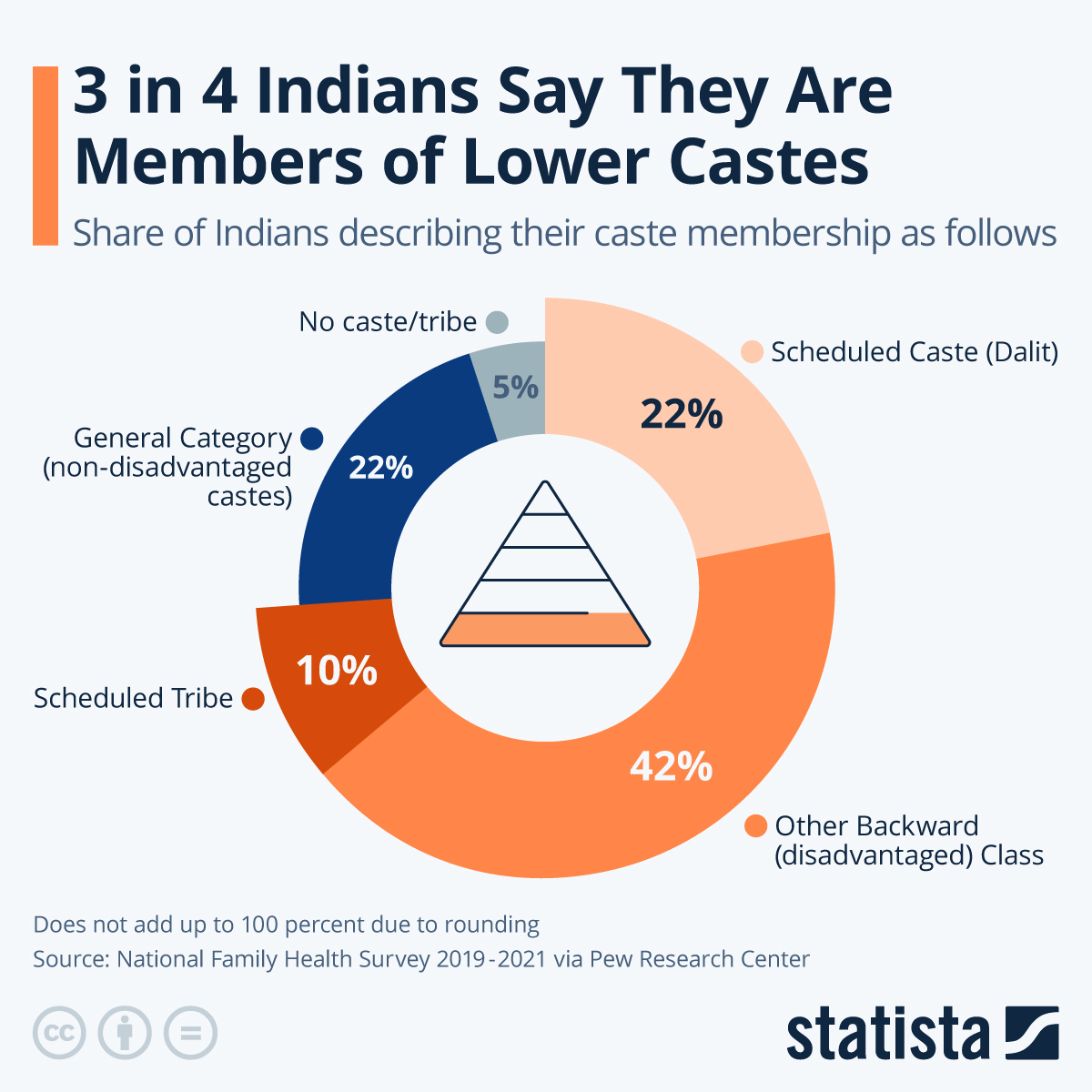
Data from the National Family Health Survey by the Ministry of Health & Family Welfare conducted between 2019 and 2021 shows that three quarters of Indians name themselves as members of castes that are eligable for reservations, a term for affirmative action programs. Among them are 22 percent of the Indian population describing themselves as Scheduled Caste, also known as Dalits or Untouchables, which are identified as such in the Indian Constitution. A further 42 percent count themselves as part of a group called Other Backward Class, which combines disadvantaged castes not listed in the Constitution. On top of these are 10 percent of the Indian population who are members of Scheduled Tribes, on average the most underpriviledged people in today's India.
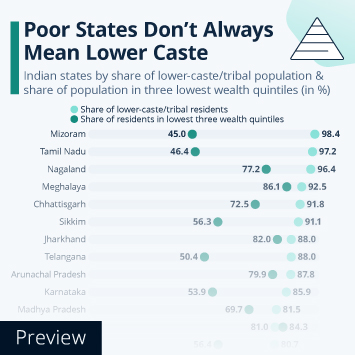
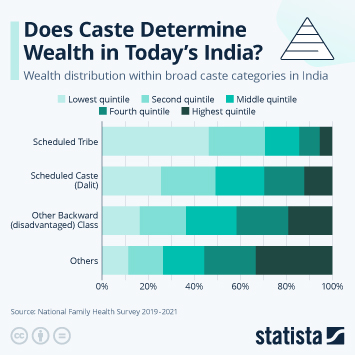
This leaves only less than a quarter of Indians who are part of the so-called upper castes, while 5 percent of Indians claimed no caste or tribe membership. However, lines of wealth and economic hardship have blurred in India and are diverging from caste membership. While almost half of Scheduled Tribe members fell into India's lowest wealth distribution quintile, this number stood at one quarter for Scheduled Caste, 16 percent for Other Backward Class and 11 percent for those not falling into these categories.
An electoral win by the BJP, India's ruling right-wing party, in populous but poor state Bihar this weekend shows how caste continues to be discussed in modern-day India. 80 percent in the state belong to groups that fall under reservations and did traditionally not vote for the BJP or its local coalition partners. The party's win was therefore a surprise, even when aided by last-minute payments to residents made as part of an employment program for women. Voting was very clear along caste lines, the Hindustan Times reports.