Over the weekend, India's ruling party, the BJP, gained a surprise electoral win in a local election in the northern state of Bihar. While the success might have been aided by last-minute payments to women as part of, or under the guise of, an employment initiative (as some put it), the BJP and its allies were able to mobilize Bihar's population along caste lines, as many reports stated.
Parties have long battled over caste alliances in Bihar by running candidates from important caste groups and also by setting up welfare programs. While preferences for parties have shifted, caste-wide voting has not. Bihar is a populous but poorer state and is home to many Indians belonging to castes and groups eligible for affirmative action and other welfare programs, which might make the above dynamics more salient there.
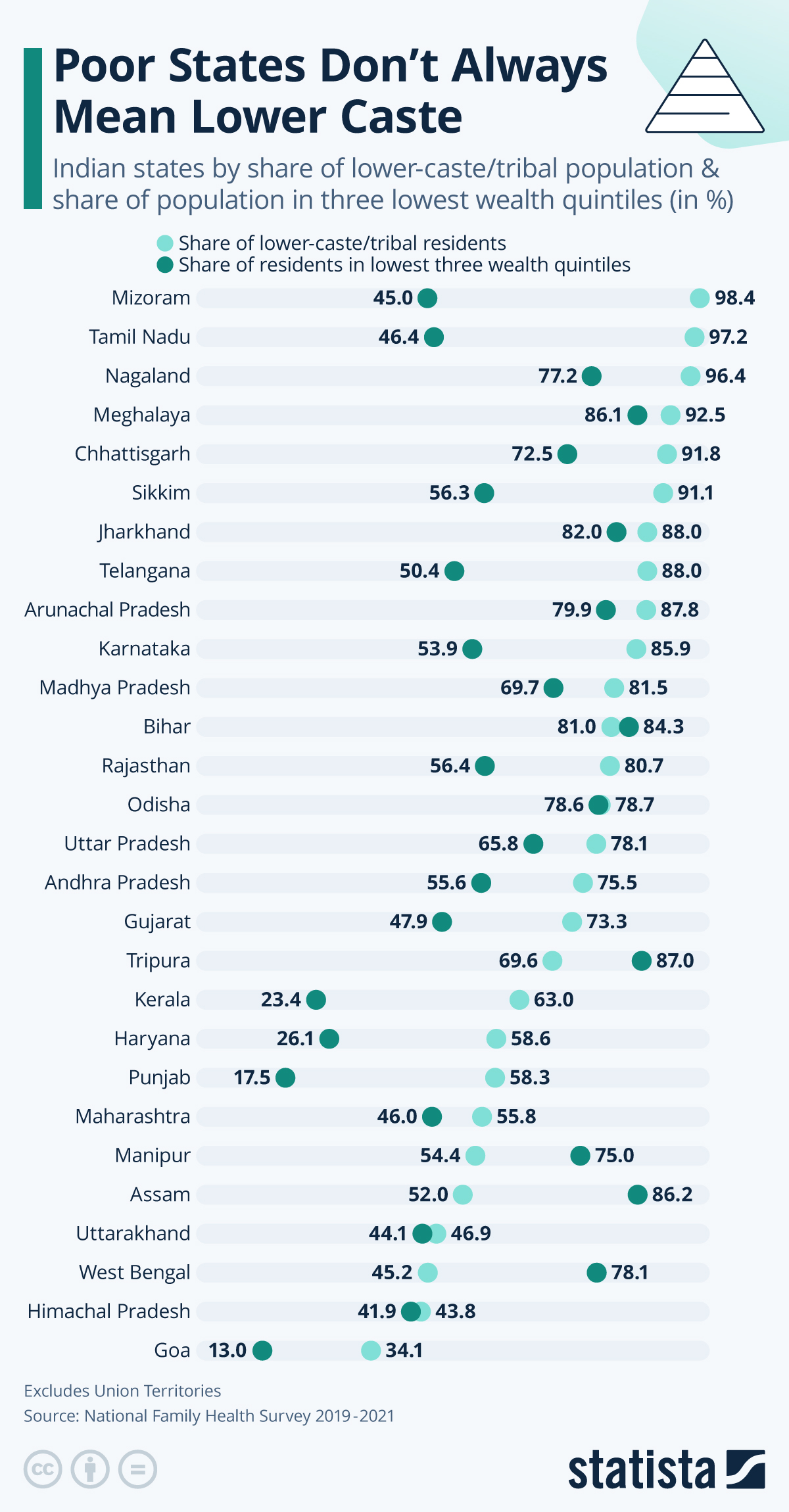
But the connection between caste and wealth is not as strong as in Bihar everywhere in India. Many places indeed stray from the mold of this stereotype. Data from the National Family Health Survey shows that states like Meghalaya, Jharkhand, Arunachal Pradesh or Odisha mirror the lower caste, lower prosperity link, while others are more prosperous in relation to their share of Scheduled Tribe, Scheduled Caste and Other Backward Class population share. This is the case in some of northern states like Punjab, Haryana, Mizoram and Sikkim, but also in the very south in Tamil Nadu, Kerala and Karnataka.
Places that show the same trends are urban Union Territories as well as states with big urban centers like Gujarat or Telangana as well as Goa and Rajasthan. States that are poorer in relation to the share of upper castes they are hosting include West Bengal, Assam, Manipur and Tripura as remoteness and regional development status, among other factors, also play a big role in India's wealth distribution.