After a fire engulfed a Hong Kong apartment complex under renovation Wednesday and killed upwards of 150 people, investigations around the cause are ongoing. The city's use of bamboo instead of metal scaffolding for a majority of building projects has come under scrutiny in the process, as some observers believe it to have contributed to the deadly blaze. While the practice is cheaper and less labor-intensive, it had already been listed for a phase-out before last week's tragedy despite a long list of safety regulations added in recent years and an even longer history of the building style in the city.
Hong Kong police have made arrests in connection to the fire, including of scaffolding contractors. According to reports, it was actually the plastic netting used on the project that - like some building parts - was not up to fire safety code. Another issue already detected was the polystyrene foam found in elevator shafts that is believed to have fueled the fire. The Hong Kong government itself is now part of the controversy, as compliance was not enforced on the construction site despite many complaints, safety issues found and warnings issued to construction companies. Some have accused responsible city officials of corruption.
However, studies also found scaffolding from bamboo to be inherently more dangerous and flammable. Additionally, the researchers found more general safety violations in Hong Kong bamboo scaffolding projects than in those using metal, for example, missing guardrails, broken platforms, low helmet or safety belt use and overly tired workers.
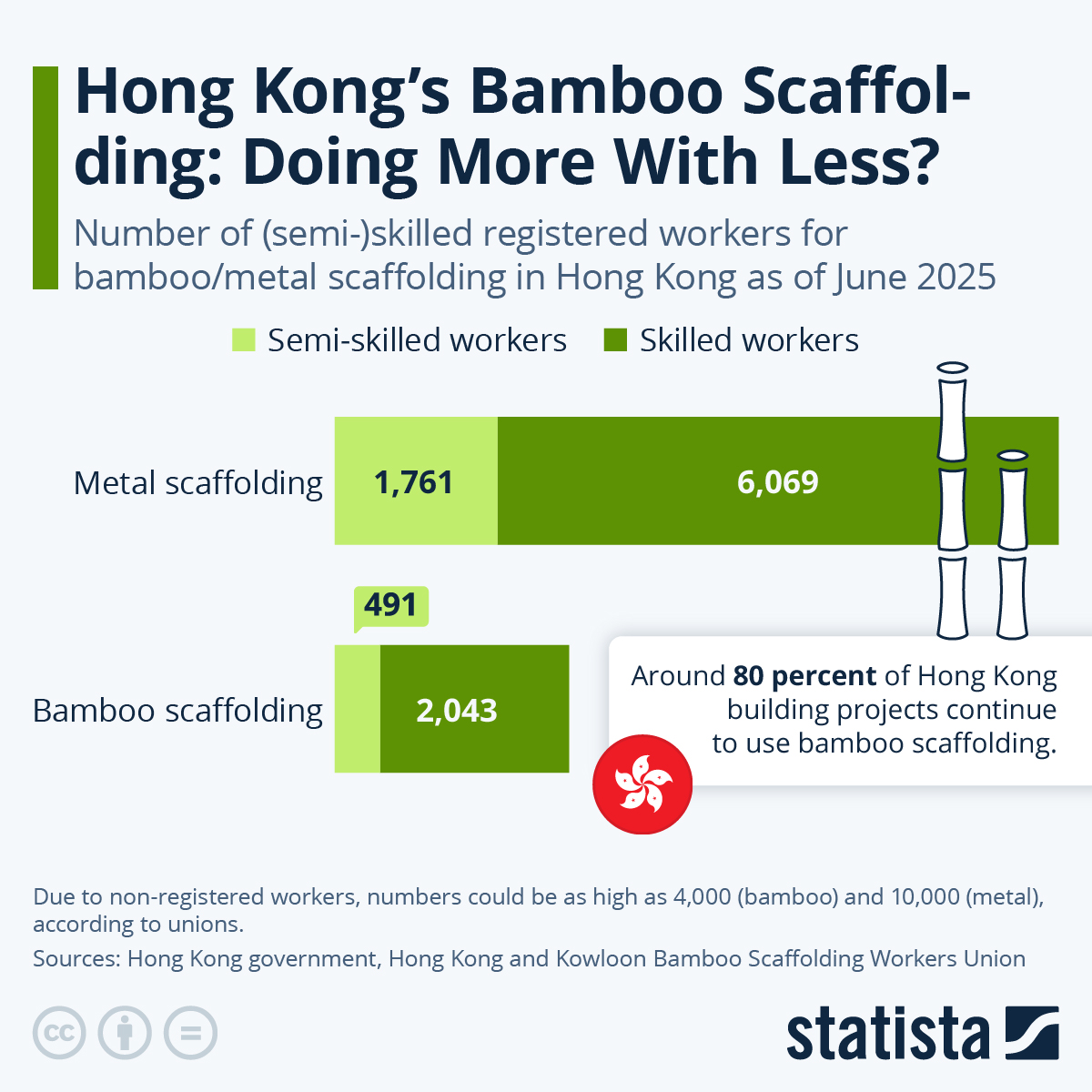
Hong Kong currently has fewer bamboo scaffolders depite most projects using the material, once more showcasing how much cheaper and less labor-intensive the age-old practice really is. The city also has extensive codes aimed to ensure scaffolding safety, including in bamboo scaffolding. However, the practice's inherently negative aspects can be intensified if contractors cut corners and enforcement lags, making many already unsafe buildings in the city even more dangerous.
In March, Hong Kong's government decided to use metal scaffolding on 50 percent of its projects going forward in order to eventually phase-out bamboo. Especially high-risk projects, like those involving occupied buildings, would benefit from using metal as an extra precaution. As the practice has become a symbol of the city, eliciting fascination, nostalgia and potentially disbelieve from outsiders, labor unions have said that up to 4,000 speciality workers could be affected by the phase-out, above the around 2,500 officially registered.