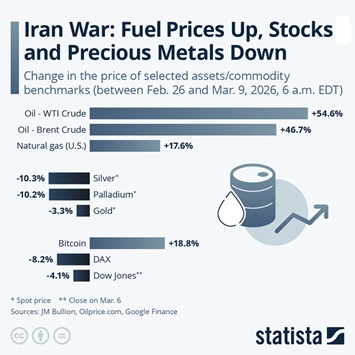
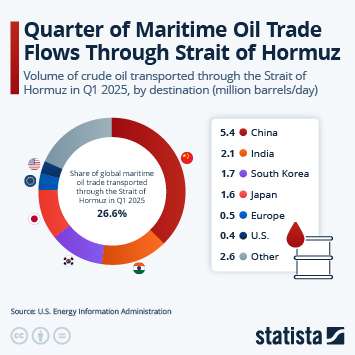
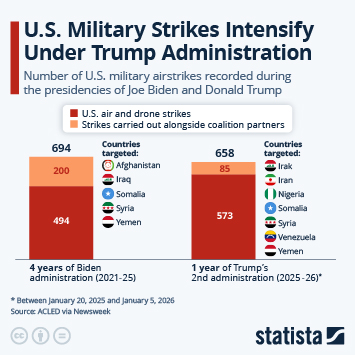
Just over a week after the U.S.-Israeli attacks on Iran and as the war rages on, oil prices have surged to reach over $100 for a barrel of Brent crude, an almost four-year high. The ongoing strikes in the region have all but halted maritime transport in the Strait of Hormuz, through which more than a quarter of the world's maritime oil trade transits. Furthermore, Israel hit Iranian oil depots over the weekend, adding to the uncertainty of the country's oil trade.
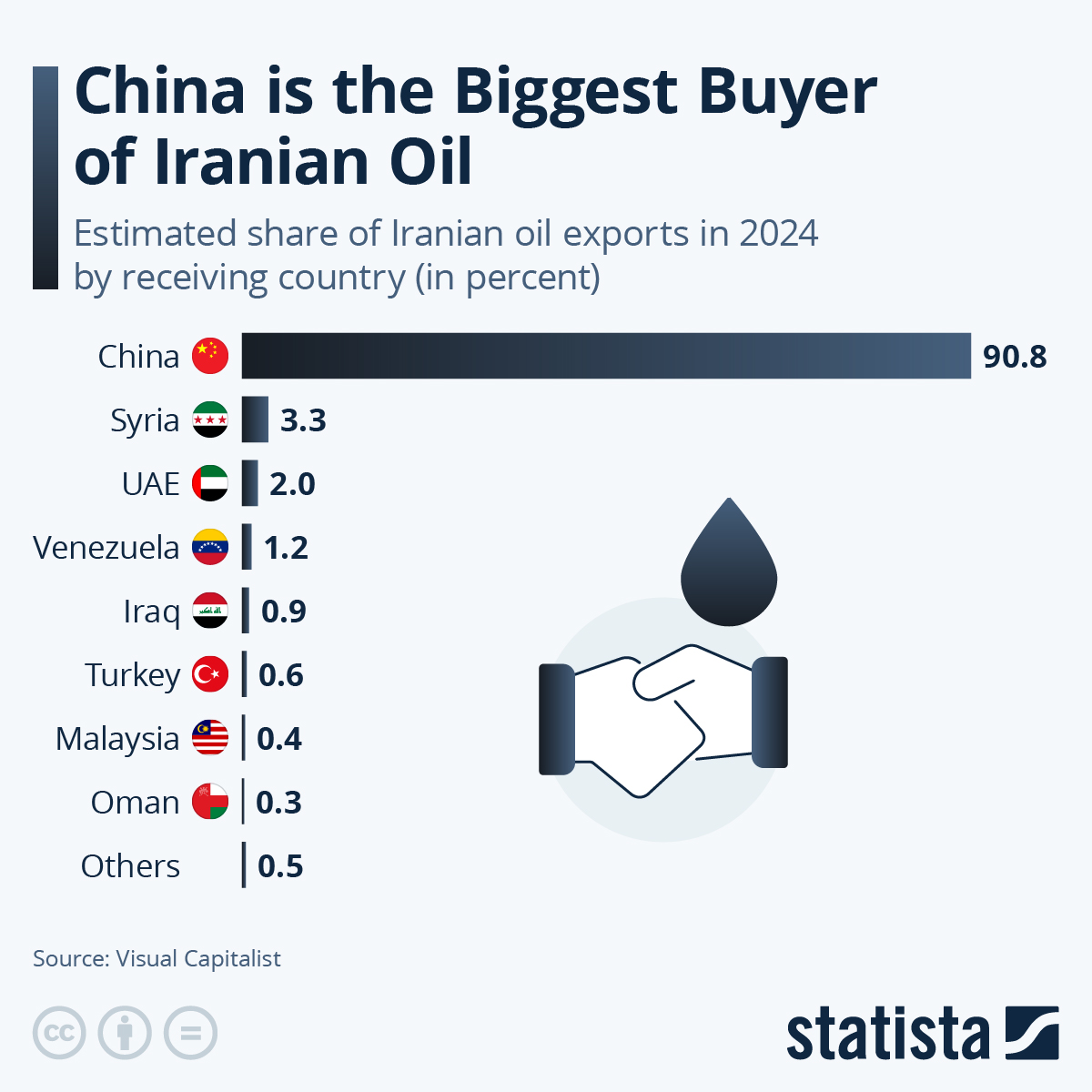
Data gathered by Visual Capitalist shows that China is by far the biggest buyer of Iranian oil, accounting for around 91 percent of the country's oil exports in 2024. Syria came second with 3.3 percent, followed by the UAE with 2 percent. Venezuela accounted for 1.2 percent of Iranian oil exports, while Iraq, Turkey, Malaysia and Oman each accounted for less than one percent. Iran has been facing international sanctions for several decades, including from the U.S., but they were expanded in 2018, 2019 and 2020 during Donald Trump's first term. This left Iran with a limited number of countries still willing and able to trade, despite being one of the world's largest oil producers.
G7 finance ministers are meeting today to discuss the potential joint release of strategic oil reserves to try and mitigate the effects of the conflict on oil prices. Countries that are members of the International Energy Agency (which include the U.S., the UK, France, Germany and Japan) must hold oil reserves equal to at least 90 days of net imports, but oil can be released from these reserves if supply is severely disrupted.