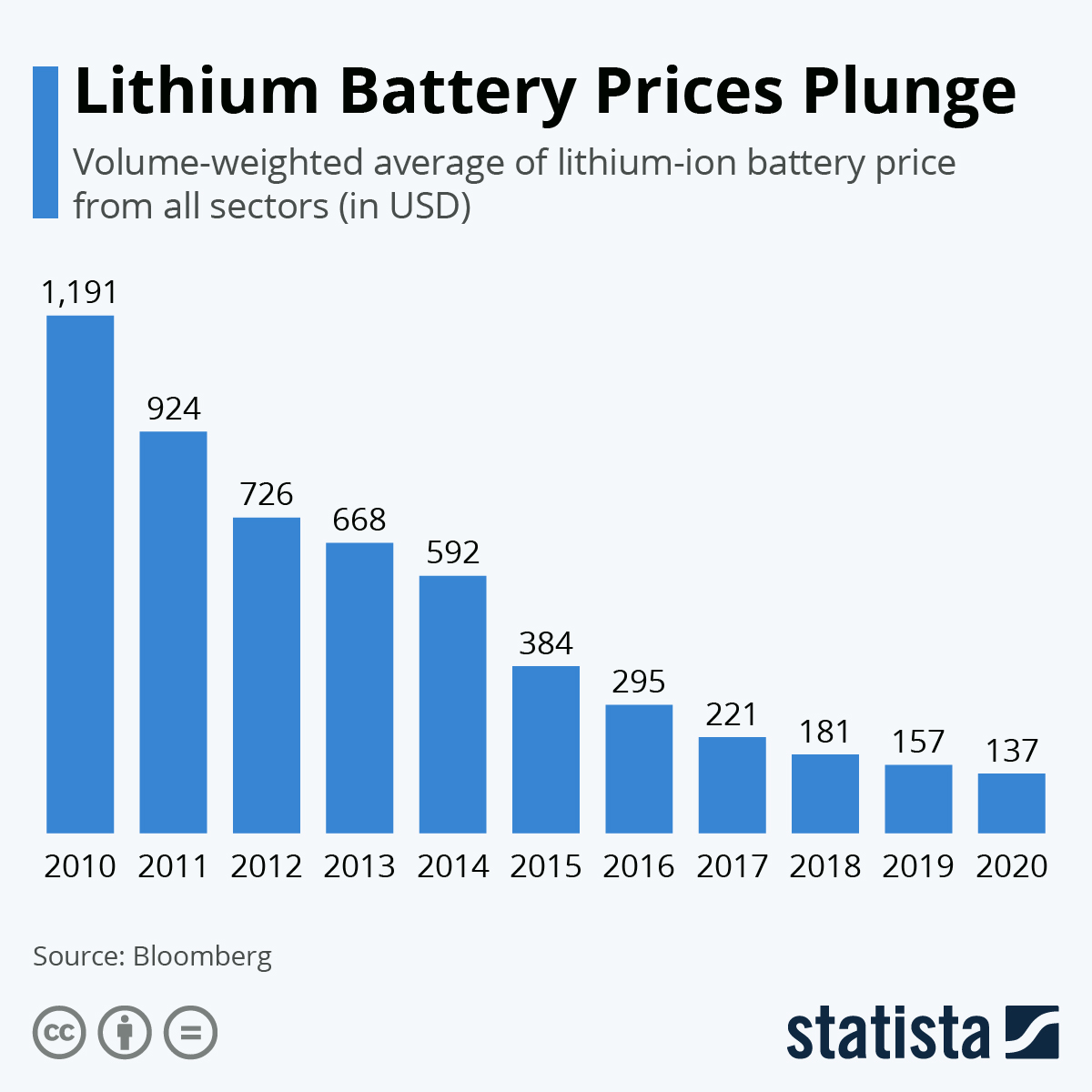
The cost of electric vehicle batteries has fallen dramatically over the past decade, reaching a key milestone recently. As our chart shows, average lithium-ion battery prices dropped from around $550 per kWh in 2010 to just $78 in 2024, a decline of roughly 86 percent. While prices rose slightly in 2022 amid supply chain disruptions and higher raw material costs, the long-term downward trend has quickly resumed. The data is based on a compilation by researcher Rupert Way, drawing on sources including BloombergNEF and academic studies, and published via Our World in Data.
The sharp decline in battery prices has been driven by a combination of factors, including technological improvements, economies of scale and increased industrial competition. Advances in battery chemistry and manufacturing processes, along with the rapid expansion of global production capacity (particularly in China), have significantly reduced costs. Crossing the $100-per-kWh threshold is widely seen as a turning point for electric mobility. At this level, electric vehicles can reach cost parity with internal combustion engine cars without subsidies, a benchmark frequently cited by BloombergNEF. As battery prices continue to fall, the data suggests that EVs are moving closer to mass-market adoption.