15 years after Steve Jobs resigned as CEO of Apple and Tim Cook was named his successor on August 24, 2011, Cook's time at the helm of the company is drawing to a close. Earlier this year, he announced that his time as CEO of Apple would end on September 1. He will be succeeded by John Ternus, Apple’s Senior Vice President of Hardware Engineering and a long-time frontrunner for the role.
Following in the footsteps of Jobs, Apple’s visionary co-founder and the driving force behind the company’s resurgence that started in the late 1990s, was never going to be an easy job. And yet, Tim Cook, a calm and operationally focused leader, was identified as the ideal replacement for the more impulsive, brilliant, yet slightly unpredictable Jobs.
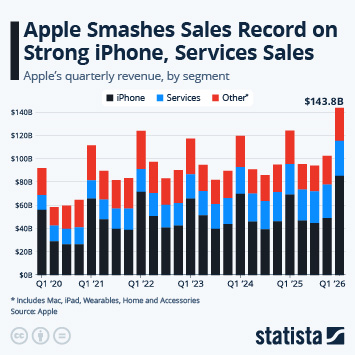
Widely credited as the architect of Apple’s highly efficient global supply chain during his time as COO, Cook oversaw a period of extraordinary growth. Under his leadership, Apple became the first company to reach a market capitalization of $1 trillion in 2018 – a number which has since grown to more than $4.5 trillion. Revenue and profits surged as well, with the company surpassing $100 billion in annual profit for the first time in fiscal 2025.
Despite these achievements, Cook has faced criticism for a perceived lack of groundbreaking innovation. While Apple launched major successes such as the Apple Watch and AirPods under his lead, the company has yet to deliver another product with the transformative impact of the iPhone. The most ambitious attempt, the Apple Vision Pro launched in 2023, fell short of expectations due to its high price and unclear use cases.
“It has been the privilege of a lifetime to serve as Apple’s CEO,” Cook said in a statement, praising his successor: “John Ternus has the mind of an engineer, the soul of an innovator and the values to lead with integrity.”